Drax Avatar of Life is good-ish, and that is more useful than it sounds. He is not a plug-and-play miracle card, and he is not simply a three-cost Captain Marvel. The card is stranger than that. Once you understand the timing and the role, he starts to make sense as a priority tool, a stat stick, and a defensive piece for decks that care about staying ahead.
The mistake is judging him only by how often he moves on the final turn. In testing, the movement was not the main story. The main story was that Drax regularly became a 3/7 while helping you keep control of the board.
The Short Version
- Drax is usually a strong three-cost body, often playing like a 3/7.
- His end-of-turn check uses the final state of power after locations and other effects resolve.
- The movement is less about stealing the last turn and more about protecting tempo earlier.
- He fits best in decks that want priority, big bodies, and controlled lane pressure.
- He is good, but not as effortless as the text may first suggest.
The Timing Matters More Than It Looks
Drax checks the board at end of turn, and that detail changes how the card plays. Power that gets added later still matters. Locations resolve first, then card effects, which means the final board state is what Drax cares about.
That makes him more technical than a basic stat card. You are not just asking whether the opponent played something bigger. You are asking what that card’s power will be after the turn finishes resolving, and whether Drax would be winning the location if he moved.
Those timing details create some awkwardness, but they also create skill expression. Drax rewards players who understand how the turn will actually end, not just how it looks when cards first flip.
The Baseline Body Is Already Useful
The best thing Drax does is also the simplest: he becomes a 3/7 a lot.
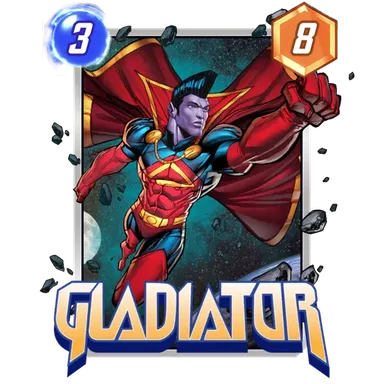
That matters in the current environment because big bodies are everywhere and Gladiator can feel risky into ramp-heavy fields. Drax gives you a similar “large three-cost card” feeling without pulling something dangerous from the opponent’s deck.
A reliable 3/7 is not glamorous, but it is real. In MARVEL SNAP, efficient stats that also threaten movement text deserve respect.
Do Not Treat Him Like Captain Marvel
If you expect Drax to fly around on turn six and solve the game by himself, he will disappoint you. That is not the role he played in testing.
His movement mattered more on turns four and five, where board control and priority were still being negotiated. On the final turn, the plus-three power often mattered more than the relocation. He is closer to a tempo and pressure card than a miracle cleanup card.
That distinction is important. Drax is not there to bail out a messy board. He is there to help make sure the board never gets completely away from you.
Star-Lord And Skaar Give Him A Real Shell
One of the more promising homes is a Star-Lord package that uses Skaar as a payoff. Drax can become another 10-power body in the right games, which helps discount Skaar while adding a flexible threat to the curve.
That is a meaningful role because Star-Lord decks can sometimes become too dependent on the main duplication line. Drax gives the list another way to develop pressure when the perfect sequence does not appear.
He also fits the broader idea of building Star-Lord decks with backup plans instead of pure combo greed. If the main line hits, great. If it does not, Drax can still help put enough power on the board to keep the game alive.
Ramp And Doom Shells Also Make Sense
Drax also looked interesting in controlled ramp and Doom 2099-style shells. In those decks, he can defend lanes, contest larger cards, and support the kind of single-lane stacking that ramp often wants to do.
The appeal is not just stats. It is that Drax can make the opponent’s big-card turns less comfortable. He pressures the board without forcing you into an all-in combo line, and he can help maintain priority for later plays.
That gives him a cleaner role than he first appears to have. He is not just a novelty movement card. He is a flexible three-drop for decks that already want board control.
The Wonk Is Real
Drax is still wonky. Sometimes the movement does not matter. Sometimes the opponent’s play pattern does not give him a useful target. Sometimes you would rather have a card with a more predictable effect.
That is why the verdict is not an automatic “great.” He needs decks that understand his job. If you jam him into random lists expecting him to win games out of nowhere, he will feel inconsistent.
But if you use him as a priority card with upside, the card becomes much easier to appreciate.
Final Verdict
Drax Avatar of Life is good-ish in the best way: not broken, not brainless, but clearly playable when the deck wants what he offers.
Treat him as an efficient three-cost body that can protect tempo and occasionally create movement value. Do not treat him as a final-turn savior. In the right Star-Lord, Skaar, ramp, or Doom-style shell, he has a real job. That makes him worth testing, even if he is not a card every deck can blindly adopt.