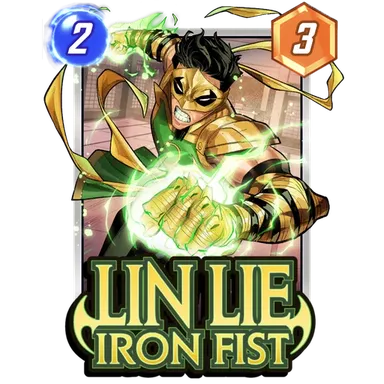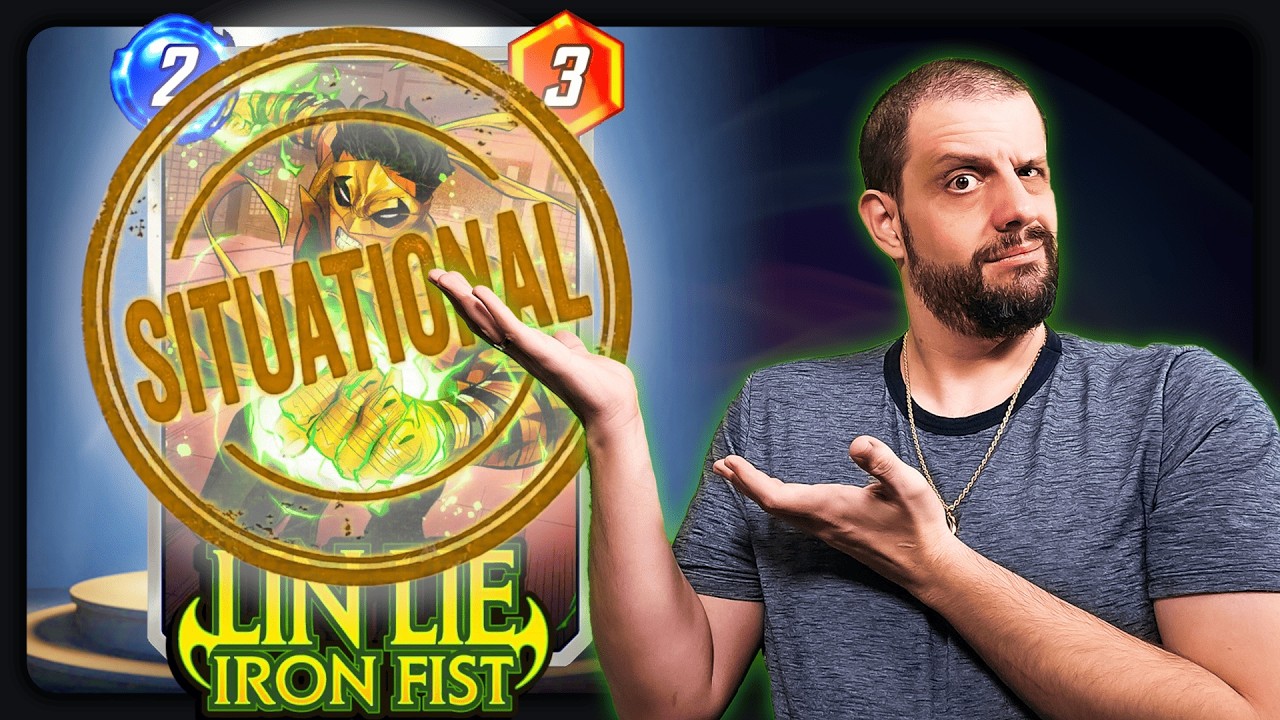
Lin Lie Iron Fist is one of the better kinds of MARVEL SNAP designs: simple text, obvious goal, and a lot of room for players to get clever. You play Lin Lie, the Sword of Fu Xi appears somewhere else, and your job is to bring the quest together.
That sounds cute until you do the math. If Lin Lie and the sword meet, the card becomes a very efficient two-cost payoff. The question is not whether the ceiling is exciting. It is whether the work required is reasonable enough for real decks.
The answer looks like yes, especially for move shells that already wanted to manipulate locations anyway.
The Short Version
- Lin Lie is strongest when the deck already has movement, bounce, or location control tools.
- Move bounce looks like the cleanest home because it can relocate either Lin Lie or the sword.
- Aurora-style move decks can use Lin Lie as another on-reveal and ongoing puzzle piece.
- Madam Web, Ghost-Spider-style effects, Arana, Sparky, and similar cards make the quest much easier.
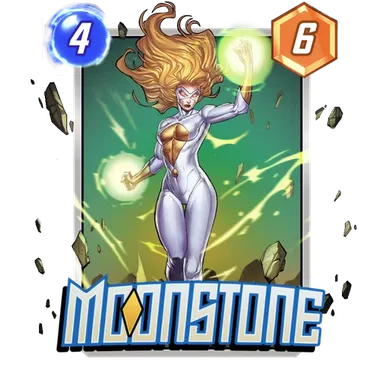
- Moonstone and Victoria Hand shells can push the sword’s ongoing payoff into much sillier territory.
- The card is bad if treated as a random two-drop, but good when the deck is built to finish the quest.
The Card Is A Built-In Mini-Game
Lin Lie asks you to solve a board problem. The body starts in one place. The sword starts in another. If they end up together, the payoff is real.
That is more interesting than a generic rate card because the opponent can see the mission, but the route is flexible. You can move Lin Lie. You can move the sword. You can pick pieces up and replay them. You can use lanes like a puzzle instead of just stacking points.
The danger is that any quest card has to pay enough. If the reward is too small, players will not bother. At the expected numbers, this one looks worth the effort.
Move Bounce Is The Obvious First Home
Move bounce gives Lin Lie the easiest path to success. The deck already wants cards that shift, pick up, and redeploy pieces. That means Lin Lie is not asking the shell to become something strange. It is asking the shell to do more of what it already does.
Madam Web can help line up the body. Bounce tools can reset awkward positioning. Move effects can turn the sword’s random placement into a solvable problem.
That matters because the best new cards usually do not require twelve new assumptions. They slide into an existing structure and raise its ceiling.
Aurora Move Gives The Card More Texture
Aurora-style move decks are also appealing because Lin Lie creates multiple hooks at once. There is an on-reveal piece, an ongoing piece, and a positioning challenge that can work with activate and move support.
Cards like Arana, Sparky, Fan Fei, and similar tools all become more interesting when the deck has another reason to care about precise movement.
This is where Lin Lie feels less like a raw stats card and more like a deckbuilding invitation. It gives the move player a reason to rethink old packages.
The Simple Version May Be Enough
Not every Lin Lie deck needs to become galaxy brain nonsense. Sometimes the card is just a two-cost payoff in a move shell with enough ways to unite the pieces.
That is important. A card can have elaborate lines while still needing a clean average case. If the average case is “reasonable two-drop that sometimes becomes excellent,” the card has a much better chance of surviving ladder.
The nightmare version would be a deck that only wins when the full trick happens. Lin Lie does not have to be that fragile.
Moonstone Opens The Greedy Builds
The more ambitious version uses the sword’s ongoing text as something to multiply. Moonstone lanes, Victoria Hand packages, Bastion-style copying, and ongoing support can create scenarios where the plus-seven payoff becomes much more than a single buff.
That is where the card gets exciting and dangerous. If you can duplicate or amplify the sword effect, Lin Lie stops being a tidy two-drop and starts becoming a serious scaling threat.
Those builds will be harder to pilot, but they are exactly the kind of weird space worth exploring.
The Weakness Is Late Draws
The biggest warning is timing. Lin Lie wants to come down early because the deck needs turns to solve the positioning. Draw it too late and the quest can become awkward or impossible.
That makes the card less appealing as a generic inclusion. You do not want to toss it into any deck and hope. You want enough support that the early draw is powerful and the midgame draw still has outs.
That is the difference between a good build-around and a cute trap.
Final Verdict
Lin Lie Iron Fist looks good. Not because it is effortless, but because the work lines up with decks that already want to do that work.
Move bounce should be the first place to test it. Aurora move and ongoing Moonstone/Victoria Hand shells are the more creative branches. If the payoff numbers hold, this is exactly the kind of card MARVEL SNAP should encourage: powerful enough to matter, weird enough to make deckbuilding fun, and clear enough that the quest feels satisfying when it lands.