Muse can put serious power on the board in a destroy game, but that ceiling did not make it an easy card to recommend. Muse has a narrow home, but I came away incredibly underwhelmed.
Muse is a three-cost Ongoing card that gains +3 Power for each location where one of my cards has been destroyed. That asks me to care about where my destroys happened, then rewards Muse for spreading those destroys around. Wilson Fisk had just felt like an incredibly easy ask, while Muse needed destroys to push toward a similar payoff. I could see the potential, but I kept finding Muse only okay.
That gap between possible power and a suitable deck home stayed with me as I tested different versions, because I found Muse grew stronger when I leaned more heavily into one sub-element of destroy.
I kept running into the same question, though: where does Muse belong when I am building a destroy deck that already knows what it wants to do?
Muse Is Not a Classic Destroy Fallback
My first instinct was to treat Muse as a backup option in classic destroy. That was the wrong frame for the card.
Classic destroy did not want Muse. In a separate hybrid experiment, I was just trying to pop off on turn five, and if it did not happen, I died. There was not enough substance to that deck. Muse did not solve that problem.
That is the biggest trap with Muse. It does not give classic destroy a comfortable safety net. Trying to make it cover an awkward draw or rescue a missed combo made the card feel worse. I would not go back into that first hybrid direction.
Muse wants commitment. It wants destroys in the locations that matter, and it wants a deck whose endgame already welcomes a late three-cost power play. When I leaned into one sub-element of destroy instead of asking Muse to patch every weakness, the card became much more convincing.
Morgan le Fay Was Closer, but Dormammu Pulled Against It
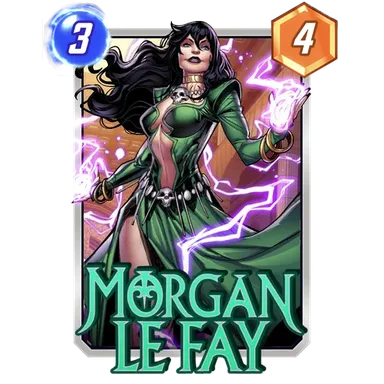
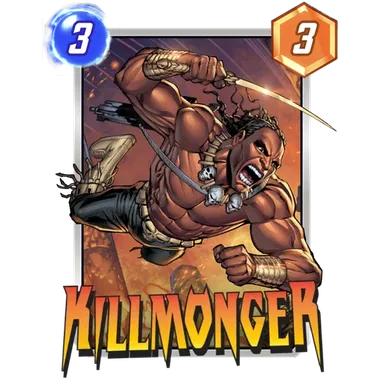
Morgan le Fay felt much closer to what Muse wants. The crucial piece was Killmonger. I cannot overstate that part: Killmonger was the reason Muse felt like it had a chance to be decent in this style of deck.
The line I wanted involved getting Squirrel Girl down, destroying the Squirrels. This is a different destroy endgame from the classic Deadpool-style approach. Combo destroy wants cheap cards that can become meaningful final-turn power, which gives Muse a clearer role.
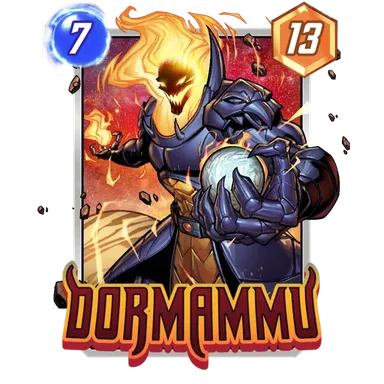
The issue came from trying to put Dormammu beside that Morgan le Fay plan. Some games wanted to begin a Dormammu game plan. Other games leaned into Morgan le Fay. Those directions competed with each other, and Muse did not get enough destroys in the right places unless I was doing Squirrel Girl.
Squirrel Girl helped, but the overall build only came close. I still want to try Morgan le Fay with Muse again without Dormammu.
Moira X Made the Hand Package More Promising
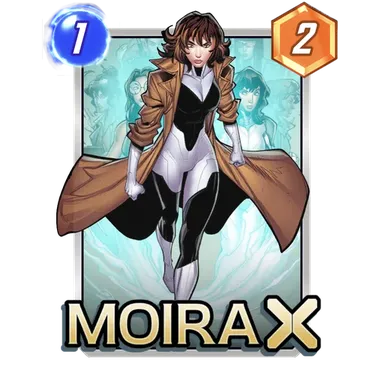
Muse felt far better with Mother Askani, Moon Girl, Death, and Victoria Hand. Killmonger plus Squirrel Girl was still a good hit, but Moira X gave the package an important layer.
If I am bringing a card back into my hand, I need that process to be cheap. Moira X, X-23, and the Squirrels gave me small cards to work through. This version felt ten times better.
Death offered a large drop, while Mother Askani put power into my hand that was hidden. If I knew I was facing a Mobius deck, I could avoid targeting Death.
All-In Dormammu Was the Clear Winner
The best Muse deck I played that day was the traditional, all-in Dormammu version rather than a Morgan le Fay hybrid. That deck felt better than the others by a mile. It also gave Muse exactly what it was asking for: multiple destroys, more cards returning to hand, and duplication.
Moira X also helped put more power onto Dormammu.
Weapon X Wolverine also felt good on turn two, and I could play catch-up with everything else later. Missing the turn-one engine did not leave me feeling behind in the same way. The deck felt much more balanced.
This is where I landed on Muse’s timing, too. I wanted to play it on turn three or save it for the final turn. In a focused destroy sub-plan, that flexibility is valuable. In a scattered list, it is not enough.
I Would Spend Tokens Elsewhere
Muse is very niche. If you are a destroy player who wants to go deep on a focused Morgan le Fay or Dormammu-style plan, I can see the appeal. Build around it, give it repeated destroys, and let it be a turn-three or final-turn card.
For classic destroy, I did not get there. The Deadpool-style versions I tried did not work well, and Muse did not feel like the backup piece I hoped it would be.
Muse does not show updated Power in hand, so I keep track of the locations where destroys happened. I want to play Muse on turn three or as the final card. It is not a backup when I did not get the combo. The role it wants is in a focused destroy plan today.
My verdict remains underwhelmed. Muse offers flexible stats in the right destroy shell, but I think there are better uses for tokens unless that narrow playstyle is already what you want to play.
Watch the source discussion in the original episode.