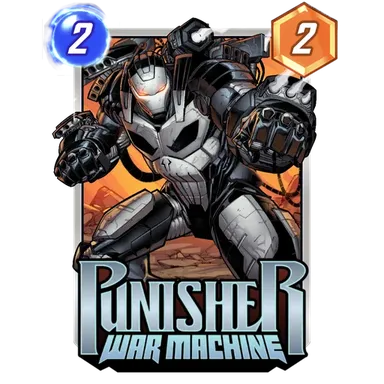
The argument against Punisher War Machine is easy to understand: in familiar ramp shells, it can feel less useful than simply waiting for the established ramp turn. There is also a case for patience, but it remains unproven. Punisher War Machine does something unusual enough that its real home may be an archetype nobody has named yet.
Punisher War Machine is still an open question
The early read on Punisher War Machine is skeptical without being dismissive. It looks like ramp for a ramp deck that does not quite exist. Even when it produces early energy, that turn did not always feel substantial enough to justify the weaker body compared with simply using a more established ramp plan.
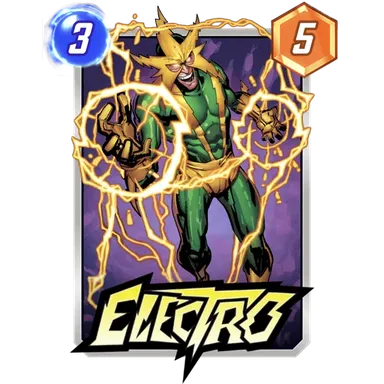
Luna Snow remains the cleaner comparison for part of that discussion, and the conclusion there is blunt: Luna Snow looks like the stronger card. Still, it is not a one-to-one comparison. Luna Snow also ramps the opponent, and they can turn off the ramp you get. Electro has a specific, long-understood job with a downside that needs to be managed. Unlike Electro, Punisher War Machine lacks that same obvious groove.
That lack of specificity is the problem and the appeal. Current uncertainty is not permanent evidence that the card is bad. This card can sit outside the usual evaluation patterns until a more specific deck gives it a purpose.
Timing matters here. The episode was recorded a day earlier than normal, and the extra day of play was described as valuable for dialing in this take. That is not a claim that another day would prove Punisher War Machine good in the current meta. It is a reason not to overstate a negative first impression. The current case against it is concrete: early ramp did not feel substantial enough, later draws could be dead, and Luna Snow seemed like an upgrade in the shells being considered. The case for patience is equally concrete: a polished Professor X deck could need exactly what Punisher War Machine provides. Neither side gets to declare the question closed from this amount of testing.
A Professor X shell may be its clearest lead
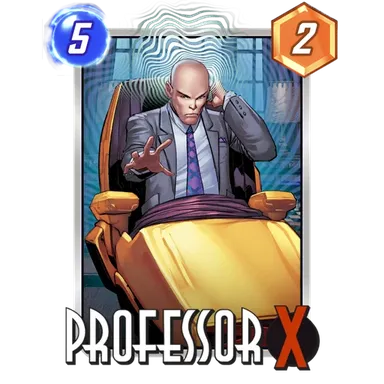
A tempo Professor X shell is one compelling lead. The deck remains unproven. The discussion stops short of calling the Professor X version good, even while describing the build as compelling. It says there may be something worth digging into further, then leaves the deck in the category of a promising lead rather than a settled answer. That card may be structurally necessary there. The goal is to have two ways to ramp into Professor X, establish pressure in a lane, then make the opponent regret deciding they could stop fighting there.
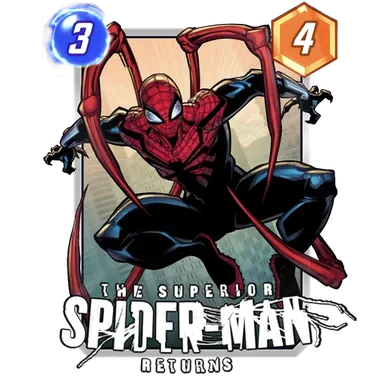
That is a much better reason to play the card than treating it as a generic upgrade for every ramp deck. If the deck needs the early Professor X line, replacing Punisher War Machine changes the deck's entire purpose. One view in the discussion goes that far: there is no replacement. Another proposes removing Punisher War Machine and Martyr together for Silver Sable and Superior Spider-Man. The disagreement matters because it keeps the verdict provisional.
Martyr is part of that uncertainty as well. Current strength may come from having Martyr available to support the early contest. Without that support, the card can feel terrible after turn three. With it, the deck may do exactly what it wants to do. Its payoff is conditional, not evidence that Punisher War Machine belongs in every ramp package.
A successful Infinite climb does not settle the question either. In that climb, the card was described as meaningful, yet the value was said to come from its pressure rather than its actual effect. A card can belong in a good deck without unlocking the broad strategy people imagined on day one.
Galactus rewards the read, not the label
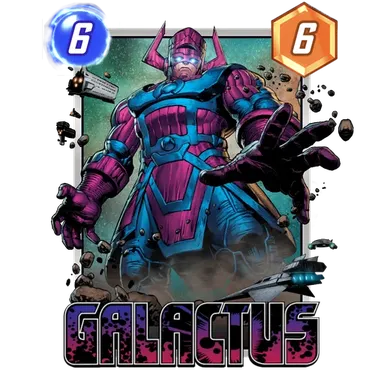
A Galactus deck offers another route for Punisher War Machine, but it is not presented as the card's best home. Instead, the deck is presented as a fun shell with several possible finishing lines. The card is described as another out among several cards that augment the deck’s final-play combinations.
The broader point is about Galactus itself. Galactus decks turn late turns into a read. The opponent may see the threat coming and still have to choose which line to respect. A correct response can make the opponent feel smart for stopping Galactus, while the Galactus player gets to create the same pressure when the read is missed.
The redesign earns some credit for that. Galactus can still fail hard when the opponent understands the setup and places power in the right lane. The card is asymmetric, but beating it can feel as satisfying as playing it.
The same restraint should apply to current metagame language. A strong deck can simply be pretty good. Calling it pretty good is not a weak conclusion.
Counter nostalgia reveals the need for clear counters
The episode does not endorse restoring a familiar counter simply because a familiar answer feels available. It asks why the request feels so natural.
A direct counter is easier for players to recognize and adopt. A gameplay-dependent answer may be real at high ranks, yet fail to spread where players need specific knowledge to see the line. Mobius against Mr. Negative and Stardust against Hela are the examples offered.
That does not make broad counters painless. Luke Cage, Mobius, and Stardust can all dictate terms to the opponent. The defense is that they dictate a return to the normal game: three locations and equal access to energy, rather than a one-sided deck changing those fundamentals. The episode’s position is that these counters are only slightly better than letting the strategies they stop run wild.
Luke Cage remains the difficult case. Its effect reaches across every negative-power interaction, from Hazmat to Mysterio, with no obvious way to split that work into separate cards. One side sees a full-board effect at a cheap cost as too easy to plug into any deck. The other asks whether the answer is really to push every broad counter up the curve, or to reduce how completely it shuts down the opposing plan.
There is no finished fix here. The stronger question is whether counters can stay clear without becoming total. Asking that is better than reflexively returning to the older counter.
Why old cards may be resurfacing
The discussion's limited observation of Darkhawk, Leader, and Professor X reappearing does not automatically mean each has become a top-tier metagame force. The simpler explanation may be that a new metagame makes old experiments less bad relative to the field. Once the dominant options lose ground, players have room to revisit cards they had stopped considering.
That applies to packages as much as full archetypes. The episode points to zombies as a possible return in a field that may be seeing a little less Shadow King, Cosmo, and Gambit Horsemen of Death. It also keeps the distinction clear: a package is not automatically a complete archetype. Pairing a four- or five-card package with another package creates a hybrid, and that precision helps players think about what they are actually trying to revive.
The same nostalgia shapes the collection conversation. Series 5 is crowded, and series drops feel like the familiar answer. Yet moving a complex card into Series 4 can create a different problem: it can become a bad purchase for a newer player.
One proposal is to improve the early collection path around meaningful build-arounds. Wong, Venom, Cerebro, and other cards that give a player a direction could arrive sooner, letting new collections develop into recognizable strategies instead of waiting for those cards to arrive. Series drops may help, but the priority should be the player who has almost no choices, not only the player trying to finish a large collection.
The correction is not always a reversion
Across Punisher War Machine, the older counter being discussed, returning deck packages, and series drops, the same habit appears. The community knows the direction it wants to move, then reaches backward for the old solution. Sometimes that solution still fits. Sometimes it only feels right because it worked before.
More time is warranted for Punisher War Machine because the current information does not settle its role. Broad counters deserve scrutiny because clarity and overreach can exist in the same card. Card access deserves a better answer than simply moving everything downward.
Never trust the day-one take when the real work is figuring out what problem you are trying to solve. [Watch the full Snapcast episode](the original episode).