Guest's 6-3-2-1 deckbuilding rule assigns a purpose to all 12 MARVEL SNAP slots: six cards for the core plan, three that help it work, two answers to opponents, and one flexible choice. Start with that split to see whether extra counters have crowded out the cards your deck needs.
The source treats this as a guide, not a hard requirement. Keep the engine-first principle and judge the roles against what your particular deck is trying to do.
The Short Version
- Most bad decks fail because they dilute their own synergy.
- Four or five tech cards can make a deck worse even if every card is individually good.
- The 6-3-2-1 structure protects the engine first.
- Tech cards are best when they also support your own plan.
- The flex slot is where personality and surprise belong.
- Audit your favorite deck by role, not by how much you like each card.
How do you apply the 6-3-2-1 audit?
| Slots | Role | Question to ask |
|---|---|---|
| 6 | Core | Which cards carry out the deck's main winning plan? |
| 3 | Enablers | Which cards make that plan easier or more reliable to execute? |
| 2 | Tech | Which opposing plays do these cards answer? |
| 1 | Flex | What useful option does this slot add without disrupting the plan? |
Write down the job of each card in your current list. Some cards contribute to more than one role; for the slot count, give each card the main job you included it to do. Then look for counters that need an opponent to cooperate while doing little for your own winning line.
Guest's suggested test is to rebalance the list and track your cubes. If you depart from the starting split, be able to explain which role the deck needs more of and why. The count helps you find a question to test; it does not prove that every deck with those numbers will work.
If you are still learning the rules, start with the MARVEL SNAP beginner guide. Once the roles are clear, use the guide to sequencing and holding cards to examine how you play the list.
Twelve Slots Means Every Card Has A Job
MARVEL SNAP is not a buffet. You cannot add Cosmo, Shang-Chi, Enchantress, Shadow King, and another counter just because all of them answer something.
When too many cards are reactive, the deck starts waiting for the opponent to do the right thing instead of executing its own plan. That is how you end up with dead hands, awkward curves, and games where your cards are technically useful but never together.
Snap is a synergy game first. The engine has to work before the answers matter.
Six Cards Should Be The Core
The “six” in 6-3-2-1 is the heart of the deck. These are the cards that define what you are trying to do.
In Silver Surfer, that means Surfer, Brood, and the main three-cost bodies that make the payoff worth it. In Destroy, it means the destroy pieces and payoff cards. In a combo deck, it means the cards that actually create the combo.
If you cannot identify six cards that form the core, you may not have a deck yet. You may just have an idea.
Three Cards Should Enable The Engine
The “three” are enablers. They smooth the plan, accelerate the payoff, or make the core cards more reliable.
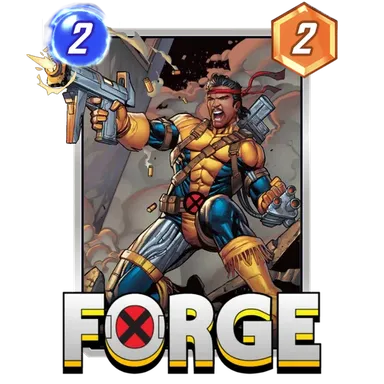
For Surfer, that might be Forge, Nova, or Sera depending on the build. For Destroy, it might be cards that provide good destroy targets. These are not always the flashiest cards, but they are the reason the main plan happens often enough to trust.
Good enablers reduce the number of games where your deck stares at its own hand and does nothing.
Two Tech Cards Is Usually Enough
The “two” is where most players need discipline. Pick the tech cards that matter most for the meta you are actually facing.
If Shuri is everywhere, Shang-Chi gets better. If Galactus or combo lanes are common, Cosmo may be correct. If small cards and zoo boards are rising, Killmonger earns the slot.
The best tech cards also work with your own deck. Red Guardian and Killmonger in a Surfer shell can answer opponents while still fitting the power plan. That is the sweet spot.
One Flex Card Gives The Deck A Twist
The final slot is where you get to be different. A surprise Quake, an Emperor Hulkling gamble, a location trick, or a card that changes one matchup can all live here.
The flex card should not be a second deck hiding inside the first deck. It should be one angle that makes your version harder to predict without breaking the engine.
That is where creativity belongs: after the structure is stable.
The Rule Works At Every Collection Level
The best part of 6-3-2-1 is that it scales. Series 2 players can use it. Series 3 players can use it. Fully built accounts can use it.
A free-to-play Destroy deck, Sera Control, Silver Surfer, or any other archetype can be audited the same way. Count the roles. If the numbers are wildly off, ask why. Sometimes the answer is a specific meta call. Often, the answer is that the deck got scared and added too many reactions.
Final Takeaway
A confident MARVEL SNAP deck starts with its own plan. The 6-3-2-1 rule keeps that plan intact: six core cards, three enablers, two tech cards, one flex.
If your favorite deck is stuck, count the slots. You may not need a new card. You may need to trim the panic and let the engine breathe.