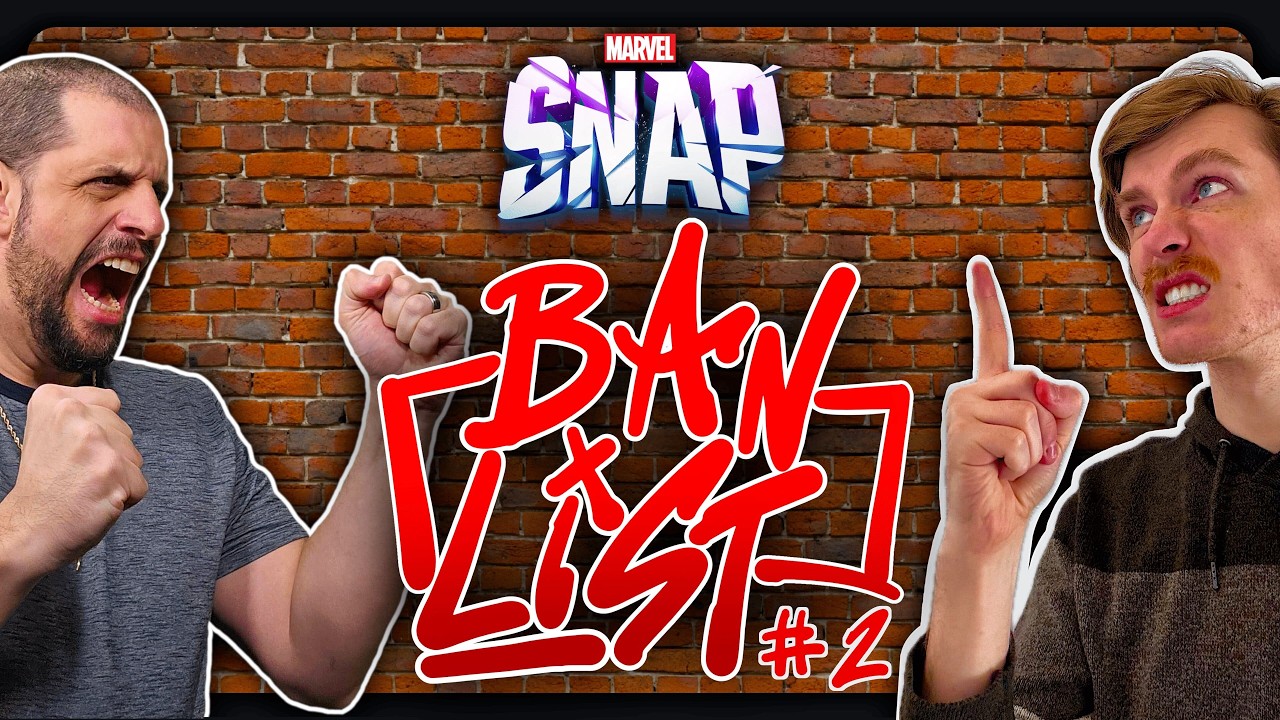
The Ban List works because it turns community frustration into a courtroom. Not every annoyance deserves to be banned, and not every complaint survives debate. But Episode 2 lands on a problem MARVEL SNAP players have felt for a long time: boosters often pretend to be progression when they mostly feel like filler.
That distinction matters. A reward does not need to be huge to feel good. It does need to feel like it moved the player somewhere.
Boosters often fail that test.
The Short Version
- Magic variants survived the ban attempt because variety and player expression still matter.
- Boosters were the real target because they often feel like empty reward-track padding.
- Targeted boosters can be defensible when tied to a newly unlocked card.
- Random boosters are much harder to justify as meaningful progression.
- The main collection track may still need low-value rewards, but limited tracks and premium-feeling reward paths should do better.
- MARVEL SNAP’s rewards feel best when they move players toward cards, cosmetics, or visible collection goals.
Magic Has Too Many Variants, But That Is Not The Real Crime
The first case was about Magic variants, and honestly, the frustration is understandable. Magic has a ridiculous number of variants. When one card has that many options while other cards wait around for attention, it starts to feel excessive.
But excess is not the same as a design failure.
Magic is a popular card with a unique effect, a long lifespan in the game, and a character identity artists clearly enjoy. MARVEL SNAP also sells itself partly on collection expression. If players want different versions of a card they actually use, that is not automatically a problem.
A pause might be reasonable. A permanent ban on new Magic art feels too extreme. The game should probably spread artistic attention better, but variety is still one of Snap’s strengths.
Boosters Feel Like Filler With A Progress Bar
The stronger case is boosters. Not all boosters, but the way boosters appear across reward tracks, caches, events, and shop-like systems as if they are meaningful prizes.
The emotional response is the giveaway. When players hit credits, tokens, gold, variants, borders, or a real cosmetic, something happens. When they hit random boosters, the reaction is usually a shrug.
That is a problem because reward tracks are built around anticipation. Every node should feel like a small step toward something. Boosters often feel like the game saying, “Here, technically this is an item.”
That is not progression. That is padding.
Targeted Boosters Are More Defensible
There is a better version of boosters. If a Snap Pack unlocks a card and gives boosters for that same card, the reward makes sense. It helps the player upgrade the thing they just received. The connection is obvious.
Seasonal or featured-card boosters can also be somewhat defensible when they support the card the system is actively promoting.
The problem gets worse when boosters are random, excessive, or attached to cards the player has no intention of using. Thousands of boosters for a card you do not care about do not feel like a reward. They feel like a punchline.
Specificity matters. A small targeted reward can feel better than a larger random one because at least it respects the player’s current goal.
Progression Should Move Players Toward Something They Value
MARVEL SNAP has several kinds of progression. There is collection progress, cosmetic progress, card acquisition, split chasing, and personal collection expression. Boosters technically connect to some of that, but they are rarely the scarce part players care about.
Credits move the collection track. Tokens move players toward specific cards. Gold opens options. Borders and variants create visible collection identity. Boosters are mostly a gate you accumulate naturally by playing.
That is why they feel weak as headline rewards. They do not help players catch up. They do not usually unlock a new deck. They do not give a visible shiny thing. They just sit in the background until another currency does the real work.
If a reward is framed as progression, it should feel like progress.
Filler Has A Purpose, But It Has Limits
There is a fair counterargument: reward tracks need low-value items. If every node is premium, nothing feels premium. Filler creates contrast.
That is true, especially on the main collection track. A long progression system probably needs valleys so the peaks matter. But that argument gets weaker in limited-time events, paid-feeling tracks, or systems that already ask players for extra attention.
Players can tolerate low-value rewards when the structure is clear and the better rewards feel reachable. They resent them when the filler is too frequent or when it replaces something that could have been more satisfying without breaking the economy.
A mystery border, a tiny token amount, a small credit bump, or occasional cosmetic reward can feel better than boosters because the player can see or spend the result more directly.
Deck Slots And Card Rotation Still Deserve Their Own Trials
The episode also touches two community complaints that did not make the wall but probably deserve future attention: the 20-deck limit and the rotating card shop.
The deck limit frustrates players because it discourages experimentation. Snap has too many archetypes, limited-time modes, and test lists for 20 slots to feel comfortable forever.
The card rotation issue is deeper. Waiting for a specific unowned card to appear can make targeting feel worse than it should. A full direct-buy system may be unlikely, but better previewing, searching, or planning tools would reduce the frustration.
Neither issue was the final ban here, but both fit the same theme: players want systems that respect their time and planning.
Final Verdict
Boosters should not disappear from MARVEL SNAP entirely. They have a purpose, especially when targeted and tied to a card the player just earned.
But boosters as broad reward-track filler deserve scrutiny. Too often they cosplay as progression while giving players nothing they can feel, spend, or show off. MARVEL SNAP’s economy does not need every reward to be massive. It just needs more rewards that feel like they actually moved the player forward.
That is why boosters earned their spot on the ban list. Not because they are useless everywhere, but because they have been asked to carry too much weight as “rewards” when they usually feel like air.