Weekend missions can put you in an awkward spot. You might like a deck’s idea while missing the cards it asks for.
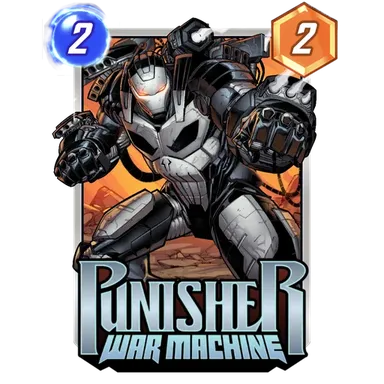
Can Punisher War Machine and Modok Asgard Share a Deck?
My first idea combines the two Modok Asgard versions I am seeing right now: the Sasquatch and Majestic Wingbeat line, alongside the Techno-Organic Virus and Punisher War Machine line. The question is whether those plans can coexist.
The reason I think there may be room is that they occupy different parts of the match. The Punisher War Machine extra-energy approach is the first half. The Modok Asgard plan takes over later. That leaves me testing whether the two game plans can help each other rather than compete. That is why I am looking for a way the two plans can coexist.
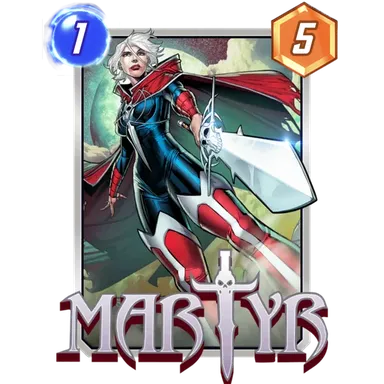
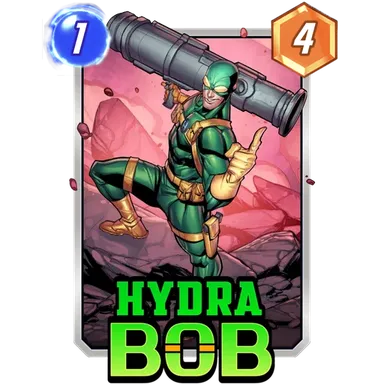
Martyr is central if I am trying to win the early Punisher War Machine game. Hydra Bob is an option, though I consider it less effective and think it lowers the chances of getting there. Luna Snow gives me another route. From my own games with Punisher War Machine this week, I found myself leaning on Martyr plus Techno-Organic Virus more than the Debris backup.
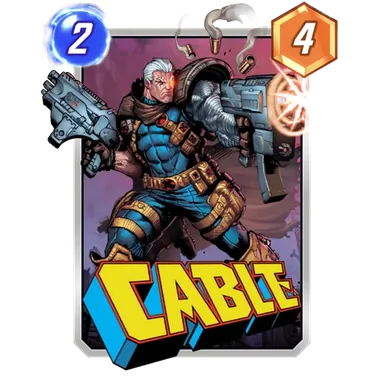
I also moved to Cable instead of Iron Patriot or Mirage. That choice keeps the priority angle I want for Techno-Organic Virus in view. Techno-Organic Virus and Punisher War Machine together on turn three is another option. I am not claiming that is automatically the correct line. That could give the hybrid enough power that it is worth exploring.
Debris is the card I am watching most closely. I would not be surprised to see more Gladiator. Sasquatch and Wilson Fisk are two influential big cards in the decks on my mind, and I have been seeing less Cosmo.
The Sasquatch side remains available when the cards line up. There are also turns where playing two cards on turn three lets Sasquatch become the only card on turn four. Without the Mother Askani route, I still have to get something out there.
With Grand Master, Mother Askani, Majestic Wingbeat, and Sasquatch together, I am probably taking that line every time in priority. I do not yet know whether the hybrid is the finished answer. My instinct says there is something between the two established versions. Pick either half. Both are good individually. The hybrid is the deck to test when you want to find out whether the early and late plans can truly help each other.
Nightmare Turns the Skaar Plan Into a Turn-Three Puzzle
Ikari’s release put Nightmare back on my radar, and that led me to another Techno-Organic Virus deck. This one is built for players who want to clear weekend missions, keep a path toward a positive climb, and still play something more random because of Nightmare.
I prefer Ares to Ikari here because I see the extra power as valuable, though you can make the Ikari swap if you have the new card and want to use it. This Skaar line uses Techno-Organic Virus on Wilson Fisk as part of getting Skaar free.
Nightmare is what changes the texture of the deck. With Skaar and Nightmare in hand, the timing of how I play Skaar becomes a key decision. The timing of Skaar matters, and the decision changes depending on whether Skaar is in hand and whether Nightmare is in hand. Techno-Organic Virus can also put some extra power back onto Nightmare, which matters because Nightmare starts weak.
Without the Nightmare line, I still view this as a strong Skaar and Techno-Organic Virus deck. Nightmare makes this version more random. I think its ceiling is higher because it runs five-cost cards. That is where the strange outcomes become part of the appeal. Wilson Fisk can turn into Black Panther, and a particularly unusual game can create even wilder Skaar results. The upside comes in exchange for accepting the risk.
Turn three is the decision point that shapes the rest of the game. Do I play Nightmare? Does Mobius need to take priority? Do I go for power with Star-Lord and start that route instead? The biggest factors are whether I have Nightmare and whether I have Techno-Organic Virus in hand. Knowing how I enter and leave turn three, the later choices become much clearer.
Its appeal is that it can do the missions, still aim upward, and avoid feeling like I am playing only the meta decks.
Professor X Lockdown Without a New-Card Requirement
Punisher War Machine has also helped revive interest in Professor X, so I wanted a lockdown version that does not require new cards. You can include the season pass card and the week’s release if you want to complete those missions, but the point of this build is that it remains relatively approachable without them.
The primary plan is direct. I can ramp on turn three and play Professor X on turn four. The other route is to keep priority, build a huge amount of power, and finish with Alioth.
Running Punisher War Machine instead of Psylocke adds Galactus First Steps to the pressure package. When they see a second marked location, they have to reprioritize and choose which battle they are prepared to lose. That choice feeds heavily into my game plan.
Negasonic Teenage Warhead is especially strong to me on turn five. Ideally, Professor X is down on turn four, then Negasonic Teenage Warhead helps keep that lane clear while I use Alioth in the third lane where my opponent needs to compete. If Professor X is not available, Vision can be the turn-four play instead, letting me think carefully about where I need priority on turns five and six.
Gladiator is another card I want in this shell. I think Gladiator is probably underplayed right now, and I like having him as a powerful option for a Professor X lane. After Professor X, I can still change that lane with Hydra Bob, Nightcrawler, Jeff the Baby Land Shark, or Vision. That flexibility is important because the location I lock is not necessarily finished once Professor X lands.
Hydra Bob and Nightcrawler also give Galactus First Steps an early option. If my draw tells me that is the route I need, I can move early. That can give the Galactus First Steps line more power by the end of the earlier turns.
I think we are likely to see more Professor X. Lockdown may be the next major shift in the meta, so this is a practical place to start, whether you are working with older cards or making room for the new releases. That is why I put it among my three decks of the week.
Watch the source discussion: the original episode.