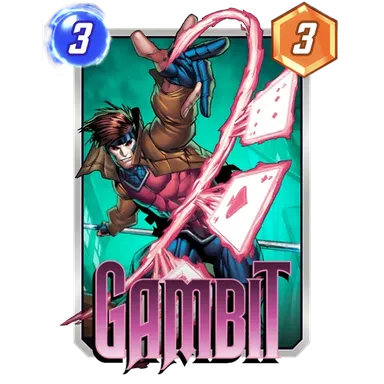
Gambit’s nerf may give Cerebro 3 the room it has been missing.
After a lot of recent changes and patches this past week, I’m choosing between a deck for weekend missions and a deck for climbing.
With Gambit expected to see less play, I think Cerebro 3 is worth reconsidering.
Why I’m Revisiting Cerebro 3
When Gambit is too prevalent, I don’t think Cerebro 3 can be fantastic. I expect players to back off Gambit now, which is why I’m revisiting the archetype with an interference build. Half of the approach interferes with the opponent. The other half scales tall.
Cost reduction is important enough right now that Mobius is in a lot of decks. That makes hand disruption worth considering. Gorgon is included to interfere when duplicated cards could receive a reduction.
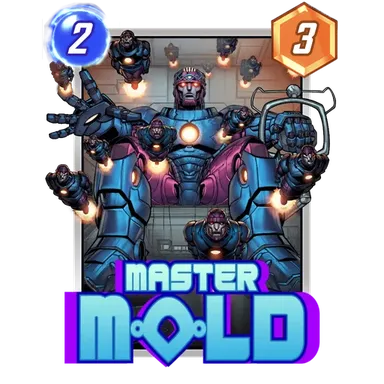
I highly recommend Master Mold. Moon Girl and hand duplication are around, and Master Mold can make those hands harder to manage. Master Mold leaves two Sentinels to deal with. In the right matchup, that pressure matters.
Valkyrie helps control the tall end in this build. Technoorganic Virus also looks likely to remain in the meta. Ongoing scaling is something I want to respect.
Muse is the card for the weekend. Cerebro 3 gets its own plus-threes. If I am going to scale, Cerebro 3 is probably the better direction.
The important part is flexibility. I’m not saying every Cerebro 3 list needs these exact slots. What you see in your MMR bracket or rank should shape those choices. What makes me optimistic is that Cerebro 3 has enough tech to interfere, and enough room to customize without giving up its potential ceiling.
Muse Needs Help, Not a Perfect Scenario
Muse is the card this weekend, too. I still don’t think we have found the right way to play Muse. My current direction is to make the card worthwhile without building only to min-max it.
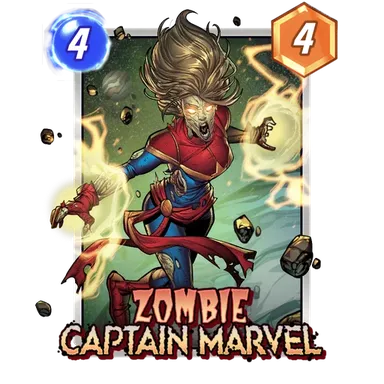
That is why I’m looking at the Zombie Captain Marvel and Fantomex shell. It is a Killmonger deck that can hit two lanes. I like that foundation because the deck has reasons to function beyond Muse.
Luna Snow is the unusual inclusion, but it fits beside Zombie Captain Marvel, Fantomex, Muse, and the taller cards in this build. Luna Snow’s ice cube can trigger Muse. The extra energy also matters. Six energy on turn five gives this deck more flexibility in how it sets up.
Muse can still be Gambit fodder in the worst case. That is acceptable here. More importantly, this is a strong deck if I use Muse and a strong deck if I do not. For weekend missions, that is probably the best direction to take: use Muse in a deck that is strong with or without Muse.
Supergiant and Ozymandias Ask a Different Question
The latest changes included changes I liked and changes that confused me. I’m not talking about the Gambit changes here. The build I wanted to explore from it is a Supergiant/Ozymandias deck with Awesome Andy as an important part of the curve.
Maria Hill was part of the version I wanted to explore in an Ozymandias/Supergiant-style build. I had also considered a Technoorganic Virus version before choosing Maria Hill.
When I have Awesome Andy, I want a one-cost card down to benefit from it. This build runs three one-drops. The build now runs four two-cost cards and two three-cost cards. With three one-drops in the deck, I put the chance of opening with a one-cost card in hand at 75 percent.
If I have the Supergiant line, I lean heavily into it to disrupt the opponent’s game plan.
I still need to see whether this is strong enough to compete with the current meta.
Watch the full discussion: the original episode.