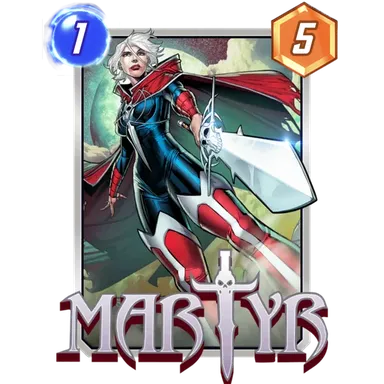
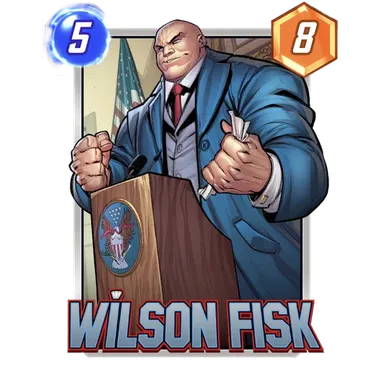
Golden Gauntlet put a balance dispute in plain view: TOV and Martyr were hit, while Wilson Fisk was left untouched.
Wilson Fisk, TOV, and Martyr Were the Package to Watch
Wilson Fisk, TOV, and Martyr formed a combo package. TOV and Martyr took hits. Wilson Fisk did not take a hit. Among decks that reached the Worlds-qualifying records of five and one or six and zero, Wilson Fisk was also the most popular card.
That split matters. Wilson Fisk was a monster here, so leaving him untouched can look strange when the tournament data puts him at the center of successful lists. The case for targeting TOV instead rests on Mobius. TOV enables more Mobius in the meta, and increasing its cost or making it scale more would ask players to run even more Mobius.
TOV is now a two-cost card that does not scale.
The Fisk, TOV, and Martyr package was the highest-performing combo package. Among decks that qualified for Worlds, Mobius and Shadow King were also named among the top-performing two-card packages.
Balance work was already underway before Golden Gauntlet. Balances, patches, and adjustments are constantly being worked on, so the event did not start the balance work.
Captain Carter Ran Into a Shadow King Field
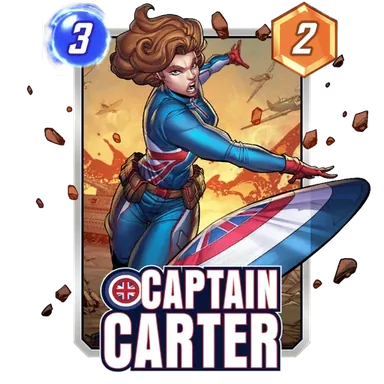
Captain Carter combo entered Golden Gauntlet with the reputation of a powerful, high-ceiling deck. More Captain Carter combo decks finished 4-2 than any other deck. That result looks different in a Golden Gauntlet field where Shadow King was the most-played card.
Shadow King alone does not have to beat Captain Carter. It can be beaten even when Grandmastered, if the player can execute the deck's plan. Captain Carter remains a very good deck.
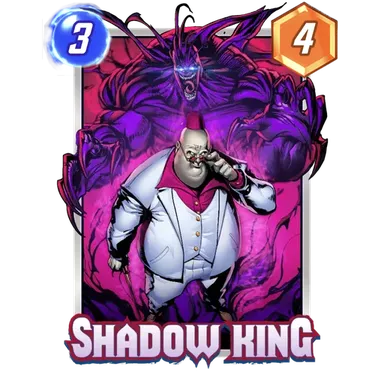
Shadow King ranked first in both Golden Gauntlet and the top 10% Infinite field. It almost felt as if players were running Shadow King because it was a card they had to play.
Phantom X Covered Both Sides of the Meta
Phantom X was the only deck with a positive win rate against both the Wilson Fisk-TOV decks and the Captain Carter decks throughout the competition.
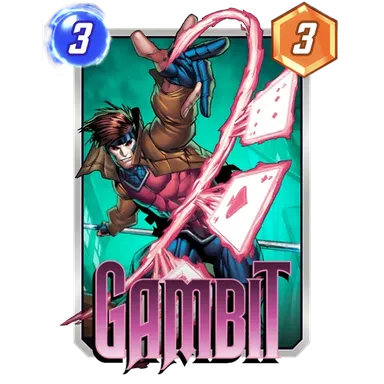
As a Shadow King deck, the archetype can hide a lot of power and give up priority against Captain Carter. Gambit was especially good into Captain Carter decks. Specific ordering disruptions and changes to how many cards receive a Captain Carter buff help give Phantom X a favorable Captain Carter matchup.
Shadow King, Killilmonger, and Mobius were named as tech cards that cover ground across Phantom X matchups. Being a good Killilmonger deck gives Phantom X equity into TOV.
It can look harder than it is because it demands a destroy, a discard, and Phantom X down by turn five at the latest. The deck's destroy and discard triggers, activation timing, and final-turn ordering leave room for mis-sequencing. One final-turn line puts Killilmonger first, then Gambit, then Phantom X, so Phantom X can hit things left after the other effects.
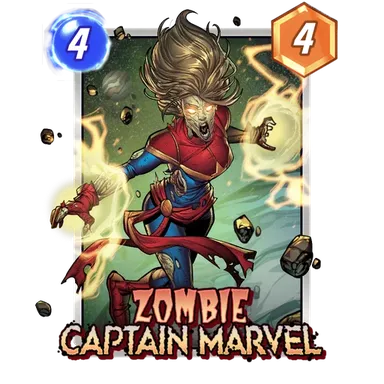
Killilmonger and Gambit are the final-turn triggers for Phantom X. Using Zombie Captain Marvel moves it, and you may want that move to happen after it sees the Phantom X effects.
The sequencing is easy to get wrong, and missing an activation can ruin the turn.
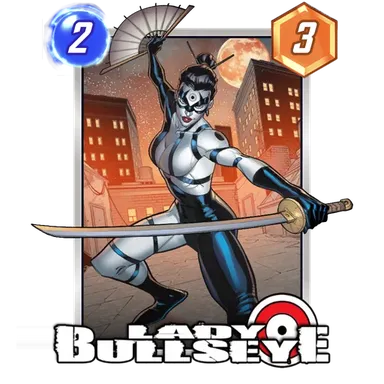
Lady Bullseye's arrival and the move toward Luke Cage may explain why players put Phantom X down and never picked it back up.
The label still depends on what meta means. If popularity defines the label, Phantom X is off-meta; another view says it is a meta deck that people simply do not play.
Its limits still matter. It establishes its own defenses before carrying out a game plan and restricts the opponent's output along the way. It has pronounced weaknesses and is not invulnerable. The right takeaway is simpler: Phantom X is a serious competitive deck with demanding sequencing, not a guaranteed answer to everything.
Magic's Numbers Were a Tournament Warning
Golden Gauntlet also revealed a Magic-specific metagame problem: Magic can remain popular even when its results do not justify the play rate.
Magic raised a more practical preparation question: if a meaningful share of the field keeps registering it, should Golden Gauntlet players reserve room for a Scarlet Witch response? The question treats the card as a possible part of the field players must prepare for, even when its own record is poor.
Magic was the fourth most-brought card in the tournament. Magic finished at a 40.6 win rate. Magic's popularity has two readings. Its gameplay gives certain decks an irreplaceable effect and supports play styles that remain incredibly popular despite poor results. The other reading is that people may buy variants for different reasons than they play Magic. Magic may be the most popular card ever to be this bad.
Adam Warlock was tenth in representation and had a 47.6 win rate. Its inclusion in the second tier of TOV decks probably helped produce that result. Two top-ten cards in Golden Gauntlet finished at a 40% win rate.
The useful tournament lesson is that a card can be a field-level consideration without being a high-performing choice. If players continue to register Magic at that rate, opponents may need to account for it during Golden Gauntlet preparation even if the card's aggregate record stays poor.
If cards with basically no sample are set aside, Magic may be the only card in the top ten for representation and bottom ten for win rate. The top-ten-versus-bottom-ten position remains a bet, not a settled conclusion.
Watch the full discussion: the original episode.