Golden Gauntlet may largely reflect public tracker data more than expected.
Competitive coverage should put unusual players and decks that are succeeding at a high level in front of people. It also should not reduce the broadcast to a single deck that works. A Magic comparison made the point: early coverage can feature an off-meta deck builder who starts 3-0, giving the broadcast a player and deck worth talking about. That kind of feature can make a player a recognizable part of the event while still showing several potential styles of deck. Putting players doing interesting and weird things on stream gives the coverage someone to talk about and helps create stars and interest.
Mother Escani Is a Range Problem
Mother Escani losing a point of power prompted an extended balance discussion.
The skeptical view is that one lost point may not be enough to stop Mother Escani from remaining a generic inclusion. If it remains a generic inclusion, the card has not escaped the problem that made it so visible.
Balance works within an acceptable range rather than at one perfect number in the center of the metagame. A card can sit near the top of that range and still be acceptable depending on how one-sided its play pattern is and how hard that pattern is to interact with.
That range is not the dead center between every deck and no deck. The balance question is whether a card has a justified place in a list, even when it remains strong. Mother Escani can stay powerful in a deck that actually wants copying and buffing without needing to be the easy inclusion for every unrelated shell. It is a different target than a perfect number in the middle.
That is why taking one dial at a time has merit. Mother Escani is a game piece players pay for. Dropping her further may be warranted later, but a staged change could show whether she remains strong only where copying and buffing are part of the deck’s plan. The desired destination is a card with a home, rather than a card that gets added everywhere because there is no reason to leave it out.
There is still a serious case for a further nerf. The argument against copiers is that they centralize the game and amplify balance mistakes elsewhere. A further numerical reduction was discussed as a possible way to confine the card to copying-and-buffing decks, but whether the current reduction reaches that outcome remained uncertain.
Useful restraint means admitting that neither instinct is an iron law. Text changes should not be the first answer when a number can still create a healthy card. At the same time, a card’s play rate matters when its pattern is difficult to interact with or makes the ladder less enjoyable. The acceptable share for a dedicated buff card is different from the acceptable share for a card that appears in nearly every kind of deck.
Mill shows why play patterns matter alongside results. Players can hate it even when it is never good, a judgment tied to the player base.
Technoorganic Virus Has to Find a Different Home
Technoorganic Virus may be the patch’s most important change. It is now a two-cost card every time, rather than a card whose cost keeps rising as it adds copies to hand. That change breaks the old relationship with Mobius and may open Quinjet-based shells.
Previously, Mobius was good with Technoorganic Virus because it effectively provided that discount. Now Mobius becomes good against a Quinjet-based Virus line. The case for the reversal is that a card pushing more Mobius into the metagame is probably bad for the game long term.
The disagreement is about scale. One view sees a substantial loss of output and expects the former deck to fall well below its prior level. Another sees a chance for a lateral move into new Quinjet shells, with Maria Hill becoming a more interesting partner. Both views agree on the key point: the old shell is no longer the same deck.
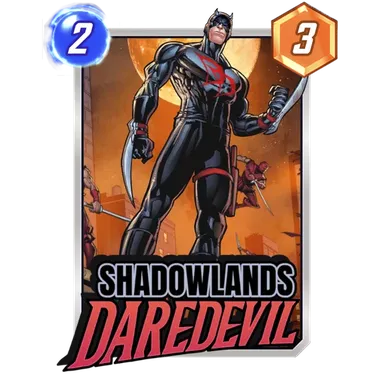
Martyr was reduced after the experiment. The case for the stronger Martyr period is that it taught players where the card fit. The counterargument is that no one can know whether the weaker Martyr would have worked in the old Virus deck. That stretch was also said to make players explore Shadowlands Daredevil.
Marvel Snap balance does not need a world with no best deck. It needs a world where the best deck changes the play experience over time. That is a much harder target than fixing a number, because fun, interaction, and replayability do not arrive from a spreadsheet alone.
Shadow King Draws the Line on the Other Buffs
Zombie Sentry is cheaper, which opens bounce experimentation.
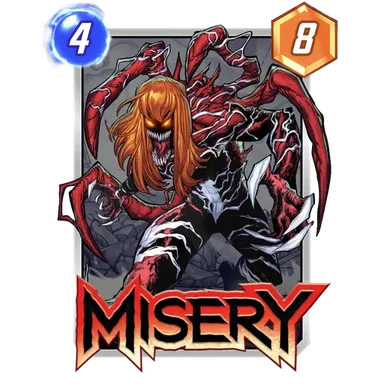
Zombie Sentry was met with curiosity around bounce and Misery, not a strong tier prediction. Misery was also mentioned as a way to make Zombie Sentry’s effect happen twice. One possible route was to bounce a horde, have two hordes, and make the final turn involve multiple hordes and multiple Zombie Sentries. That remains an experiment, not a good-deck prediction. Experimentation was expected mainly in Conquest because there was too much Shadow King to consider a serious amount of Zombie Sentry.
The obstacle is obvious at high ranks. Shadow King showed 34% popularity in the top 10% of Infinite over the last seven days. In the cited 60–80 range, Shadow King had a 14% appearance rate; the discussion suggested the wider rate might be lower. Cube data outside Infinite is unusable.
Shadow King demands a serious plan from an archetype that expects to face it. A metagame-defining card is a card every serious deck needs to account for. That plan has to be more than hoping the opponent does not draw Shadow King.
Several smaller changes inspired more curiosity than confidence. Maggus prompted interest in revisiting older ideas. Lockheed drew a colder response because the appealing Technoorganic Virus line was no longer available. Crystal prompted a design objection: more consistent combo pieces can lower variance and make games feel too similar. That concern was a reaction to the kind of games Crystal can create. It was not presented as a promising tier prediction.
Phantom X’s Tech Package
Wilson Fisk was the most popular card among decks that went 5-1 or better, and it was not close. Technoorganic Virus may be the more appropriate hit than Fisk because it had been an enabler of more Mobius in the metagame. The case against that choice is that Fisk was the standout card among the qualifiers.
A well-thought-out plan can still beat Shadow King, even when an opponent Grandmasters it. Understanding the matchup and what matters in it can make that possible.
The Phantom X deck can hide power, throw priority against Captain Carter combo decks, and carry a broad tech package.
The deck attacks the field from several angles. It has enough disruption for Captain Carter and a tech package with equity into Technoorganic Virus. The final turn can require a precise order for the destroy effect, Gambit, and Phantom X activation.
Magic is a warning against treating representation as proof of strength. Magic was the fourth most-brought card in the tournament and finished with a 40.6 win rate against decks. Players bring cards for reasons that escape a narrow win-rate calculation, including the play styles they enable in particular decks despite poor tournament performance. Magic enables play patterns people love, even when the result does not justify her tournament popularity.
The remaining question is where Technoorganic Virus finds its new home, whether a Quinjet-based version stays playable, and how much worse it becomes than the former build.
Watch the full Marvel SnapCast discussion: the original episode.