Snapcast Ep. 126 starts in the usual chaos, but the useful thread is clear: MARVEL SNAP is in a spot where balance, card design, data, and player discipline all collide. A card can be too weak because Second Dinner is scared of making it universal. A deck can dominate because one support card quietly does too much. A player can blame the meta when the real issue is reps.
The episode moves through Shang-Chi Master of the Rings, Shou-Lao, Maverick, Merlin, Deafening Cord, Spider-Ham, Lin Lie Iron Fist, move buffs, meta data, and snapping. The best takeaway is not one card grade. It is a framework for how to think about a changing game.
The Short Version
- Shang-Chi Master of the Rings has a dangerous design problem: make the free resource too consistent and it becomes everywhere.
- Shou-Lao may still be strong because the nerf trims points without fully changing the pressure it creates.
- Maverick remains one of the most important cards in the best decks, even after losing power.
- Merlin’s smaller hit shows how support cards can quietly define entire shells.
- Lin Lie Iron Fist is the kind of risky buff MARVEL SNAP should make because the card asks players to build differently.
- Meta data gets messy when ranks, hidden MMR, bots, and sample size all blur together.
- Getting better usually means playing enough reps with a good deck before changing it.
Shang-Chi Shows The Problem With Free Options
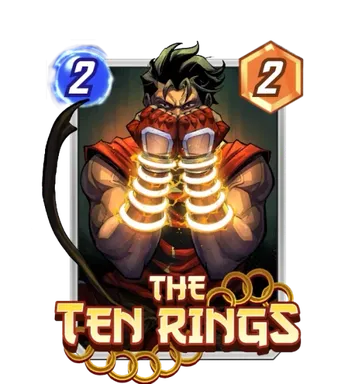
Shang-Chi Master of the Rings is awkward because the exciting version of the card is also the dangerous version. If the Ten Rings package becomes too reliable, the card stops being a cute synergy piece and starts becoming a universal option engine.
That is why the card feels undertuned. The payoff is fun when Clea or Thanos-style draw support makes the rings work, but the baseline can feel like a brick. The obvious player instinct is to ask for consistency. The design problem is that guaranteed extra options are almost always stronger than they look.
A bad option is still better than no option. If a card starts in hand or effectively gives free cardboard too easily, it raises both ceiling and floor with almost no deckbuilding cost. That is how a niche design becomes a card everyone plays.
Shou-Lao Is Still About The Ceiling
The Shou-Lao nerf trims power, but the central issue remains the same: the deck creates points in ways many mid-range decks struggle to answer. Taking stats away matters, but it may not be enough if the best play pattern still beats the field.
The more interesting design argument is what should be protected when a card gets nerfed. Shou-Lao’s identity is bestowing power. If Second Dinner has to change it, cutting surrounding stats or restricting targets may preserve the card better than turning the core fantasy into something smaller.
A balance change can be numerically correct and still feel wrong if it betrays what the card was built to do.
Maverick Was Never Just A Shou-Lao Problem
Maverick losing power is a big deal because Maverick is not merely a passenger in Shou-Lao decks. It enables Zombie Galacti. It supports Man-Spider shells. It scales with cloning and buff packages. It turns a lot of mid-range nonsense into real pressure.
That is why the nerf makes sense even if players who recently bought the card feel burned. The card is still good. It still belongs in the decks that wanted it. It just has less free stat pressure attached.
The broader lesson is that the obvious headline card is not always the real engine. Sometimes the support piece is the reason everything around it looks unfair.
The Smaller Nerfs Still Matter
Merlin, Deafening Cord, and Spider-Ham all show different versions of the same balance story.
Merlin’s change is small, but the card’s package has been warping enough that small trims add up. Deafening Cord remains frustrating because cheap silence effects can outperform larger answers too easily. Spider-Ham is the kind of disruption that should never become too popular because synergy-heavy metas make its text feel close to discarding a card from the opponent’s hand.
These are not just stat changes. They are attempts to keep annoying play patterns from becoming default play patterns.
Lin Lie Is The Buff Worth Celebrating
Lin Lie Iron Fist getting more power is exactly the kind of buff MARVEL SNAP should be willing to try. The card asks players to do something weird: unite Lin Lie with the sword, move pieces intelligently, and build around a different kind of move payoff.
That is much healthier than buffing only generic good-stuff cards. If a card asks for unusual deckbuilding, the reward has to be high enough that players actually explore it.
Maybe Lin Lie becomes too strong. That is possible. But a risky buff on an interesting card is better than letting the card disappear because the payoff was too modest.
Data Is Useful, But Ranks Are Messy
One of the sharpest points in the episode is that rank data is not as clean as players want it to be. Two players can both be rank 93 and live in completely different matchmaking worlds because hidden MMR still shapes the experience.
That makes “best deck in the 90s” style claims weaker than they sound. Bot filtering, rank bands, sample size, and player skill all affect what the numbers mean.
The solution is not to ignore data. It is to stop treating data like gospel. Look at archetypes, cube rate, and real play patterns. Then ask whether the deck is working for your own climb.
Reps Beat Constant Tweaking
The best improvement advice is also the least glamorous: pick a good deck, change nothing for a while, and play enough games to actually understand it.
Many players change cards after a tiny sample. They lose to one matchup, add a counter, then weaken the deck against everything else. They call it adapting to a pocket meta when it may just be reacting emotionally to five games.
Real reps teach what matters in matchups. They teach when the opponent’s snap means a specific card. They teach which losses were unavoidable and which were caused by staying too long.
You cannot get that foundation if every bad game turns into a deck edit.
Final Verdict
This Snapcast is really about discipline: design discipline from Second Dinner, data discipline from players, and gameplay discipline from anyone trying to climb.
Buff the weird cards enough that they are worth exploring. Nerf the support pieces that quietly make everything else unfair. Read data carefully. Play enough games before changing cards. And remember that snapping still matters because the best players are not just playing strong decks; they understand when the pot belongs to them.
MARVEL SNAP keeps changing, but the players who improve are the ones who learn what actually caused the result instead of blaming the most obvious card on the board.