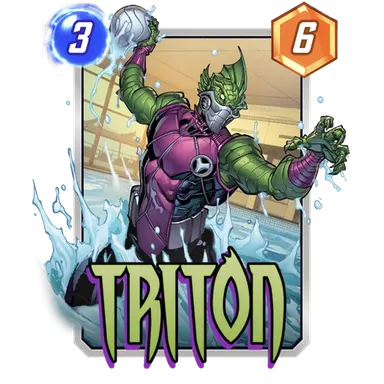
I think the idea of putting Triton in your deck is one of the scariest things right now because its On Reveal gives the last character each player played last turn +3 Power. The catch is obvious: my opponent can also get +3 Power. Building backwards from Triton meant finding a shell where my +3 becomes more valuable than theirs.
That was the whole question. Could a package built around multiplying the benefit turn Triton into a card worth playing in the Captain Carter package, where another play repeatedly looked better?
The +3 has to matter more on my side
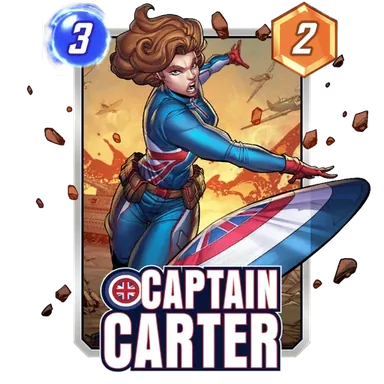
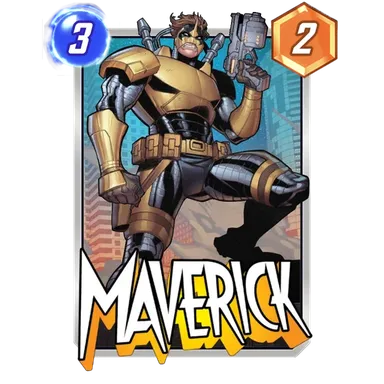
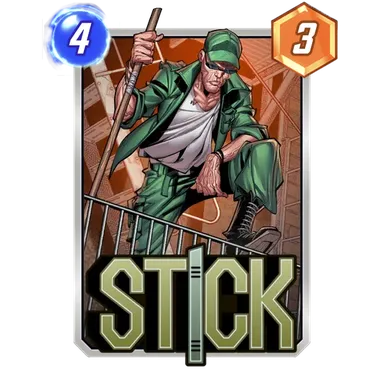
Captain Carter was the first place I looked. I saw Captain Carter as probably the most flexible back-buffer target because the surrounding package already included Maverick and Stick. Triton could also hit Agony, and Stick could set up a later Grandmaster line.
The appeal was not simply putting +3 onto a card. The goal was an imbalance: Triton's boost is a single +3, while the cards I chose could use that boost in a multiplicative way. Captain Carter was probably the most flexible back-buffer target I considered.
I also considered a lockdown direction. Extra Power entering a locked location on turn six could matter, even without relying on a move card. That idea remained a possible route rather than a solved list.
For the actual build, I leaned toward a Silver Surfer-style shell because I wanted a top-ceiling play. I did not like the cuts required to make room, though. The process already felt awkward when Triton had to replace pieces that belonged in the Captain Carter package.
Captain Carter gave Triton a home, not a reason to stay
The core problem kept returning: when Triton was available, another play kept looking better. I could imagine playing Maverick and then following with Triton, yet Stick repeatedly felt like the stronger follow-up.
The board-only interaction changed the puzzle
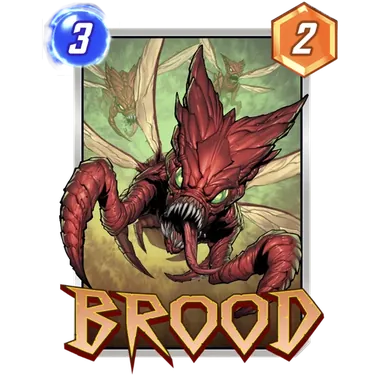
One interaction gave Triton a more interesting limitation than the initial wording suggested. I tested whether a card in hand could receive the buff. Brood was in hand during the test, but Triton went to the last card it could find from the previous turn instead.
My reading after that game was that Triton looks for the last character each player played last turn that is still on the board. That makes the card more conditional than a plain reading of “last character each player played last turn” implies.
Invisible Woman was the direction I thought might contain some hidden tech, and I described the possibility as a weird, cheeky use case. I also noted that a different version of the effect could invite Phoenix Force interactions with graveyard cards, but Triton does not work that way.
The finding made the card more interesting to test. It did not turn the interaction into a main-deck payoff.
A tournament sideboard case is easier to picture
Triton may have a narrow role as a tournament sideboard card. If I expected a Cerebro matchup, I could see keeping Triton aside and bringing it in for that matchup.
Another use case showed up when an opponent skipped turn two. If I had played Agony or Nightcrawler, playing Triton on turn three seemed good in that spot. I specifically said certain Merlin metas might make Triton a card worth thinking about.
Those are conditions, not a broad endorsement. They depend on what the opponent does, what I have already played, and the matchup I expect. The sideboard thought remains a possibility because Triton can be selected for a known problem.
Twenty games left Triton below the package
After 20 games with the Captain Carter and Triton experiment, I could not say Triton upgraded the deck. The list technically reached a 55% win rate, yet that number did not settle the question because the comparison was against a Captain Carter combo deck with stronger options available.
I couldn’t call it a success because any Captain Carter combo deck that has to take out Silver Surfer is a downgrade in my view. More importantly, every combo in the deck felt stronger than Triton itself. The card had some appealing pieces and one genuinely interesting board-state discovery, but neither overcame the repeated feeling that another play would be better.
I tried to build Triton backwards in what should have been its best home. Triton still did not have the sauce, and that is the verdict that matters more than a workable record across 20 games.
Watch the full discussion: the original episode.