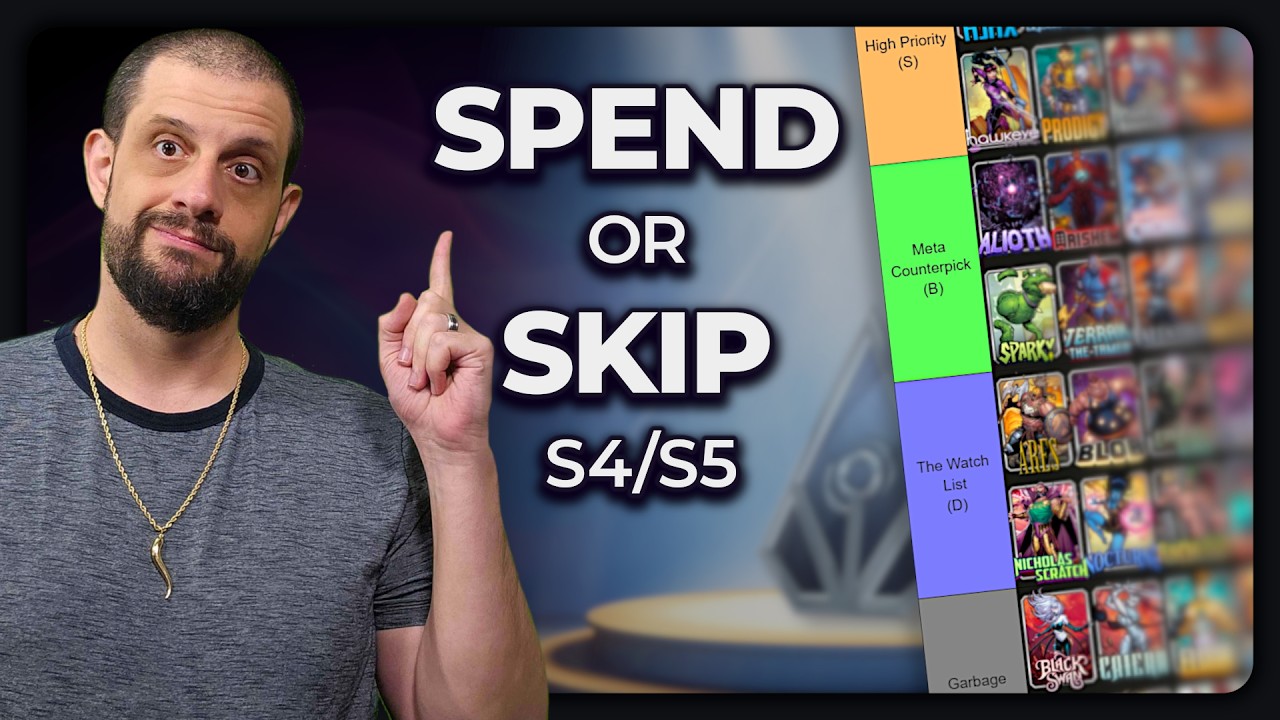
MARVEL SNAP can feel pay-to-win when you are staring at a half-built collection and a shop full of cards you do not own. The free-to-play path is real, but it is not as simple as repeating old math or spending every resource as soon as it appears.
The key correction is credits. A lot of advice talks like collection levels cost about 25 credits each. Guest’s point is that real progression is closer to 40 credits per collection level once normal upgrading is accounted for. That difference matters because it changes your expectations, your weekly planning, and how aggressively you should protect your gold.
The Short Version
- Plan around roughly 40 credits per collection level, not the cleaner 25-credit myth.
- Free-to-play progress comes from consistent credits, missions, weekly rewards, and smart gold use.
- Gold should usually become long-term collection value, not short-term impatience.
- Snap Packs and targeted Series 4/5 packs can matter more than random spending.
- Tokens should go toward cards that open decks, not cards that only look exciting today.
The Real Progression Math Is Slower Than It Looks
The biggest free-to-play mistake is expecting the collection track to move at fantasy speed. If you assume each collection level effectively costs 25 credits, your weekly estimates look amazing. If the real number is closer to 40, the whole picture changes.
That does not mean free-to-play progression is doomed. It means you need honest expectations. Weekly missions, daily play, free-track rewards, credits, and gold still add up. The difference is that you should not plan like every reward instantly becomes a huge jump.
When your expectations are realistic, you stop panic-spending. That alone makes free-to-play feel much better.
Credits Are Your Progress Engine
Credits are the most direct way your account grows. They upgrade cards, move your collection level, and eventually feed into more rewards. For a free-to-play player, that makes daily and weekly consistency more important than chasing every shop offer.
The best habit is simple: keep credits moving into meaningful upgrades without wasting other resources to rush tiny gains. Upgrade efficiently, keep the collection track progressing, and understand that the big advantage comes from doing this every week.
A single week may not feel dramatic. A full season of steady play can mean hundreds of collection levels, multiple Snap Pack opportunities, and enough tokens to make real decisions.
Gold Is Too Valuable to Spend Casually
Gold is the premium free-to-play resource because it can turn into several different kinds of value. That flexibility is exactly why it is dangerous. Mission refills, direct credits, cosmetics, variants, and token-related plays can all look tempting, but they are not equal.
Guest’s advice is to think in terms of long-term account growth. If a gold purchase slows token progression or only gives a handful of collection levels, it may not be worth the shine. The more patient use is usually the one that pushes your collection forward over time rather than giving you a short burst today.
Variants are the emotional trap. They are fun, and no one should pretend cosmetics have no value. But if your goal is free-to-play progress, variants come after collection health, not before it.
Snap Packs Should Be Targeted, Not Random
Snap Packs are a major part of the newer acquisition system, and free-to-play players should treat them as strategic opportunities. The more efficient route is not simply opening whatever feels good. It is thinking about which packs produce the most useful new cards for the resources involved.
Series 4 and Series 5 packs matter because they can convert tokens and progression into cards that would otherwise be difficult to access. That does not mean every high-series card is a good target. It means the pack system should be part of your plan rather than an afterthought.
Free-to-play accounts win by reducing waste. Snap Packs are one of the places where waste can hide behind excitement.
Tokens Need Discipline
Collector’s tokens are where impatience gets expensive. A card can be powerful, popular, and still wrong for your account. Free-to-play players should prioritize cards that unlock archetypes, fit multiple decks, or solve a specific collection problem.
Do not spend tokens just because a card is trending. Ask what deck you are actually building, whether you already own the support cards, and whether the purchase will still matter next month.
The best token purchases make your collection wider or your favorite deck significantly more complete. The worst ones leave you with a flashy card you cannot properly support.
Free-to-Play Progress Is a Season-Long Habit
The encouraging part is that the numbers do add up. If you are collecting credits, earning weekly gold, moving through the track, and avoiding obvious traps, a season can produce real progress without spending money.
That progress may include hundreds of collection levels, multiple pack chances, and enough tokens to move toward a meaningful card. It will not feel like a whale account, and it should not be judged against one. Judge it against where your account was last week.
Free-to-play MARVEL SNAP is less about one perfect trick and more about refusing to bleed value.
Final Verdict
MARVEL SNAP is playable free-to-play, but only if you respect the economy. Use realistic credit math, protect your gold, target your packs, and spend tokens like they matter.
The fastest free-to-play player is not the one who clicks every shiny offer. It is the one who turns steady rewards into long-term collection growth while avoiding the traps that quietly cost everyone else weeks.