This OTA could have a pretty big impact on the meta, even if it may not look that way at first glance.
Technoorganic Virus Needs Less Setup
Technoorganic Virus now adds one cost each time it returns to your hand instead of two. That changes the texture of the card. If I absolutely needed extra power, I did not think playing it at three cost, say, on turn five was terrible. The new version is much easier to accept as a two-cost play on its next appearance.
Early lists that were doing well ran a range of supporting combinations, from Mobius alone to a pairing with Black Swan or Quinjet with Black Swan. I would start with the synergies my deck already wants.
That matters for more than the dedicated package. Black Swan, Quinjet, and Mobius are all named as existing synergies, but I do not think you need to stack multiple pieces just to make Technoorganic Virus worth including. One Quinjet, or one Mobius because of other synergies, may be enough.
If I do not draw those support pieces, playing it at two cost does not feel that bad. The lower increase leaves Technoorganic Virus at two cost on its second appearance, so the card has a more forgiving fallback when the rest of the package is not available.
Bucky Stays Bucky While Chamber Gets a Narrower Job
Bucky Barnes gets one more point of power. I see that as a consolation buff, not a destroy breakthrough. Bucky is there because you want the Winter Soldier line. When that line fails to happen, the added power makes the fallback less painful. I don't think this changes Bucky's place in a traditional destroy shell, and I do not expect it to change what Bucky is asked to do.
Chamber is more interesting because the point is role separation. I see this as an attempt to give Chamber and Moon Dragon clearer homes. Moon Dragon is aimed at Doom 2099-style decks that play one card per turn. Chamber's lower ceiling makes its place on the curve a more deliberate choice, especially where Chamber and Moon Dragon had been overlapping.
I understand the attempt to make those slots less interchangeable. A player should have to ask what Chamber contributes beyond another card at the same point in the curve. Still, I would not read this as Chamber disappearing from the decks already using it.
The ceiling matters because the same curve can ask for different jobs. The nerf alone does not make it an automatic cut.
Kazar Is Probably a Win for New Players
Kazar's extra point of power is not the change I would use to sell an endgame Zoo deck. Zoo is the best deck when you're first starting Marvel Snap. For new players, I would consider Kazar's extra power probably a win. I still would not assume Kazar makes Zoo an endgame answer.
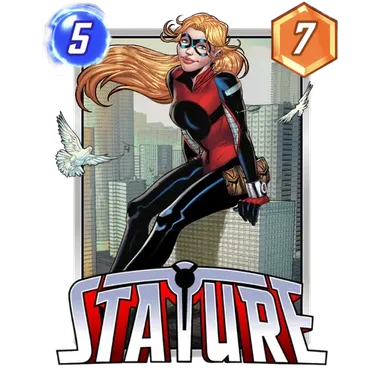
Blackbolt brings a different kind of warning. Blackbolt and Stature were once a dangerous combination alongside the Darkhawk package, before that line was nerfed. Blackbolt is still a dangerous card to make really good.
Odin gaining a point of power tells me the team is less constrained by the old fear of Shang Chi. Shang Chi now hits one card in a lane, which changes the risk attached to giving a large card more power. I would not be surprised if this is the start of more six-cost cards receiving buffs that previously felt too dangerous. That is only a question for now, but Odin makes it worth asking.
Odin alone does not prove the rest of the six-cost curve will rise. The Odin buff is still notable. Developers had repeatedly considered Shang Chi when assessing certain power thresholds, and Odin is an early series card around the same time as Shang Chi is unlocked. I am watching for the next six-cost change.
Three Cost or Lower, Four Cost or Higher
The broad mechanical change is the new dividing line between cards that cost three or less and cards that cost four or more. That affects several cards and locations named in the discussion, including US Agent, Iron Patriot, Moonstone, Malakth, Crimson Cosmos, and Big House.
US Agent may be the most meaningful individual beneficiary. Moving to a four-plus check gives the card more viability, even if I am not ready to say that alone guarantees it a place in the meta. The restriction now reaches a different class of cards than it did before.
Iron Patriot has a more concrete new upside: it can produce a Death that gets reduced. That is a meaningful option to have available when you are competing for a lane.
Crimson Cosmos goes the other direction. Free She-Hulk and Wasp can no longer be played there. That makes an already difficult location more restrictive.
I like the underlying change because it simplifies the text while updating an old dividing line. It is not just a wording pass. It changes what several cards and locations can reach.
Hela's Change Is a Buff, Not a Footnote
Hela receives a unique mechanics adjustment, and I count it as a direct buff. The discussion presents the adjustment as removing a consistency problem in Hela revival sequences, making it more than a small mechanics footnote.
Ghost Rider is the sequence that makes the Hela adjustment matter. If Ghost Rider revives the same six-cost card Hela had selected, the previous interaction could cancel Hela's planned revival even with another six-cost card available. That is why I see the change as a consistency buff rather than a footnote.
The OTA leaves me with one useful unresolved question: which is worse to face, Hela or Arisham? Watch the full discussion on YouTube: the original episode.