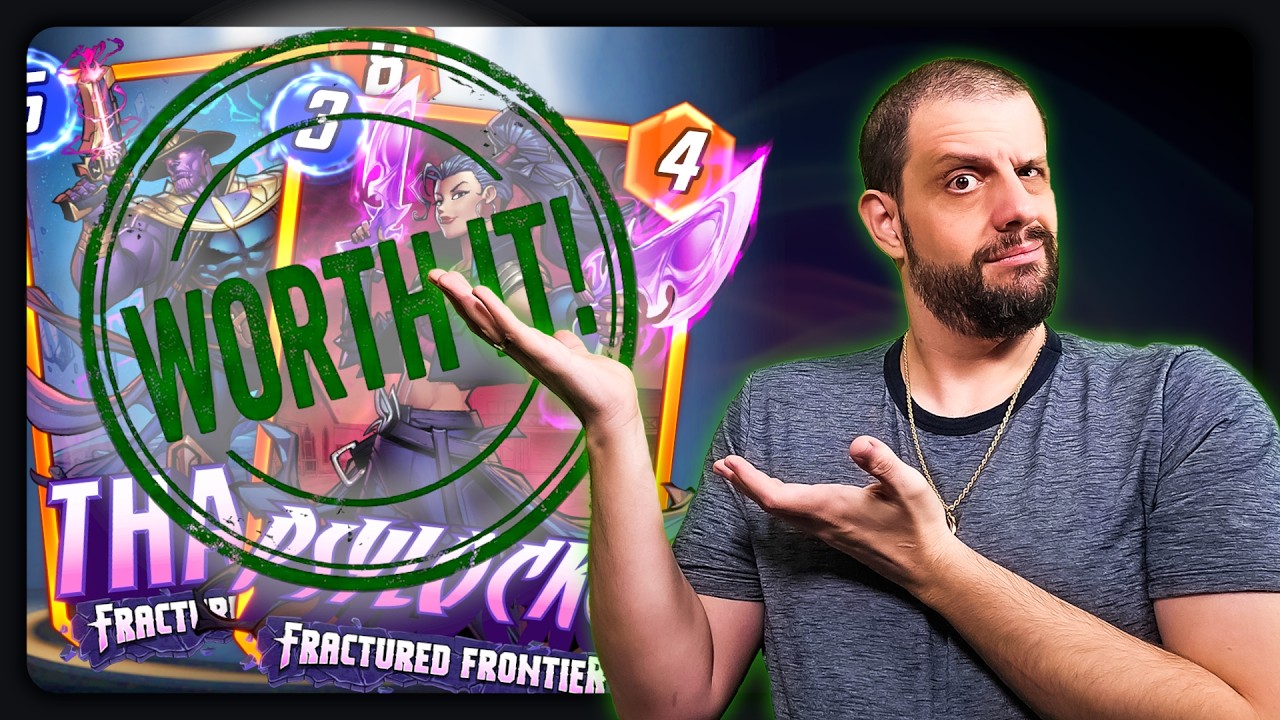
Thanos Fractured Frontier and Psylocke Fractured Frontier both clear the early bar for me. I think they are good, but they ask for different deck-building decisions. Psylocke gives decks built around five- and six-cost cards a dependable way to bring their plan forward. Thanos asks me to read the shots he has collected, then decide whether turn five or turn six is the better moment to commit.
Psylocke is the Series 5 card, while Thanos is in the season pass. I still need more time with Thanos before I settle on every build, but I already feel strongly about the core lesson: I do not want a Thanos list that only knows how to play one kind of late game.
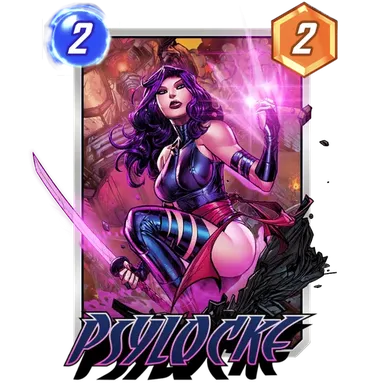
Psylocke is a direct ramp tool
Psylocke's On Reveal gives every five-cost-or-more card in my hand minus one cost. Her Quick Draw version goes further and gives my whole hand minus one cost instead. Quick Draw is the new keyword: play a card on the turn it was drawn from the deck and its bonus effect applies.
That makes Psylocke a card for decks trying to get five- and six-cost cards down early. Ramp is the clearest home. Discard also has a real reason to look at her. The Quick Draw hit is a big upside, yet the normal reduction already does the job I want from ramp.
The goal is not to ramp just so I can fit another expensive card into turn six. The important payoff is putting a five-cost card down on turn four. A turn-three Psylocke draw is almost a snap condition for me. That is how much I value the effect.
Her appeal is consistency. She does not need the best-case Quick Draw outcome to be useful. When the bonus does happen, the ceiling gets much higher. That combination is why I see Psylocke becoming a ramp staple.
Thanos makes the timing part of the game plan
Thanos is much harder to summarize because he has to be played to make full sense. He begins with one random shot installed at the start of the game. Those shots are effects, not cards. Every card I draw has Quick Draw, and playing a card on the turn I drew it adds another shot to Thanos.
When Thanos is in my hand with three, four, five, or six shots, playing him makes the individual effects fire. The shots tell me when I should want him. A shot that draws a card points me toward turn five. A shot that reduces the cost of my cards by one does too.
So there is no single correct turn for Thanos. Some games want Thanos on turn five for the unpredictability turn six can bring. Other games can favor holding Thanos for turn six when the shots point that way.
A Thanos deck needs plans for both outcomes. If my list is all-in on turn five or all-in on turn six, I am leaving part of the card behind. The flexible versions felt better to me because a more rigid plan can backfire.
Wiccan and High Evo give Thanos multiple routes
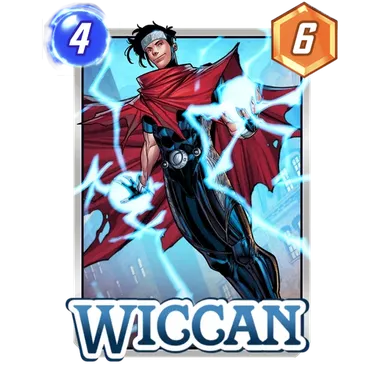
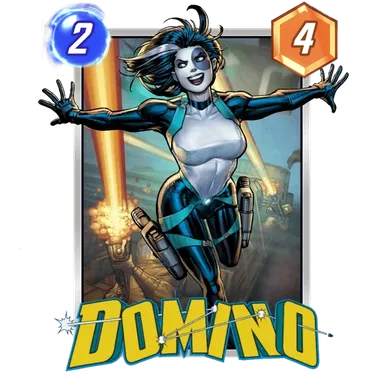
I expect to see plenty of Quicksilver and Domino with Thanos. I also played a Wiccan shell that did very well. That was my best Thanos deck, and it is the one I want to keep experimenting with.
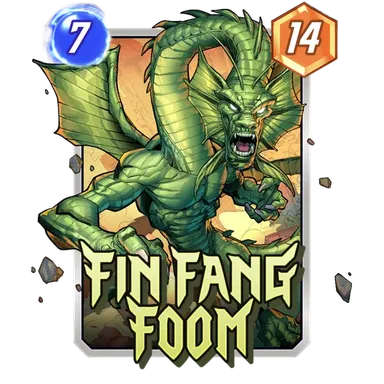
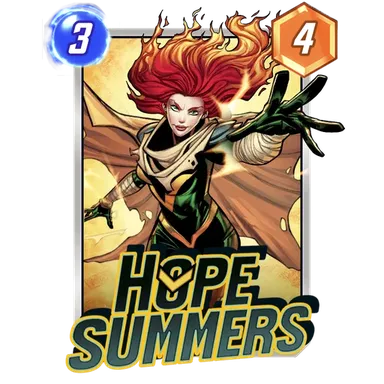
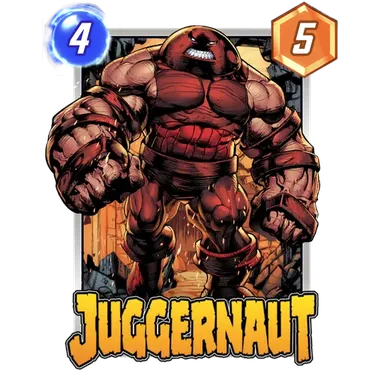
The important part was not forcing the same sequence every game. Sometimes I could follow Wiccan with Fin Fang Foom. Other times I could put several cards onto Hope Summers on turn five and play Thanos plus Juggernaut on turn six. The shots decide which route makes sense, and I am happy to pivot when they support it.
That leaves the late game surprising and unpredictable. Thanos has room for variations, and I think the versions that preserve that unpredictability can do very well.
I’d probably point newer players toward Discard or High Evo. The High Evo direction felt classic and straightforward. Its cheap cards let me put plenty on the board, which benefits Thanos. Cyclops hitting three cards felt strong too.
More importantly, Thanos gave High Evo backup plans when my early draws did not come together the way I wanted.
The Thanos-on-Thanos build leans into uncertainty
My next Thanos recommendation is a straight-up Thanos-on-Thanos direction. I would swap Maria Hill for Quicksilver in the version I played. If I draw Stones, I play those first. If I do not, Quicksilver still fits the build without hurting it.
This version leans into surprise and unpredictability. I found myself drawing a lot of cards, collecting multiple Thanos shots in a turn, and reaching late turns where there were many possible directions. Gambit can clear lanes. Sinister Six can steal a lane after the little cards come down early. I am not promising Infinite. I am saying it is probably the Thanos deck I felt was most likely to get me to Infinite. The wild turn-five and turn-six potential is exactly why. When I have the flexibility to take different lines, the opponent has a much harder time knowing what I am trying to do.
Discard and Zombies made Psylocke look even better
Discard was the Psylocke shell I hoped would be okay. It was better than okay. I had a 70% win rate with it. Extra reductions are fantastic when they land. If they do not, I still found the deck good.
Psylocke does not need every card in hand to receive a discount for the shell to work. She just needs to bring the important expensive plays forward.
Zombies was my biggest surprise of the day. I went in hopeful, and it held up. Psylocke helps bring the deck’s larger plays forward.
I think it probably needs a little tuning. I would probably remove Zombie Sentry because it felt like a flavor piece that could be constricting. I would rather test another five- or six-cost card there. I am not settled on the replacement.
I still need more time with Thanos, especially to see which flexible variations hold up best, but I’m comfortable calling both cards good.
I still think the season pass is good value. The Red Hulk Fractured Frontier emote being back in the pass is a nice extra too.
[Watch the full discussion](the original episode)