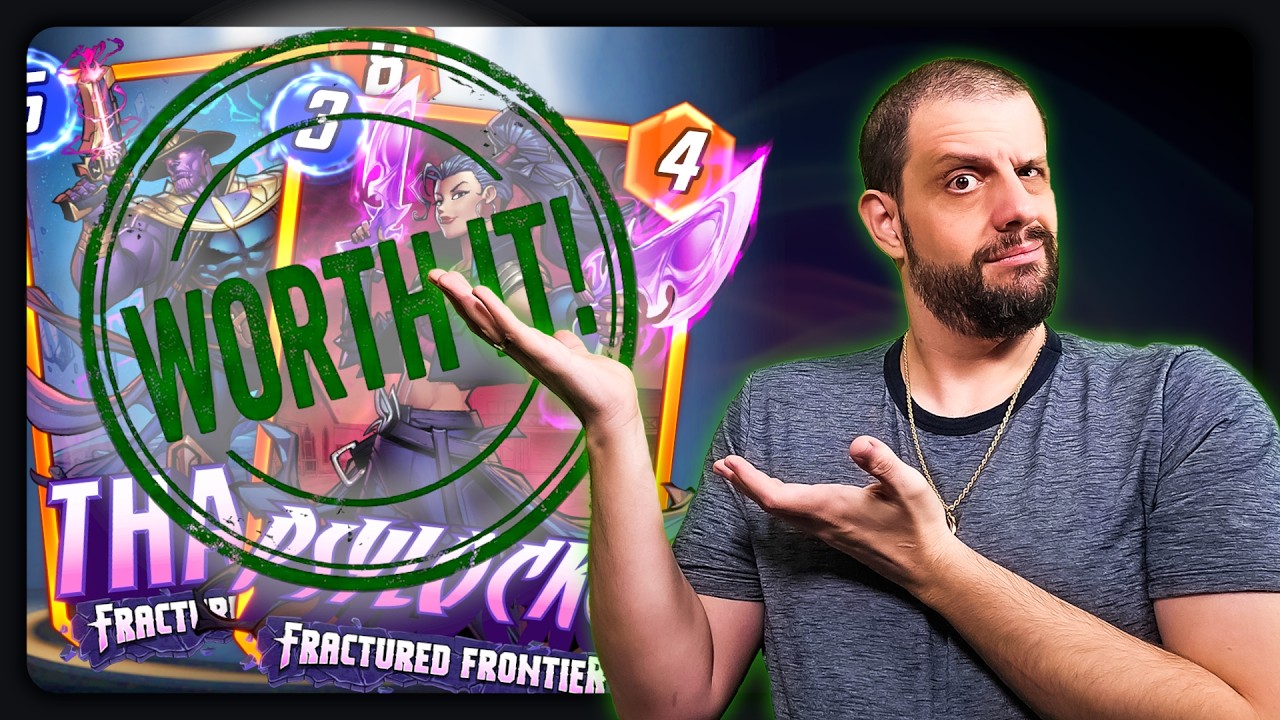
Marvel Snapcast’s joke about finding the button that makes good cards is really a question about standards. A strong release does not need every card to fill the same role. Jane Foster can be dependable without being a centerpiece. Psylocke can create a turn that another card cannot. Thanos Fractured Frontier can be powerful while still needing better information on the board.
That is the useful tension in Episode 151. The hosts are excited by several new cards, but they keep separating early experiments from finished answers. They also disagree where the source gives them room to disagree. The result is a season discussion with more to say than a tier list.
Jane Foster gives a deck something to do when the line breaks
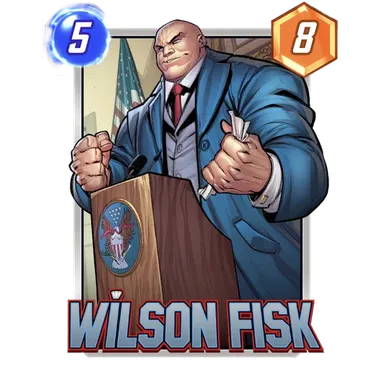
Jane Foster begins with the clearest split in the episode. Her higher rating from one host comes from a higher floor than Psylocke. The Wilson Fisk comparison is not a promise that Jane will follow the same path. It is a way to describe a card that looks plainly strong before players have found the best place for it.
Her value is not that she cleanly completes every buff or affliction package. The conversation repeatedly identifies awkward spots in both kinds of deck. Even so, the hosts see a role for a three-cost card that can help a list play a fair game when its ideal sequence fails to arrive.
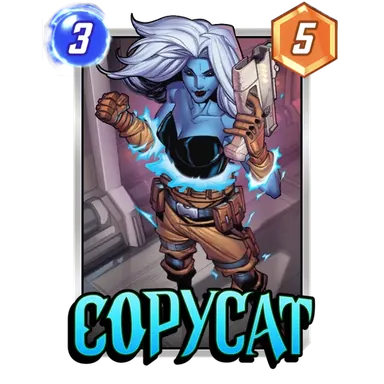
Copycat becomes the sharper reference point. Jane can be played at different points in a game as a dependable body with the chance to matter to the rest of the plan. That can sound less dramatic than a card that unlocks a new sequence, yet a midrange deck can need exactly that kind of fallback.
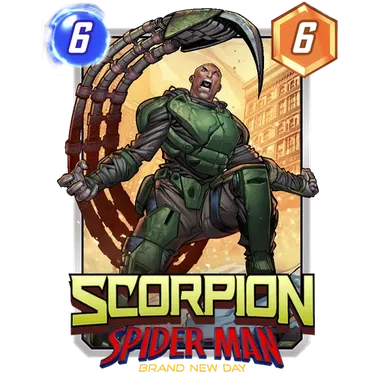
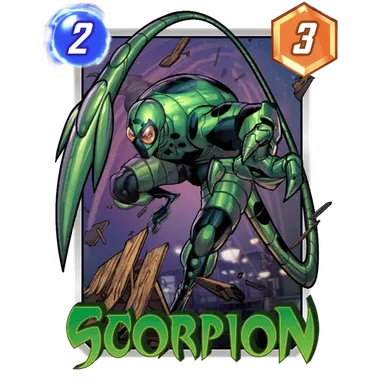
Scorpion Brand New Day is the clearest example. The show sees potential in Scorpion lists that can move between a big combo turn and ordinary lane-total games. Jane is not the priority when the whole Scorpion plan is online. In the games where it is not, she may keep the deck from collapsing while it plays for normal totals.
The more skeptical host softens after the Copycat comparison, but the conclusion stays measured. Jane does not leave the episode with a settled home or a claim that she belongs in every rough shell. Her case is that a card with occasional synergy and a useful baseline can be worth a slot when a deck needs to keep playing after its best draw disappears.
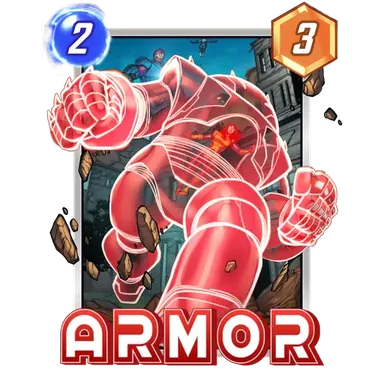
Later affliction cooking remains exactly that: cooking. A host says the version already tried did not work and wants to test a revised direction, with Armor raised as a possible consideration. That is a reason to keep testing, not a finished recommendation.
Galactus First Steps exposed the six-cost problem
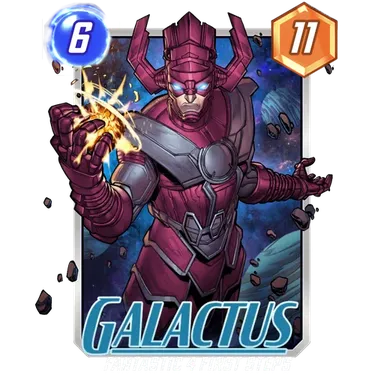
The hosts agree on their complaint about the Galactus First Steps nerf. They do not say Galactus could never have been an outlier. Their point is that the rest of the six-cost field had fallen so far behind that Galactus had been the obvious final-turn card for too long.
A six-cost play has a demanding job. It needs to win a lane after the earlier turns have done their work, or secure another lane when one is already under control. Galactus First Steps does that in a direct way: take one location and let Galactus handle the other. The visible possibility also creates a mind game because an opponent can recognize it while still needing to respect another line.
For Marvel Snapcast, none of that makes the card blameless. It does make the preferred balance answer clear. Improve the other six-cost options instead of leaving one card as the default simply because its competition cannot keep up.
Thanos Fractured Frontier has room to be tuned
Thanos Fractured Frontier receives the episode’s strongest shared praise. Both hosts like that it can produce huge turns without tying its balance to a separate package that might become the next problem. If Thanos proves too strong, they see several ways to adjust numbers on Thanos and the connected pieces directly.
Wong comes up as a real interaction, including lines that can create further discounts. The hosts do not treat that as a reason to panic. An early Wong in a Thanos mirror can give the opponent an obvious target, so a spectacular interaction does not settle the practical deck question by itself.
The more immediate concern is visibility. A player can see a loading animation, but the show argues that both players should be able to inspect which shots are loaded after that information has appeared. One proposed presentation puts a shot behind the card that loaded it. A text game log is raised as a wider answer. Both ideas come from the same concern: remembering an animation should not be the only way to reconstruct the board state.
Attention still matters. Missing the animation can lead to a blowout, and the hosts do not dismiss that complexity just because Marvel Snap has asked players to track similar information before. Existing precedent does not remove the usability problem.
Their deckbuilding disagreement is useful because it stays specific. For one host, a Thanos deck should reach four stones regularly. The other thinks three shots can be enough once a player understands whether the combination leans toward personal power or interaction with the opposing board. Four offers more security. Three may be sufficient when the card’s rhythms are clearer. Neither position is presented as the final answer.
The episode also pushes back on treating every strange interaction as a competitive breakthrough. Moon Girl, Grandmaster, Symbiote Spider-Man, and Wong all create questions worth testing. Repeating shots is not automatically worth the setup, especially when a shot arrives at the wrong time. The red stone is the clearest dedicated build-around path for one host. Outside that route, Thanos may simply be a powerful five-cost card that demands a deck meet its condition. That is already a substantial job.
Doctor Octopus earned another Captain Carter test
Doctor Octopus is the pleasant surprise. A host tested a version that returns the leftmost card in hand to the top of the deck, adds a random card, and gives both cards more power. The appeal was not limited to getting two boosted cards. With Surge and other buff-oriented lines, the cycling pattern gave the group more sequences to explore.
Captain Carter combo was the shell that felt promising. The host testing it says Doctor Octopus legitimately works there, while also being surprised that Storm remained in the experiment. No one calls the deck solved. The immediate concern is how it handles the current Thanos environment, especially when a destructive shot can threaten Captain Carter during a Hope Summers line.
That is the right standard for the early result. A sequence that feels good in testing earns refinement. It does not turn into a complete ladder list by declaration. Doctor Octopus gives the hosts a reason to continue with Captain Carter, while Thanos gives them a reason to keep the claim narrow.
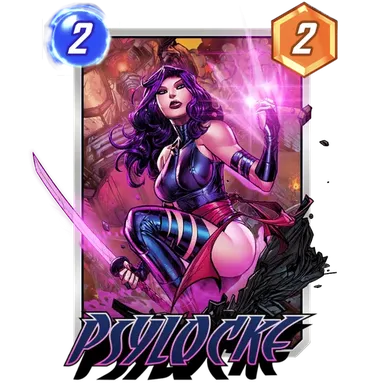
Psylocke opens a different kind of turn
Psylocke produces the episode’s sharpest disagreement, even though the hosts agree on the basic approach. Build around the on-reveal. Treat quick draw as a bonus. The divide is over whether that specialization deserves a slot or a purchase when other energy options exist.
The lower evaluation still contains praise. Psylocke can be a second Luna Snow, which the lower-rated host considers a good thing to be. Psylocke had been useful in Scorpion lists and appeared in other experimental shells. His reservation is that Luna Snow remains the first choice in plenty of the same decks. He estimates that in 80% of the Psylocke decks he wants to play, Luna Snow is the card he would choose first.
The other side values Psylocke for the lines she enables without giving an opponent the additional energy attached to Luna Snow. A discard experiment felt especially good because earlier expensive plays became possible. Zombies also comes up as a shell where Psylocke had worked well. That does not become an argument for putting her in Thanos by default. The host higher on Psylocke says Thanos does not necessarily want to be pushed ahead faster when the basic plan is already good.
Context changes the verdict. Psylocke can make a specific lower-tier deck meaningfully better because it reaches turns that were unavailable before. Jane Foster can be more replaceable in a particular deck while still being judged the stronger card overall. Marvel Snap’s economy is part of that decision. A player needs to consider how much a card will be played, not only its most impressive line in a narrow home.
The Jane side does not reduce the point to broad use cases. Jane also feels stronger in her own role, while Psylocke felt less powerful in practice than expected and remains a second choice inside a niche. The answer from the other host is equally clear: a card that opens new play lines can matter more to a deck than a dependable stat piece. Choose the card that solves the deck’s actual problem, whether that is reaching a precise early turn or surviving the games where the combo never comes together.
A good season is not an obligation to return
The final stretch moves from deckbuilding to the relationship between creators, players, and frustration. Both hosts speak positively about playing Marvel Snap while acknowledging that content creation can be difficult and that taking a week off can be healthy. Being enthusiastic about a season does not require everyone else to feel the same way.
At the close, one host wants to understand what an angry comment from someone who quit is asking for instead of assuming the worst. The other suggests that some commenters may be looking for attention or for help expressing a feeling they have not fully articulated. Their responses differ, but the boundary is shared: neither creator sees it as their job to sell an individual player on coming back.
Take a break if the game is no longer giving you what you want. If it still is, the season offers enough real questions to test: whether Jane can raise a deck’s floor, whether Psylocke unlocks the turn it needs, and whether Thanos Fractured Frontier is worth the work a list must do for him.
Watch the full Marvel Snapcast discussion: the original episode.