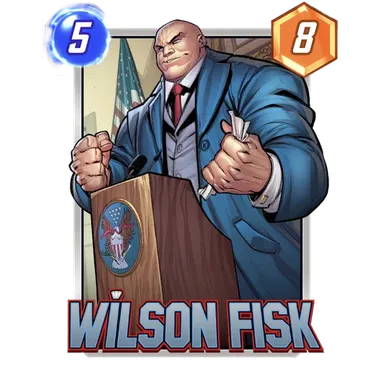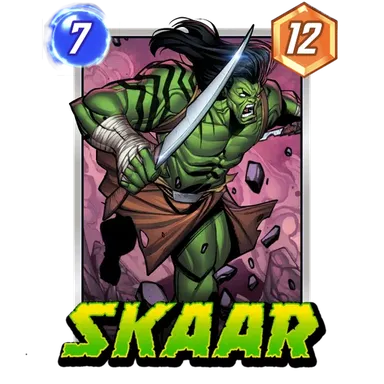
Wilson Fisk losing a point of power looks modest until you put it beside a Skaar build that needed him to cross a specific threshold. Fisk is still expected to see play. We split immediately: one side puts the pressure on Skaar lines, where getting that extra reduction can require another piece of setup. The competing view argues that Fisk himself may be the card most affected. When a deck needs to work harder for its big turn, its ceiling comes down with it.
That is the useful lens for this OTAA. One point of power matters differently on a one-cost card than it does on a six-cost card.
Wilson Fisk still has a job, but Skaar has less room
Fisk did not become unplayable because he lost a point. He still does what Fisk does, and some cuts may happen simply because the nerf makes them feel obligatory. That does not make the cut correct.
What changed is the ease of reaching the Skaar reduction line. A turn that once asked for one more point now asks for more work, and the added requirement matters most in the versions built around getting large cards down efficiently.
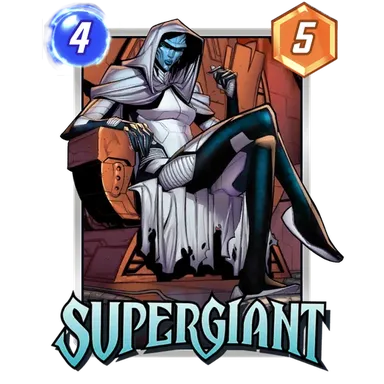
Supergiant exposed a real split in how to read the metagame. One side treated her as stronger after the format settles, when you know what opponents are doing and can pack the right answers. The other treated her as a dependable ladder option even when the field is less defined. They disagreed over whether Fisk himself or Skaar shells absorb the bigger hit.
Hydro Man personally intrigued one of us for a Skaar build and possible ramp shells. That is interest, not a solved recommendation. The broader point is that five-cost cards should be allowed to carry meaningful power.
Red Wolf needs a reason to be more than the last slot
One of us spent several hours testing Red Wolf in bounce, Thanos Fractured Frontier, and other shells without finding a list where he improved the final slot. That testing still did not produce a list worth recommending.
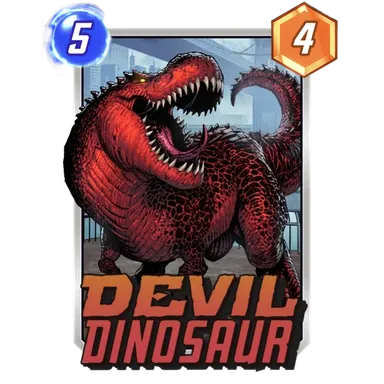
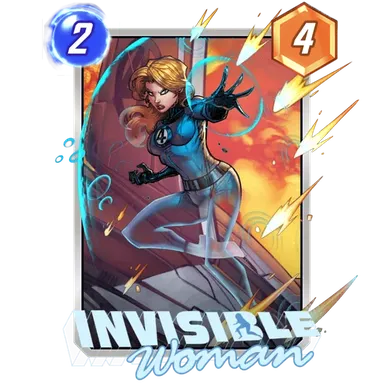
The appeal is easy to understand. The card belongs near cards that care about a full hand or benefit when cards enter it. Collector, Devil Dinosaur, Moon Girl, and Invisible Woman point toward a package with a coherent theme. Devil Dinosaur can be placed behind Invisible Woman for a later surprise.
The problem is cost. Thanos Fractured Frontier especially punishes a large card left alone in a lane, so a Devil Dinosaur played alone in a lane can be punished by Thanos Fractured Frontier, and the deck also needs enough points.
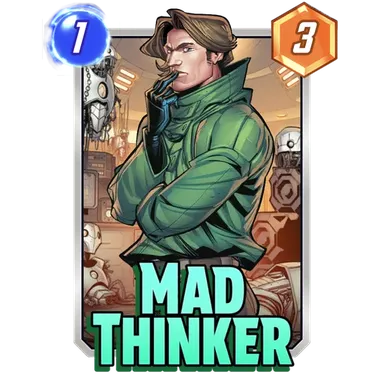
Mad Thinker gained power, but the discussion did not establish a convincing full-hand Red Wolf list. If a card asks you to maintain a full hand, the reward has to feel commensurate with that restriction. The testing did not find a convincing Red Wolf list, even if a future fit may emerge.
Doctor Octopus drew a much warmer reaction. We explored a possible Wiccan line involving Doctor Octopus, Hydro Man, and a larger card held until late. The immediate concern was valid: Wiccan decks can have energy without enough valuable actions to spend it on. A clever interaction needs to improve the whole turn, not simply look clever when it happens.
Hawkeye’s buff belongs in bounce
Hawkeye is where this OTAA gets much clearer. Falcon, Beast, and Toxin give him repeat opportunities to cash in his condition, which makes the extra point matter far more than it would in a deck playing him once. He was already a bounce consideration. Now he looks like a serious bounce card.
The buff does not automatically make Hawkeye a Supergiant staple. The case for it was an early lane built with Hawkeye and Domino, then followed with stronger plays. The rebuttal was just as direct: Hawkeye’s new home is bounce first. That disagreement matters because it prevents us from treating a good buff as a universal deckbuilding answer.
Thanos Fractured Frontier bounce may be worth revisiting because the shell wants cheap cards it can play as it draws them. Hawkeye fits that plan naturally.
He also makes a useful collection point. The collection case favors early-series cards that become relevant through later support without distorting the beginning of a player’s collection. Hawkeye’s strongest replay tools arrive later, so the card can grow into a meaningful option without turning the early game into a problem.
Groot brings the same principle into focus. A budget replacement does not need to equal a premium card. It needs to be close enough that a player can play the deck without feeling embarrassed for missing the more expensive rate card. Unique game pieces will not always have substitutes. Straightforward cards should leave more room for them.
The Guardians discussion followed that logic. One proposal was to scale each conditional bonus with the card’s cost, so the larger Guardians receive the larger reward. The response was that Rocket Raccoon and Star-Lord already function better than Drax and Gamora. Instead of reworking the entire team, Drax and Gamora may simply need bigger numbers. Matching flavor matters less than making Drax and Gamora playable.
Firehair’s power bump does not solve its workload
Firehair’s OTA change was presented as the biggest swing, and the discussion remained skeptical. The mechanic is distinctive, but the deckbuilding ask remains steep. Firehair still asks too much of the deck.
Golden Gauntlet is a Thanos Fractured Frontier decision
Announcing the OTA two days early ahead of Golden Gauntlet was defended on competitive-integrity grounds. Fisk’s nerf may not look huge, but competitive integrity should not rely on someone deciding in advance that an update is too small to affect a tournament. The safer rule is to disclose it before the event rather than make a judgment call about what will matter.
The central question for Golden Gauntlet is straightforward: are you bringing Thanos Fractured Frontier, or are you bringing a deck designed to beat Thanos Fractured Frontier decks? Season-pass cards attract play, and a Thanos Fractured Frontier-heavy field is expected. The complication is that countering Thanos Fractured Frontier himself is not always the same as countering the shell around him.
Sam Wilson was another expected card, because he can preserve your plan against the part of Thanos Fractured Frontier that feels most punishing. He is not a complete answer. Thanos Fractured Frontier still has discounts and other valuable effects even when the destroy effect loses some bite.
Our predictions included a high Cosmo play rate, while one of us worried about seeing Mobius. Hydro Man reaching the spotlight remains appealing, while Mobius feels like the more worrying prediction. Multiple Man was also called an extremely strong deck that players have moved away from, and Batroc remains a genuine dispute. The skeptical position did not think the standard Batroc deck beats most Thanos Fractured Frontier decks. The counterargument was that the standard Batroc deck can beat those Thanos Fractured Frontier decks. Golden Gauntlet is a good place for that claim to be tested.
Marvel Snap needs new faces as well as familiar ones
A personal preference in our discussion was for more unfamiliar Marvel characters to get their first release over a full year. Learning a character through Marvel Snap is part of the game’s appeal. The discussion pointed to community reception for Infinaut, Jeff, and Land Shark as part of that appeal.
Reimagined versions of recognizable characters still have a place. A themed season can call for them, and familiar names can help a live game keep growing. Those goals are not enemies. Give us alternate versions when the theme earns them, and keep making room for characters we have not met yet.
Watch the full discussion: [MARVEL SNAP Stopped Taking Its Fiber | Ep. 152 Marvel Snapcast](the original episode)