Spotlight Keys and Collector’s Tokens are too valuable to spend on vibes alone. Series 5 cards can define entire archetypes, but they can also sit in your collection doing almost nothing if you buy them without a plan.
The best Series 5 cards are not always the flashiest. They are the ones that either create a deck, upgrade multiple decks, or remain strong across changing metas.
The Short Version
- Spend on cards that are flexible, archetype-defining, or consistently meta-relevant.
- Annihilus, Red Hulk, Nico Minoru, Loki, Mockingbird, and similar cards stand out because they change real decks.
- Narrow cards can still be worth it if you love the exact archetype they support.
- A card being annoying does not automatically make it bad.
- Spotlight decisions should consider your collection, not just a tier list.
- Tokens should be reserved for cards you are actually going to play.
Flexibility Is the Safest Kind of Power
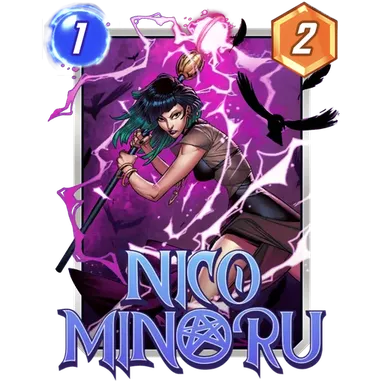
The easiest Series 5 cards to recommend are the ones that fit in multiple places. Nico Minoru is the cleanest example of that kind of value. She can support destroy, move, Zoo, Patriot-style shells, Loki lists, and plenty of random builds because her spell flexibility gives decks options they would not otherwise have.
Mockingbird is another strong case. When a card can slot into Thanos, Zoo, Gilgamesh, Surfer-adjacent shells, token decks, and other board-flood strategies, that is not just raw power. That is collection value.
Flexible cards survive meta shifts better because they are not tied to one exact list.
Archetype-Defining Cards Are Worth Special Attention
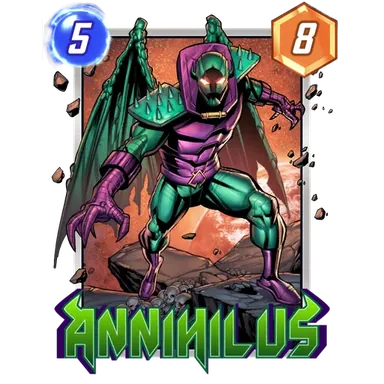
Some cards are worth considering because they make a deck exist. Annihilus is the obvious example for junk and negative-power strategies. Being able to send problem cards across the board or weaponize negative power gives that archetype a real identity.
Loki works similarly, though in a different way. He asks you to play your deck and your opponent’s deck at the same time, which makes him harder to pilot, but the ceiling is enormous. When small-card metas become popular, Loki has a way of coming back into the conversation because he punishes opponents with their own tools.
These cards are not just additions. They are engines.
Some Cards Are Strong But Narrow
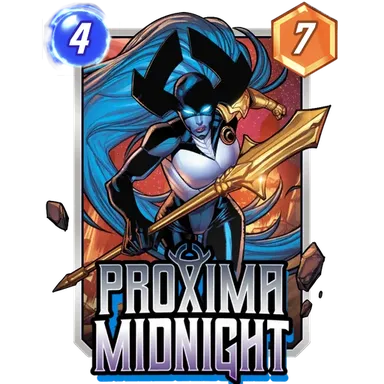
Not every good Series 5 card is a universal recommendation. Proxima Midnight is strong for discard. Corvus-style cards can be excellent when the deck is built to use them. Pixie can create outrageous snap conditions when the pieces line up, especially with cost-manipulation support, but she is much less reliable when she arrives late or the deck does not support the gamble.
That is the real question with narrow cards: do you actually play the deck they belong to? If the answer is yes, the card can be worth it. If the answer is no, the tier placement does not matter much.
A great card for someone else’s favorite deck is still a bad purchase for your collection.
Meta Reputation Can Lag Behind Reality
Some cards get ignored after nerfs, buffs, or meta changes even when they are still solid. Alioth is a good example of a card whose reputation changed as surrounding control tools shifted. It may not be the automatic security blanket it once was, especially after other lockdown changes, but that does not mean the card has no role.
Ms. Marvel is another card whose small stat adjustments changed how often people reached for her. She can still be strong in the right shell, but she is not always the same priority she once was.
Series 5 decisions should account for current usage, but they should also account for why a card rose or fell.
Annoying Cards Can Still Be Excellent
Baron Zemo and mill-style cards are a good reminder that “I hate playing against this” is not the same as “this is bad.” Mill can be frustrating, but frustration often comes from the deck doing something real: disrupting resources, limiting options, and forcing uncomfortable lines.
When evaluating a card, separate emotional reaction from competitive value. Some of the most irritating cards in MARVEL SNAP are irritating because they create legitimate pressure.
Red Hulk Shows What Raw Threat Value Looks Like
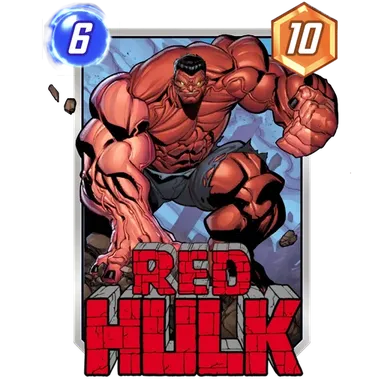
Red Hulk stands out because even after multiple adjustments, the card remains a serious threat. That kind of staying power matters. A card that survives balance changes and still demands respect is usually doing something fundamentally strong.
Raw stats are not everything, but when a card creates pressure from hand, changes how opponents spend energy, and remains relevant after nerfs, it deserves attention.
Spend Around Your Collection, Not Someone Else’s
A tier list can point you in the right direction, but it cannot know your collection. If you lack the support cards for a top-tier Series 5 card, it may not help you today. If you already love a specific archetype, a slightly narrower card might be a better use of resources than a generically stronger one.
Spotlight Keys are about timing. Collector’s Tokens are about certainty. Do not spend either unless you know where the card goes.
Final Verdict
The best Series 5 cards are the ones that either go everywhere, define a deck, or remain powerful across multiple metas. Nico Minoru, Mockingbird, Annihilus, Loki, Red Hulk, and other flexible or archetype-defining cards are the kinds of purchases that can justify expensive resources.
But the real answer is personal: buy cards you will play, not cards you only admire from a tier list.