Move has one of the strangest reputations in MARVEL SNAP. Players call it flashy, inconsistent, chaotic, and high variance. Sometimes that is fair when the deck is piloted poorly. But at its best, Move is not random at all.
It is literacy.
Every movement tells the opponent something. Every open lane, locked lane, and threatened lane changes the shape of the final turn. Good Move players are not guessing where power should go. They are reading traffic, creating false commitments, and saving their real decision until the opponent has already made theirs.
That is why Move can look average in broad data and terrifying in the hands of specialists.
The Short Version
- Move’s win rate is dragged down by the archetype’s wide skill gap.
- The best Move players start by mapping lane traffic, not counting final power.
- Early moves often exist to influence what the opponent thinks is coming.
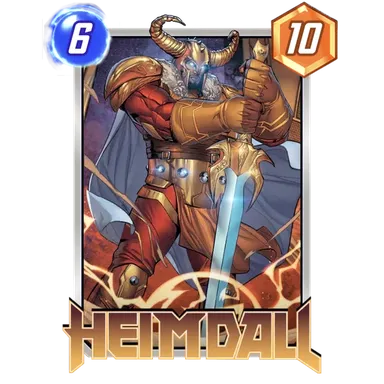
- Heimdall is as much a threat as he is a finisher.
- Turn six should create inevitability, not just surprise.
- Move rewards foresight more than raw numbers, which is why it shines at higher levels.
Start With The Priority Map
Move games begin before the big cards hit the board. The first question is not “how do I make Human Torch enormous?” The first question is where your cards can travel.
A good Move player evaluates each location through three questions: can I leave this lane, can I enter this lane, and will this lane close before I need it? That is the map.
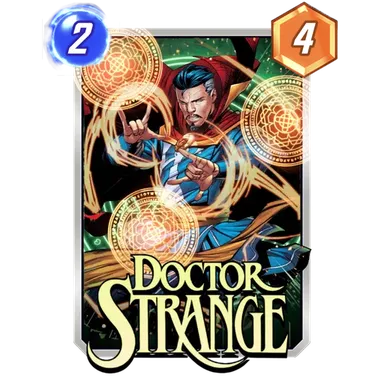
Once you start thinking this way, Move cards stop being random movers and become lane markers. Madame Web, Cloak, Arana, Doctor Strange, Heimdall, and similar tools all create routes. The goal is to understand those routes early enough that turn six becomes a choice, not a scramble.
The opponent is looking at power. You are looking at traffic.
The Commitment Trap Is The Real Weapon
Most MARVEL SNAP decks reveal their intentions by turn four. They start competing for certain lanes, and the opponent responds to the visible pressure.
Move punishes that instinct because its visible pressure can be temporary.
If Cloak appears in the middle, the opponent may start preparing for a Heimdall pattern. If a scaling card sits in one lane, they may assume that lane is the final investment. If Madame Web creates a movement threat, they may commit around the most obvious route.
That is the trap. You want the opponent to read something believable, then preserve the option to make that read wrong.
Move shifts power after the opponent thinks the board has mostly declared itself. That timing is what makes the archetype dangerous.
Heimdall Is A Question, Not Always The Answer
Bad Move play treats Heimdall as the automatic final turn. Better Move play treats Heimdall as a question the opponent has to answer.
Sometimes Heimdall is the correct finisher. Sometimes he is bait. Sometimes he is just a 10-power body played behind Cosmo or into a lane where the movement would actually make things worse.
The key is to plan for him earlier if he is the real finish. If the board is not shaped for Heimdall by turn five, forcing him on turn six can destroy your own lane math. But if the opponent believes Heimdall is coming and you simply do something else, that false threat can win cubes by itself.
The card’s value is not only in moving the board. It is in making the opponent defend against movement.
Turn Six Is About Inevitability
Move gets described as a surprise archetype, but the best version is closer to inevitability. By the final turn, you want to threaten two lanes at once and leave the opponent unsure which one is real.
That is where movable power acts like a balance sheet. You have visible power, projected movement, scaling from cards like Kraven or Human Torch, and the opponent’s remaining energy to consider. If your movable power can cover more than one likely response, you are favored before the final card is even played.
That is also why cube timing matters. Move should often function like other two-cube pressure decks. The opponent should realize they may already be locked out. The snap is not arrogance; it is recognition that your lane math became clearer than theirs.
Do Not Overinvest In One Giant Card
One of the biggest Move mistakes is building a monster and forgetting the rest of the board. A giant Human Torch is fun, but unless you are playing a specific payoff like Tribunal-style distribution, overstacking one card can make the deck easier to answer.
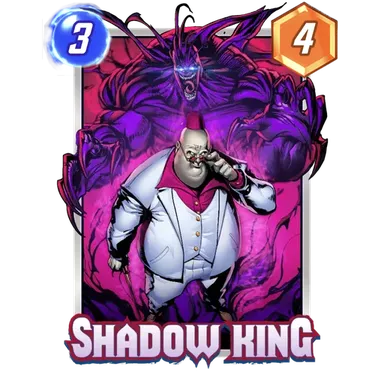
Move wants flexible power. If all your scaling is trapped in one body, Shadow King, Shang-Chi, priority, or lane restriction can punish you hard. If your power is movable and spread through multiple threats, the opponent has to solve more than one problem.
The same idea applies to priority. Sometimes you want to throw it so your scaling happens after the opponent’s interaction. Sometimes you want Cosmo protection. Sometimes you want the opponent to believe one card matters while the real lane is somewhere else.
Move is not just about making numbers bigger. It is about placing those numbers where answers are weakest.
The Destroy Matchup Shows The Skill Ceiling
Against destroy, Move often has to read the final turn carefully. Is the opponent setting up Arnim Zola? Null plus Death? A big Deadpool line? The answer changes everything.
That is where Move’s decision tree becomes interesting. Sometimes the correct play is not shifting every card. Sometimes it is leaving a powered card exactly where it is. Sometimes Heimdall’s best job is to stay still as a large body behind Cosmo because the opponent’s best line depends on an On Reveal resolving.
Those games are why Move rewards mastery. The deck is not asking you to predict the future blindly. It is asking you to read the opponent’s traffic and choose the line that beats the most likely route.
Final Takeaway
Move is not for everyone, and that is fine. It asks for more lane planning than many archetypes, and mistakes can look disastrous.
But the archetype is not chaos. It is one of MARVEL SNAP’s clearest tests of board literacy. If you can map lanes early, bait commitments, treat Heimdall as a threat rather than a script, and turn the final move into inevitability, Move becomes far more deterministic than its reputation suggests.
The deck is not random. It is a dance. And the players who learn the steps get paid in cubes.