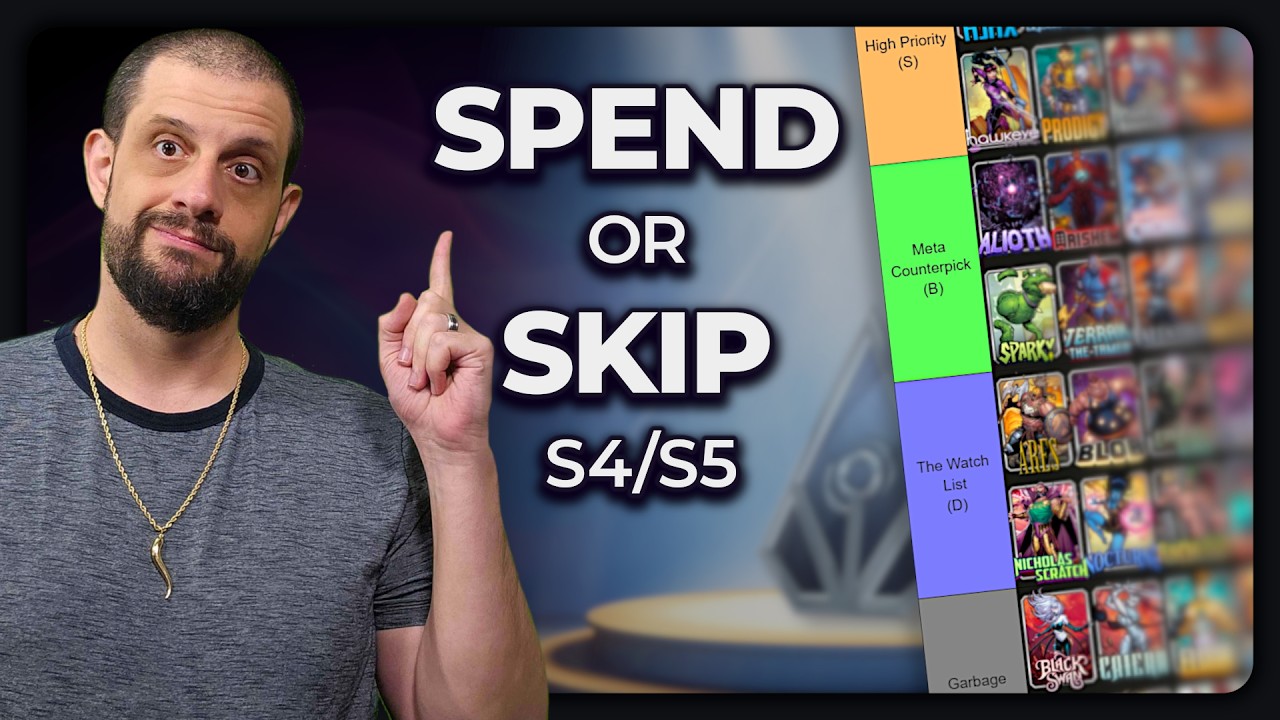
MARVEL SNAP’s economy looks chaotic when every new card feels urgent. A Series 5 release appears, the shop lights up, Snap Packs promise movement, tokens offer control, and suddenly the whole system starts feeling like a pressure test. Spend now or fall behind. Open now or miss out. Chase now or regret it later.
That is exactly how players burn resources.
The better way to understand the 2026 economy is as a set of tools with different jobs. Credits move your collection level. Gold buys flexibility and time. Tokens give targeted control. Snap Packs accelerate acquisition when the pool actually helps you. None of those resources are automatically good or bad. They become good or bad based on your plan.
The Short Version
- The economy is not about hoarding; it is about leverage.
- Credits should keep your collection moving without hitting the cap.
- Gold is best treated as flexibility, not random shop fuel.
- Tokens are the most strategic resource because they target specific cards.
- Snap Packs are strongest when the card pool matches your collection needs.
- Early, mid, and late collection players should spend very differently.
Credits Are The Engine, Not The Prize
Credits are the simplest resource, but that makes them easy to misuse. Their job is to push collection level through card upgrades. That movement creates more unlocks, more tokens over time, and more access to the broader economy.
The main rule is straightforward: do not let credits sit at the cap. Capped credits are wasted momentum. At the same time, panic-spending just because you have credits is not much better if it leads to sloppy upgrade habits and no sense of progression rhythm.
Credits are not glamorous. They are the treadmill under the entire system. Keep it moving.
Gold Is Really A Time Multiplier
Gold looks like a fun currency because it sits near cosmetics, bundles, and convenience purchases. The useful way to think about it is as a time multiplier. Good gold spending either accelerates progression in a meaningful way or buys something you genuinely value enough that you are comfortable slowing progression elsewhere.
That distinction matters. A bundle with strong progression value can be part of a plan. A random impulse purchase because the shop looked shiny is usually just the economy winning against your patience.
Gold should not be treated like spare change. For low spenders and free-to-play players especially, it is one of the few ways to bend the pace of the account.
Tokens Are Control, So Stop Spending Them Like Confetti
Collector’s Tokens are the most strategic resource because they let you target the card you actually want. That control is powerful, but it also creates temptation. If you spend tokens every time a card looks interesting, you remove the one tool that protects you from bad luck and bad pools.
A good token purchase should do at least one of three things: unlock an archetype you want to play, upgrade a deck you already trust, or solve a real problem in the current meta. Curiosity alone is not enough.
The question is not “is this card cool?” The question is “will I still be glad I spent these tokens two weeks from now?”
Snap Packs Are Best When The Pool Is On Your Side
Snap Packs changed the card acquisition conversation because they offer guaranteed unowned cards from defined pools plus bonus value. That can be excellent, especially for players missing a lot of relevant cards.
But the pool matters. If a pack contains several cards you want, it can be a strong acceleration tool. If the pool is mostly cards you do not care about, the guarantee becomes less exciting. You still get something, but not necessarily something that changes your account.
That is the core pack rule: open when the range of outcomes helps you. Skip when only one dream hit makes the pack look good.
Your Collection Stage Should Decide Your Strategy
Newer accounts usually need breadth. They benefit from systems that add multiple playable cards and expand deck options. Mid-game accounts need selectivity because they already have enough cards to build decks, but still lack key pieces. Near-complete accounts need precision because random acquisition loses value quickly.
That means one player’s correct spend can be another player’s mistake. A Snap Pack that is amazing for a mid-game account might be mediocre for someone missing only one card in the pool. A token purchase that is perfect for a focused player might be wasteful for someone who still needs broad collection growth.
There is no universal answer because there is no universal collection.
The Real Skill Is Saying No
MARVEL SNAP’s economy constantly invites reaction. New cards release. Bundles rotate. The shop refreshes. Everyone posts screenshots. It is very easy to confuse activity with progress.
Planning means deciding before the shop pressures you. Which archetypes do you care about? Which missing cards unlock the most decks? Which resources are you saving for a known target? Which offers are you allowed to ignore even if they look decent?
The players who manage the economy well are not the ones who never spend. They are the ones who know why they are spending.
Final Takeaway
The MARVEL SNAP economy rewards patience with purpose. Credits keep the account moving, gold buys flexibility, tokens provide control, and Snap Packs create acceleration when the pool is favorable.
If you treat every resource as a temptation, the economy will drain you. If you treat every resource as a tool, you can build a collection that fits how you actually play. The goal is not to own everything immediately. The goal is to spend in a way that your future self does not hate.