Star-Lord Master of the Sun lost enough power that the real OTA question is whether the card has a healthier reactive role left or was simply nuked too far. The answer matters because the old play pattern had become a defining part of the meta.
Star-Lord Master of the Sun Lost the Priority Deck
The sharpest disagreement starts with Star-Lord Master of the Sun. One case is simple: the card lost an enormous amount of power from its former play patterns, and a five-cost card that no longer gains power cannot be expected to carry the same role. Requiring extra setup while producing far fewer points changes the deck's core incentive.
That matters because points still win games. If that package no longer produces the same board, it cannot simply be judged by whether it still creates extra energy.
The disagreement is not over whether the old version lost a meaningful amount of output. Both sides accept that its previous lines no longer translate directly. The split is over what the remaining energy can buy when a deck deliberately gives up priority. One view sees room for a reactive Mr. Negative strategy. The other sees a much weaker supplemental card, unable to replace the points that made the earlier version matter.
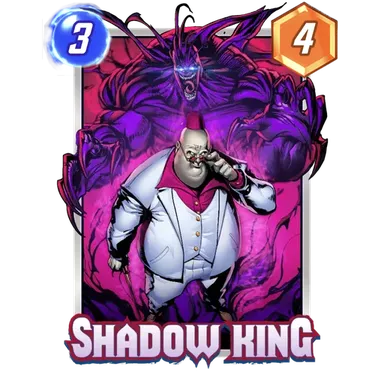
The counterargument is that Star-Lord Master of the Sun may now belong in a different shell. A Mr. Negative build that expects to lose priority can use that position deliberately, leaning on Shadow King and Null as reactive tools. In that version, Star-Lord Master of the Sun is not trying to recreate the old priority deck. It is helping build a deck that can spend its energy while using counter cards out of priority.
That is a plausible direction, especially because Mr. Negative benefits from having a backup plan when its central line does not come together. Yet it should remain a test, not an excuse to assume the nerf was light. A reactive Negative list may be good. It may even be the right way to play Mr. Negative. It does not follow that it will match the former Star-Lord Master of the Sun deck's effectiveness.
Being playable and defining the format are different standards. Mr. Negative gaining a backup plan could make games less flat around its central line and Mobius. That would be a welcome outcome. It would not prove that the old combination of energy cheating, priority, and late interaction should return.
The broader concern is the card's profile as a season-pass-style combo enabler. A card that is powerful enough to define games can create miserable patterns around energy cheating, priority, and late interaction. A card that is weak enough to become a novelty can leave players who invested in it with little reason to keep playing it. That collection-system cost is part of the balance conversation, not a separate complaint.
The discussion also challenged how the patch distributed responsibility across the former Star-Lord Master of the Sun play pattern. Eliath and Juggernaut could skate while Star-Lord Master of the Sun took a far harsher hit. Whether that proves necessary depends on what remains after players stop treating the old version as the default.
Finn Fang Foom's Lane-Winning Dream
Finn Fang Foom is the episode's other major nuke debate. One side sees a defensible direction: reduce the On Reveal's duplication risk, then let a stronger base body carry more of the card's value. A lane-winning On Reveal becomes dangerous when duplication effects can copy it.
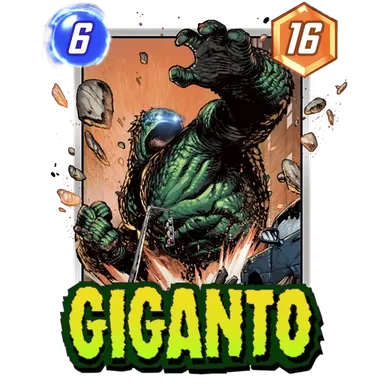
The case against the change is that the returned base power may not move the needle enough. Its new single, random enemy front-row target creates a floor-and-ceiling assessment that the earlier version did not demand. The concern is not only lower output. Finn Fang Foom may no longer perform the lane-winning function associated with its release, leaving it behind Infinaut or Giganto in the spots where it once had a clearer purpose.
That does not settle whether the patch failed. The opposing case is that a reliably lane-winning On Reveal cannot be sustainable when it is easy to duplicate. A short period where Finn Fang Foom sees little play may be acceptable while its next adjustment is considered. The unresolved issue is whether the card can keep a meaningful identity without returning to the multiplication risk that made it a problem.
Captain Carter Stacking Still Has an Open Field
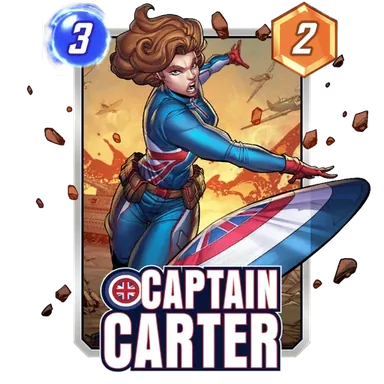
The Captain Carter discussion points toward an ongoing stacking route with a backup plan instead of relying entirely on repeated top-end scaling.
That is a healthier place for the strategy if it holds. It also has a clear weakness: stacked ongoing lanes invite Enchantress. Those answers matter because opponents have a direct way to challenge the plan.
The case for the modular route is matchup flexibility. It can commit to a large stacking line where that is safe, then choose a different plan when the opponent is likely to have interaction. A fully dedicated sequence may reach a higher ceiling, but that commitment is a weakness when its solutions are easy to find.
An all-in activate list built around Wolverine, Kid Omega, and Omega Sentinel could also return. The concern is durability. A dedicated stacking deck can generate a huge lane, yet it presents its plan face up and can become easy to target. The more modular ongoing approach may produce less at its peak while staying functional across a wider set of matchups.
For now, the ongoing route looks like a credible option rather than a vanished one. The question is whether it returns as a fair midrange option or yields its Captain Carter niche to the competing stacking lines.
A deck can be a fair B-tier choice and still deserve a place in the format. It does not need to become the apex points deck to justify itself.
Repeat Effects Stop Multiplying So Fast
The OTA's repeat-language change may shape the format more than the individual buffs. Onslaught, Wong, Invisible Woman First Steps, the Mindstone from Infinity Ultron, and Onslaught Citadel move away from effects that multiply into larger doublings. The practical model shifts from exponential doubling toward incremental repeats.
At low levels of setup, the difference may not look dramatic. It grows when several repeat effects sit on the same line, because a sequence that once doubled again now adds another instance instead. That distinction is why ordinary games and highest-ceiling games can feel like separate balance questions.
Invisible Woman First Steps takes a clear hit. Its strongest draws depended on multiple copies escalating the same payoff. With fewer total repeats, cards that once reached enormous outputs may still be good without automatically claiming a lane. Its old explosive identity is under real pressure.
Wong and Onslaught decks may feel the change less in ordinary games, then feel it much more when they stack several repeat effects together. Tribunal is worth watching for the same reason. It may retain strong core lines, but the episode also raises the possibility that it becomes too weak after the repeat change.
The question also remains for simpler early-game sequences built around Wong, Odin, and White Tiger. Players who rely on that kind of scaling need to check their largest chains rather than assume the text change is cosmetic.
Cosmic Ghost Rider may also have a different job after this. Board-based repeat combos have been natural targets for it. If fewer decks depend on those lines, its place in the meta could change even if the card itself does not.
Storm, Gambit, and the Space the OTA Leaves Behind
Maria Hill's buff deserves attention as a possible Super Giant and Wiccan tool. Martyr's extra power may also matter in decks that fill their board, even if the Super Giant interaction does not protect Martyr from moving at the end of the game.
Archangel received help to both its base and its payoff, and it could find room in the new combo environment. A line that narrows the revive pool to one large target is a compelling idea, though its actual strength remains open.
Storm is even less settled. The card can feel excellent in Captain Carter and Maverick shells, yet it asks players to leave early energy unspent. That makes it awkward beside cards and decks that want to start building their board immediately. It may be strong, merely good, or eventually strong enough to demand another adjustment. The early results do not justify a confident verdict.
Gambit is the clearer concern. If the OTA successfully lowers Star-Lord Master of the Sun and repeat-combo ceilings, Gambit Horseman may become the frustration players meet next. A proposed move to the four-cost range would make Gambit harder to repeat freely. Nothing guarantees that is the right solution, but leaving Gambit untouched may be the patch's largest omission.
The remaining question is whether the next stacking decks stay fair before Gambit becomes the complaint this OTA left behind. For now, the focus is testing Mother Escani while staying wary of Gambit's place in the next meta.
Watch the full Marvel Snapcast discussion: the original episode.