This OTA is rocky, and the game is more balanced in probably a good way. My clearest verdict is Websling: it is my favorite change, and I think it is broken.
Debris Makes Super Giant Less Automatic
I am comfortable with Debris losing power. The card has changed purpose more than once. It once gave rocks to both players, and another version was meant to leave those rocks as a downside for its owner instead of a clog element that felt comfortable to manage.
The current reduction is fair and safe in my view. I expect it to make players think twice before reaching for Super Giant. A nerf landing there matters. It targets a decision inside an especially strong package.
Aurora Is Catching a Stray for Venus
Aurora tells a different story. I do not read the point of power coming off Aurora as proof that Aurora itself was the problem. I read it as an “I don’t want to hit Venus yet” move.
That interpretation fits how I describe Aurora decks. They are easy to pilot, flexible, and open to many variations rather than demanding one rigid set of cards. You can add tech. You can change the package around it. This card and the deck invite that flexibility.
If I am looking for probably the safest deck to climb with right now, I am looking at some kind of Aurora deck. With Venus, I am even more direct: I expect Aurora decks to climb to Infinite. Taking a point from Aurora does not change that conclusion. The value around the card is doing far more work than that one point.
Jubilee Silver Surfer Still Shows Up Too Late
Jubilee Silver Surfer finally receives a buff, but the change does not solve what I dislike about the card. In a standard game, playing it on turn four gives plus three to the next two cards, on turns five and six. That can produce value without extra buffs or additional draws.
My issue is the pressure that comes with that value. Its effect pushes me toward playing the next card because that is where the power is waiting. It feels like being told that whatever I draw is now my win condition. I do not like that constraint, especially when I am already trying to map out my endgame by turns two and three in a typical game. If I am still trying to dictate that plan on turn four, I am already behind.
For that reason, I see the issue as cost rather than power. I want Jubilee Silver Surfer to be relevant, not merely stronger or more meta. A lower cost would give its effect more room to shape a plan before the final two turns turn every draw into an obligation.
Nocturn Returns to the Generic Three-Cost Slot
Nocturn got the buff it deserved because no one was playing it. Now it is back, and I think it is really good.
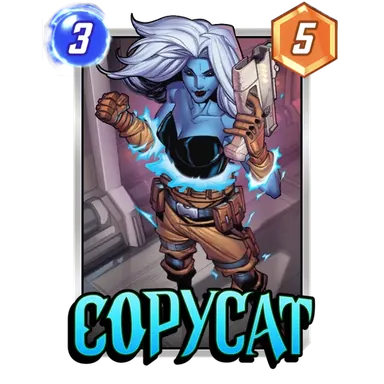
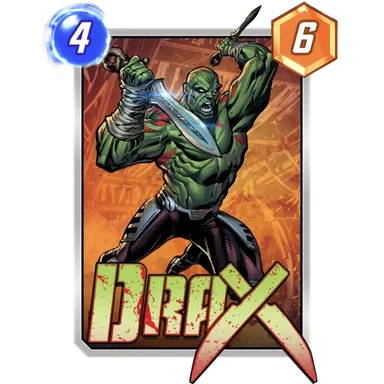
Copycat had taken over some of the role of the generically good three-cost card, while Drax could fill it at times. I now expect Nocturn to be the choice when I do not know what to play. I describe it as a three-cost Nico: a card whose flexibility makes it easy to reach for.
The location change is a large part of that appeal.
Topaz Has an Ability Problem
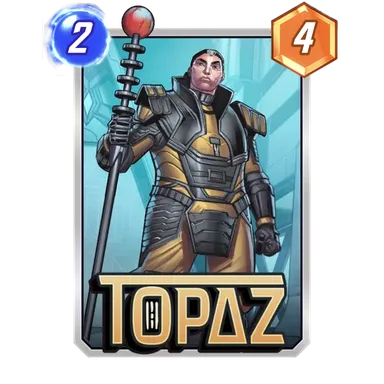
Topaz is underplayed, and I understand the attempt to help it. I still am not playing it. The issue is not cost and power. It is the ability.
Everyone still has to do the same thing, and that restriction remains after the adjustment. Topaz is my reminder that the play pattern itself has to give me a reason to include it.
Why Websling Is My Pick From This OTA
Websling is my favorite change in the set. I think it is broken, I expect it to see a lot of play, and I think players are excited because being movable is valuable. Adding power to that late positioning makes the card an easy inclusion for me.
For the full discussion, watch the original episode.