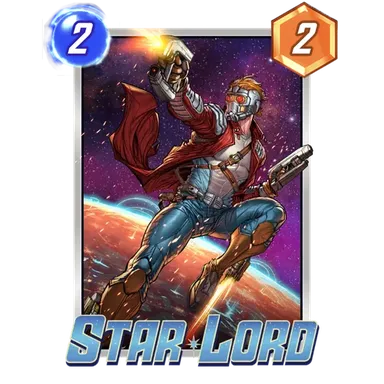
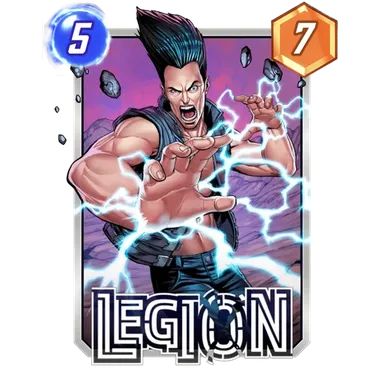
Strife is a good card, but the early reaction around it may be larger than its actual role. In Star-Lord, it raises the floor of games where the main line does not arrive. That matters. It still does not make Strife the reason Star-Lord succeeds, and it does not erase the deckbuilding cost of giving up a card such as Legion.
Strife Helps Star-Lord Without Being Its Core
The appeal of Strife in Star-Lord is easy to see. Star-Lord games are not all about landing the explosive line. Some games turn into improvised board-building, where the deck is trying to assemble enough power from separate pieces. Strife helps there by making more of those imperfect draws functional.
Still, the slot is not free. Replacing Legion means giving up a good card. Strife may be a key contributor, yet several cards are more central to the deck’s core plan.
The larger concern is that Strife looks more open-ended than the current card pool allows. It wants a high-cost On Reveal target that generates substantial power and can reward duplication. The episode argues that the six-cost target Strife truly wants is absent. Blob can offer another large outcome, but it comes with a major limitation: it is not meaningfully duplicatable.
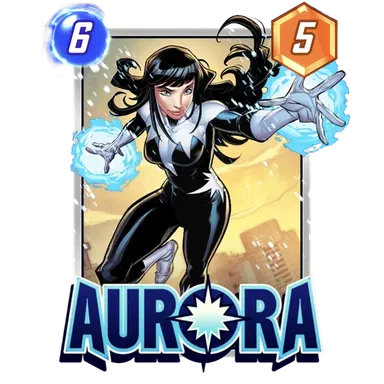
That leaves Strife in a narrower place than the hype suggests. It can improve Star-Lord. It is probably an upgrade to Aurora decks that are not Doom 2099. A one-target Strife can feel underwhelming, while competing plans at the same cost can create indecision. One view still suspects an undiscovered Strife synergy or deck. The counterargument is that Strife is missing a card-pool piece, not that the community has failed to uncover a secret interaction.
Against Star-Lord, a Strong Mid-Range Curve Is Not Enough to Snap
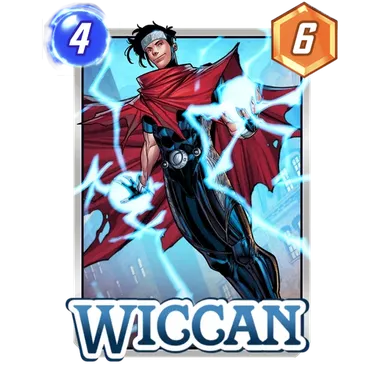
The Star-Lord matchup lesson is about cube judgment, not just deck power. Players using Wiccan or Doom 2099 may see their strongest curve, snap, and feel justified because their deck is doing exactly what it was built to do. Against Star-Lord, that can be the wrong conclusion.
Star-Lord is meant to punish good mid-range curve play when that curve is all the opponent has. If both decks execute, the Star-Lord player can be heavily favored. Snapping because you played your proactive cards ignores the specific matchup that those cards are walking into.
The important correction comes after the snap. If the Star-Lord combo appears, do not get attached to the original snap. Do not stay after the combo appears. Staying because your deck can still make a respectable power line is not enough when the opposing line has already outgrown it.
Mr. Negative creates a related problem. Both Mr. Negative and Star-Lord can hide whether they are truly assembling their best draw until later in the game. That uncertainty damages the opponent’s snap equity. A Jim Hammond may look like very little is happening, but the lack of visible power does not mean the game is safe to raise.
This does not mean every early snap into Star-Lord is automatically wrong. The point is narrower and more useful: a strong curve is not a sufficient snap condition when the matchup is designed to beat that curve. If the opponent has not shown the full plan yet, account for the possibility that they are setting up rather than falling behind.
Technoorganic Virus Has More Than One Plausible Shell
Technoorganic Virus drew a more positive response because it reached beyond the expected Sauron-style home. The card invites experiments with packages that already want low-cost cards, duplicate effects, or cards whose job is done after an early turn.
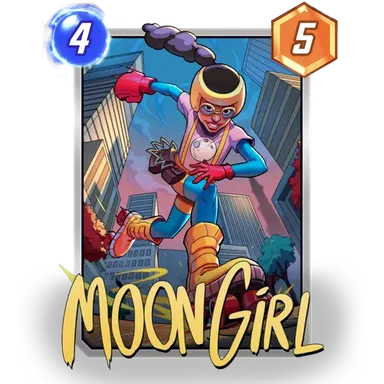
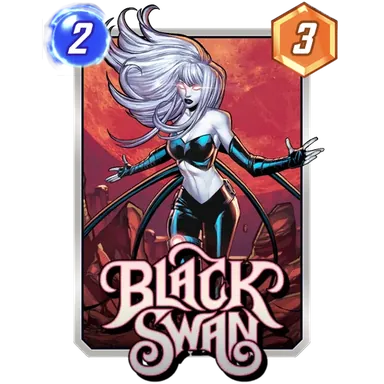
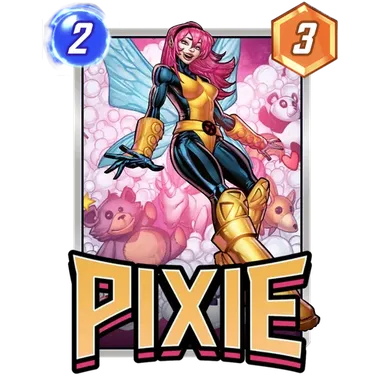
Moon Girl hand-dump was one named destination. Black Swan overlaps with that plan. Pixie was another. Technoorganic Virus works with Mobius and may fit less focused Pixie decks that are built around Pixie plus a selection of expensive cards rather than one narrow payoff.
There was also room to use it as a reverse Sauron. In that approach, the goal is not to replay Technoorganic Virus repeatedly. It is simply a useful effect in a Sauron/Super Giant style shell. The discussion also revisits an initially discounted interaction with JT Falcon: getting two copies into hand does not make the effect happen twice, but the duplicated cards can still create compounded value.
That flexibility does not settle the question of its best home. One side of the discussion values the card as a fun variation that gives a player more decisions and extra use for cards that would otherwise be inactive. The other side warns that a deck can feel good while still becoming meaningfully better if Technoorganic Virus is replaced by a card that directly serves the shell.
Both ideas can be true. Testing a flexible card in a less established package can reveal useful play patterns. It should not automatically be presented as a lasting upgrade just because it produced enjoyable games. The gap between “this works” and “this improves the deck” is the entire tension.
Theorycrafting Can Start the Conversation, Not Finish It
That tension becomes a wider discussion about Marvel Snap content. The strongest objection to presenting a likely downgrade as a card home is credibility. If the recommendation is not something you believe will hold up, showing it as a deck answer can imply more endorsement than the evidence supports.
The counterpoint is that players watch at different points in a card’s release cycle for different reasons. Early material can identify packages, ceilings, floors, and questions worth testing. A player may want a starting point before the card is released, then want later analysis after games have exposed which ideas held up.
The discussion leaves unresolved how far early analysis can guide a purchase before testing. One position argues that theory alone cannot establish whether a card is a safe investment, whether it is good, or every deck where it belongs.
Wolverine Horseman of War Needs a Better Prize
Wolverine Horseman of War feels too clunky for the value it returns.
Captain Carter illustrates the issue. Playing Wolverine Horseman of War after Captain Carter can add three power in a lane. The discussion treats that three-power payoff as underwhelming.
A larger body could raise the card’s raw performance, but it would also work against the intended play pattern. Wolverine Horseman of War wants a small body because the point is to buff it. Making it a large card and then asking players to make it larger misses that feeling. A two-cost version is raised as a more natural direction, while other possible redesigns remain speculative.
The broader lesson is useful whenever a card is judged by a flashy number. Plus-three output is not inherently strong or weak. The input matters too. A Marvel Snap card has two numbers. Both matter.
For Wolverine Horseman of War, the mission currently asks too much for too little. The prize at the end is still a pot of bronze. Continue with [the full Marvel Snapcast episode](the original episode).