The mode had a breaking bug that probably would have forced it to be taken down if it had launched. Moving another limited-time mode forward was better than leaving nothing in its place, yet it could not erase the disappointment of being told a mode was coming and then having it delayed.
Grand Arena’s Delay
Having a crowded calendar of limited-time modes gives the game a contingency when a date has to move. The last two Series 5 cards were described as disappointing. The missed chance to test a card could make the setback feel heavier.
Keep the criticism on a delayed mode rather than on the decision to stop a breaking bug. The breaking bug made the delay necessary, while the scheduling miss remained fair ground for criticism. The delay can still feel worse after other disappointing releases, but it does not explain the whole reaction.
The reaction also had layers. One view treated the missed mode itself as the baseline frustration. A metagame many players perceived as “iffy” could add to the frustration, and players who wanted to test the delayed card had an additional reason to be disappointed. Still, access to a card is not the same complaint as a delayed game mode.
That distinction matters because the anticipated card was only a possible refresh, not a proven metagame answer. Players wanted the chance to test it, but hope for a new card cannot establish what it would have done. One side sees access to the delayed card as the entire disappointment. The other sees the broken mode itself as the baseline problem. The delayed card can still make that baseline failure feel worse.
Polaris Has to Earn Her Afflict Slot
Polaris receives a much narrower endorsement. The case is that she can conceivably make Afflict or EVO stronger, which already puts her ahead of earlier Horsemen that felt worse than the cards they were meant to join.
The disagreement comes down to Malakth and the shape of an Afflict list. One side prefers Malakth for the value of a potential targeted pull.
Polaris remains an upgrade over a very low bar, and the remaining question is how large that upgrade really is.
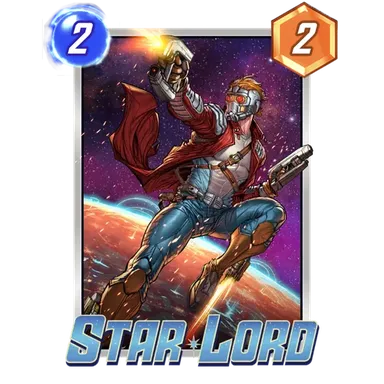
Star-Lord Punishes the Part of Snap Players Resist
Against the Star-Lord lines named in the discussion, taking priority with Shang Chi is presented as a strong answer. A Luna Snow into Star-Lord line was named as an example. If you take priority, Shang Chi can blow up Star-Lord. Super Giant is also named as a counter.
The counterplay does not settle the bigger dispute. One case is that priority enables disruptive final-turn output. The competing hunch is that the deck's energy and flexibility drive retreat decisions.
The discussion leaves the reason players dislike Star-Lord contested. One view is that Star-Lord punishes cope staying. The counterargument is that players want to play a full game, since a lot of Marvel Snap’s fun is located on turn six. At the same time, any midrange deck with Shang Chi can be fine in the matchup if the player draws Shang Chi.
For that reason, an early Star-Lord snap is a read to make, not an invitation to stay through turn six. That framing asks the player to recognize when a counter is present and when staying no longer makes sense.
That leads to two competing nerf philosophies. One proposal openly tried to kill the card. Another would remove its power gain. The latter aims to put Star-Lord's combo into a points-deck lane rather than leave it as a way to deny interaction.
One side estimated that the change cut 16 points from the specific play pattern discussed. The other argued that the deck could evolve and that the answer might be in the bottom half.
The discussion never settles whether points and priority or energy and flexibility are the central problem. Better data would be needed before declaring exactly how problematic Star-Lord is.
Card Multipliers Did More Than the Tech Apocalypse
Card multipliers have shaped current Marvel Snap far more than the so-called tech apocalypse. The tech apocalypse mattered, but its largest lasting effect was public perception. Players learned to treat Shang Chi as a poor inclusion after periods where it missed too much, even though Shang Chi is very good against current Star-Lord decks.
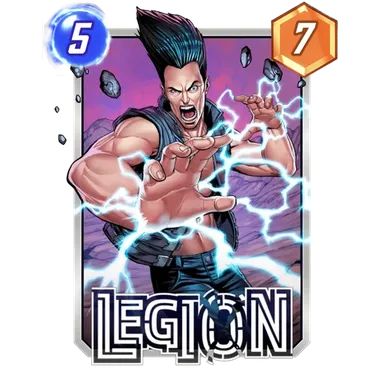
That perception can lag behind the board. A midrange deck built around the right tech cards can succeed. Shang Chi and Legion are used as the example of cards that can beat Magic decks and Star-Lord decks.
A Meme Deck Gives Up Control
One test for a meme deck is whether it loses roughly 30% of its games to outcomes outside the player's control, though the category's lines remain unclear.
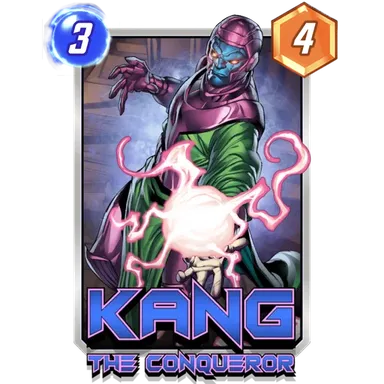
That standard puts Arisham, Agatha, and Kang in the conversation. Arisham makes half the deck random, Agatha can take over decisions, and Kang adds cards whose identities are unknown. Arisham remains difficult to classify despite its 50% win rate. Bad deck does not mean meme deck. A poor performer is not automatically a meme deck. The category instead turns on control.
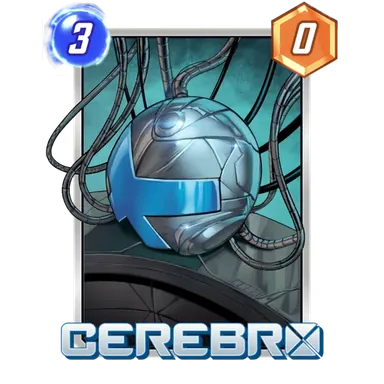
Cerebro complicates the category further. Cerebro 4 is the tentative best-meme-deck choice because it can still be reasonably competitive, though locations such as Monster Island can end its game immediately. Cerebro 2 and Cerebro 3 lean harder on getting the effect twice. Cerebro 5 can field more respectable cards and can win without Cerebro at all. The choice comes down to the rule set: if Cerebro 4 counts as a meme deck, it is the clever pick. In the tournament thought experiment, Kang and Arisham receive competing nods, with Agatha still part of the same constraint.
Cosmic Ghost Rider’s Doom 2099 Role
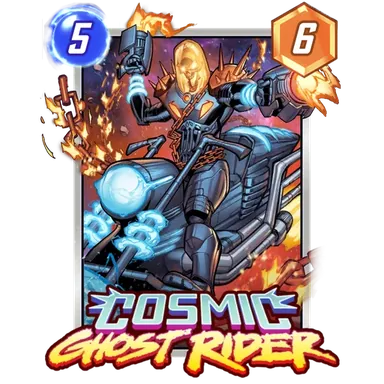
The reason given for Cosmic Ghost Rider is narrow: it can be useful against some decks that go over the top of fair point output, where that output otherwise has no plan. It is called a catch-all and important, while the discussion still questions how good it is.
In the Doom 2099 build discussed, Cosmic Ghost Rider and Sandman fill two five-cost tech slots, and they need to work or the deck gets comboed.
Representing a reasonably strong game plan can make opponents who should snap less likely to do it. Skipping early turns can invite the opposite read. The unresolved deck-building question is whether to add a third three-drop or a third two-drop.
Watch the full discussion: the original episode.