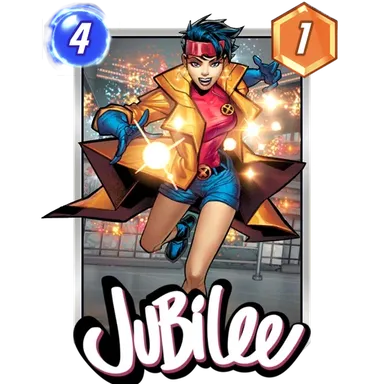
Is this a weak Marvel Snap season because it has not produced a card that takes over the metagame? The split sits at the center of this discussion. The defense starts by conceding a narrow point: if cards are judged only by huge metagame impact, Venus is the only one, even though she is described as popular rather than especially strong.
A season does not need another obvious best deck to be fun. A season can give players cards they enjoy using, seasonal cards that work together, and a format where several decks still have a case for the top spot. That position does not claim every card this season landed exactly where it should. Jubilee and Mr. Atlantic may have had room for more. The disagreement is about whether that makes the entire season a miss.
A season without a runaway answer
The case for the season starts with what has not happened. Looking for the best deck does not produce a locked-in answer here. The host making this case has roughly five decks in tier-one contention and treats that uncertainty as a positive competitive condition.
That matters because judging every season by its strongest release creates a bad incentive. One speaker calls that standard a recipe for disaster. A card can be a little underpowered without being proof that the game needed something more extreme.
There is still a legitimate reason to feel underwhelmed. The opposing view values cards that create a new deck direction. A broad card can fit into several existing decks, while a focused build-around can give someone a reason to chase an entirely different experience. The difference matters because each player wants something else from a Season Pass card.
Enjoyment is also personal, and the positive verdict is presented that way. The host arguing for the season says this is probably the most fun they have had with Marvel Snap in the past six months. The statement is not offered as data. It is a reminder that a format with many contenders can be more satisfying than one defined by a single dominant answer.
The Season Pass cannot assume a finished collection
The disagreement becomes sharper around the Season Pass. One position says its featured card should be open-ended. Someone at any point on the collection track should be able to put it into what they are already playing. The card does not have to be the best option in every deck. It needs to be usable without asking the buyer to own archetype-specific support cards.
Jeff is the clearest model for that philosophy. In a hypothetical choice between two equally powerful cards, the broadly playable card belongs in the Season Pass. A card that could be really good beside several Series 5 cards belongs elsewhere. The pass should have wide appeal because it reaches players with very different collections and very different levels of game knowledge.
That concern explains the resistance to narrow Season Pass cards such as Star-Lord, Nimrod, and Phoenix Force. The criticism is not that focused cards are bad design. The problem comes when the headline reward points toward a deck that part of the audience may not have the cards to complete.
Snap Packs change the value of being specific
The counterargument is shaped by Snap Packs. Concentrated pools changed one speaker’s view of where niche cards make sense. When a player decides to acquire a card during its particular week, specificity can be the attraction. Specificity can signal that a new deck path is worth choosing.
Random acquisition creates a different preference. If a player is spending into a pool without certainty about which option they will receive, a broad card offers a better floor. It has more chances to join decks they already own. In that acquisition context, Jeff has a different kind of value than a highly focused build-around.
From this side of the debate, the Season Pass itself is also a different purchase. The recurring advice is that players buy it because they want the whole pass, not solely because they want its featured card. If that premise holds, the featured card has more room to be niche. The featured card can invite a player into a particular deck rather than trying to be universally useful.
The response is that this assumes a very informed customer. The host defending broad Season Pass cards openly recognizes that their own investment in Marvel Snap is far beyond that of many other players. Podcast listeners may understand token decisions, collection dependencies, and the difference between a targeted pull and a random pool. A lower-information player may simply see a familiar character and a card that seems useful.
For that player, broad usefulness is not a minor convenience. Broad usefulness can determine whether the new card has a home. A specific card may be exciting in theory and frustrating in practice if the rest of its deck is missing.
Spider Punk shows where the two views meet
Spider Punk gets the closest thing to shared approval. It is described as broadly applicable while also having specific use inside an archetype. A player can treat it as a valuable stat stick, while someone playing that archetype can use its more focused application. That is the middle ground both sides are looking for.
That leaves three groups to weigh. Some buyers pick up every Season Pass regardless of its card. The discussion frames recognizable characters as one way to reach a new audience. Others are deeply invested and may prefer a niche card that gives them a distinct deck to pursue.
This season can therefore feel weak if the standard is immediate metagame impact. The other speaker treats avoiding another obvious best deck as a positive. The unresolved question is the one worth carrying into future seasons: should a Season Pass maximize immediate usefulness, or should it sometimes offer a focused deck idea for players ready to build around it?
Watch the full discussion: the original episode.