Luke Cage feels awful because a single ongoing effect can erase the reason an affliction card was in your deck. That frustration drives the biggest argument here, yet it does not end in a ban. The case against Luke Cage sees a catch-all that shuts down whole strategies and smaller packages alike. The case for keeping him sees a necessary counterweight that should carry a steeper cost or weaker stats instead.
When Jeff Takes Over Cosmo's Variant
The opening dispute is about a Cosmo variant where Jeff is so prominent that Cosmo no longer feels like the spotlight. The concern is not that Jeff should never appear in another card's art. Smaller background appearances are accepted. The objection is a version where Jeff and Cosmo are close to equal in size, with Jeff covering Cosmo and competing with the card's own identity.
The case against a ban accepts the irritation but rejects the rule. A striking variant can force an opponent to pay attention to the card name rather than read the art at a glance, which might be used as a competitive advantage. Other variants can also make a card less immediately obvious by featuring another character. The result is a narrow disagreement: Jeff is very large in this Cosmo variant, and the tail gets mocked, but cards do not need to be the only visual focus of their own variants. This does not make the Ban List.
Agatha Should Stop Taking Every Booster
Agatha stealing boosters gets the clearest verdict of the episode. The original reason made sense when Agatha controlled the entire game and could be used to farm boosters without meaningful play. Her role has changed. She no longer takes over the whole match, and the discussion treats her as a playable card rather than a shortcut around playing Marvel Snap.
That change weakens the old anti-farming rule. Agatha can now be a genuine deck option, yet she still claims boosters that could have gone to another card. The comparison to Arisham sharpens the point: if Arisham does not take all the boosters, Agatha has a much weaker case for keeping that privilege.
The exact replacement remains open. A higher Agatha chance was raised as another possibility because she controls part of the game. The discussion does not demand guaranteed Agatha boosters; it argues that every booster should no longer default to her. The important decision is simpler than the implementation. Agatha's booster penalty belongs to the version of the card that no longer exists.
Agatha boosters make the Ban List.
Free Track, Season Pass, Premium Season Pass
Marvel Snap's season-pass labels have become needlessly hard to say correctly. The free rewards are still called a season pass. The paid track that players mean when they say “season pass” is called the premium season pass. Then the extra paid version becomes the super premium season pass.
That language reverses how the community already talks. When someone discusses the season-pass card, they mean the paid card. Calling the free rewards a season pass muddies the conversation before the paid options even enter it. Adding “super” to a label that already contains “premium season pass” turns a straightforward choice into a naming puzzle.
The proposed cleanup is direct: call the free option the Free Track, call the paid option the Season Pass, and call the higher-priced version the Premium Season Pass. Each label would describe a distinct choice, and the season-pass card would finally sit under the name players already use for it.
There is an acknowledged logic behind the current names. It does not make the names easier for players or creators to use. This one earns the roast because the terminology creates confusion without adding useful meaning.
Silver Conquest Is Either the Extra Step or the Sweatiest Queue
The case for banning Silver Conquest starts with Conquest's structure. Proving Grounds is treated as a fast best-of-one test space by many players, with turn-one snaps aimed at getting a Silver ticket and moving on. Gold tickets also enter circulation through the collection track. From that perspective, Silver Conquest looks like an extra tier between a casual ticket source and the higher-stakes runs.
The proposed three-tier Conquest lineup keeps Proving Grounds, Gold Conquest, and Infinity Conquest, with Silver Conquest removed.
The opposing view turns that conclusion upside down. Silver Conquest is described as the most competitive part of the mode precisely because its players chose to enter it after dealing with Proving Grounds. Gold tickets can be earned without winning Silver runs, and some players spend them for medals near the end of a season. Silver tickets carry a different kind of investment.
That does not mean every Silver match is equally intense. The first win may include players fresh from a Proving Grounds victory, while later matches can feel far more serious. The discussion also leaves the exact matchmaking relationship between different Conquest stages unresolved.
The useful distinction is between volume and matchup quality. Winning an Infinity run requires more consecutive wins. A Silver run can still produce tougher individual matches if its queue attracts players who are there to compete rather than burn a ticket. Is Silver the redundant middle tier, or is it the tier described as the most competitive?
Luke Cage and the Cost of Boardwide Defense
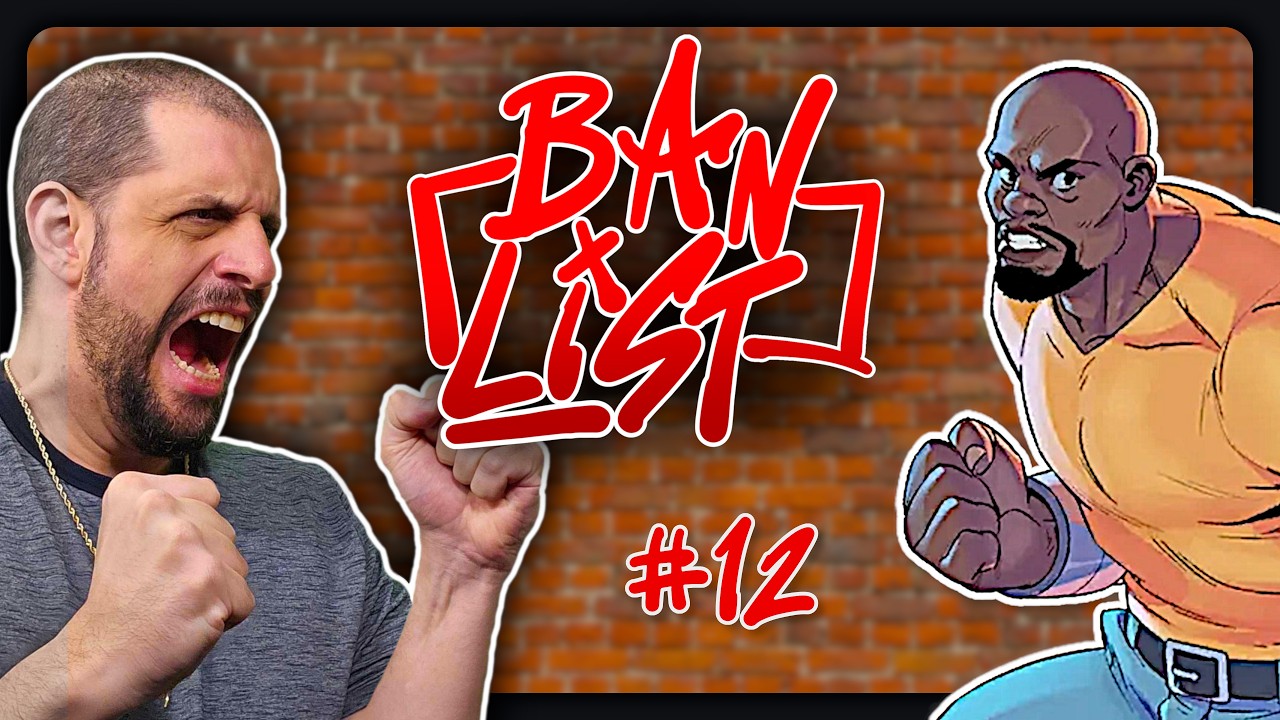
Luke Cage is the center of the episode because he creates a familiar affliction pattern. A new affliction card arrives, players give it a try, Luke Cage shows up, and the card gets shelved until Cage disappears from enough decks. The argument is that Luke Cage does more than answer one card. He can invalidate an archetype and smaller affliction packages with the same broad effect.
The proposed ban targets full-board defensive ongoing effects as a category. Luke Cage and Stardust represent the core concern: one card can protect an entire side of the board or deny an opposing plan across all locations. The suggested fix is a middle ground Marvel Snap has not used for Luke Cage. Let the effect apply in the two locations other than the one where the card is played.
That would preserve the counter while leaving a lane where the opposing strategy can still function. The proposal was that a Hela deck facing Stardust might still have a competitive strategy rather than a guaranteed loss. The argument points to existing cross-location effects as proof that the game can read locations beyond the card's own lane.
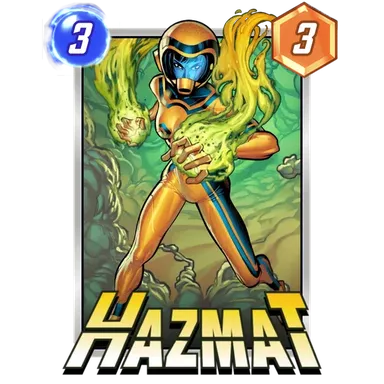
The counterargument says the concern reaches beyond ongoing cards. Hazmat also creates broad affliction pressure. From that view, the bigger issue is a counter sitting on a cheap or highly competitive stat line, not the mere existence of a boardwide answer.
Stardust illustrates why that answer can be valuable. Hela needed a counter, and Stardust gave the game one. The better direction may be to create more reasons to run defensive cards for your own upside, such as cards that make self-affliction or other drawbacks worth managing. It may also mean splitting Luke Cage's broad protection into narrower answers for different forms of negative power or affliction.
One side wants two-of-three-location restrictions so a single defensive ongoing cannot seal the whole board. The other wants expensive, less efficient counters that still keep powerful strategies from running unchecked. The episode's stated ruling is no ban. The episode was recorded in advance and notes that a Luke Cage change could make this point obsolete.
For the complete Ban List discussion, watch the original episode.