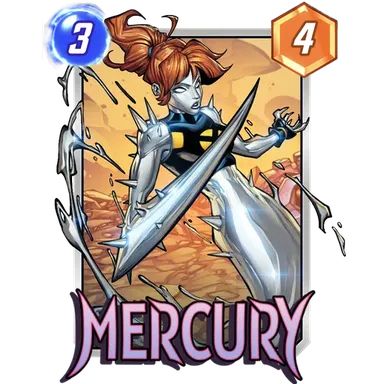
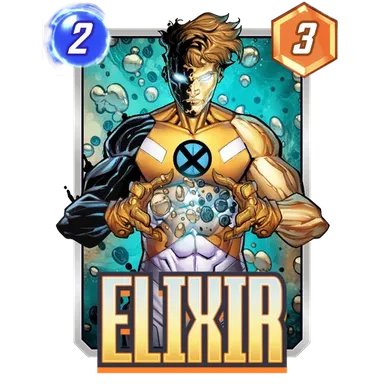
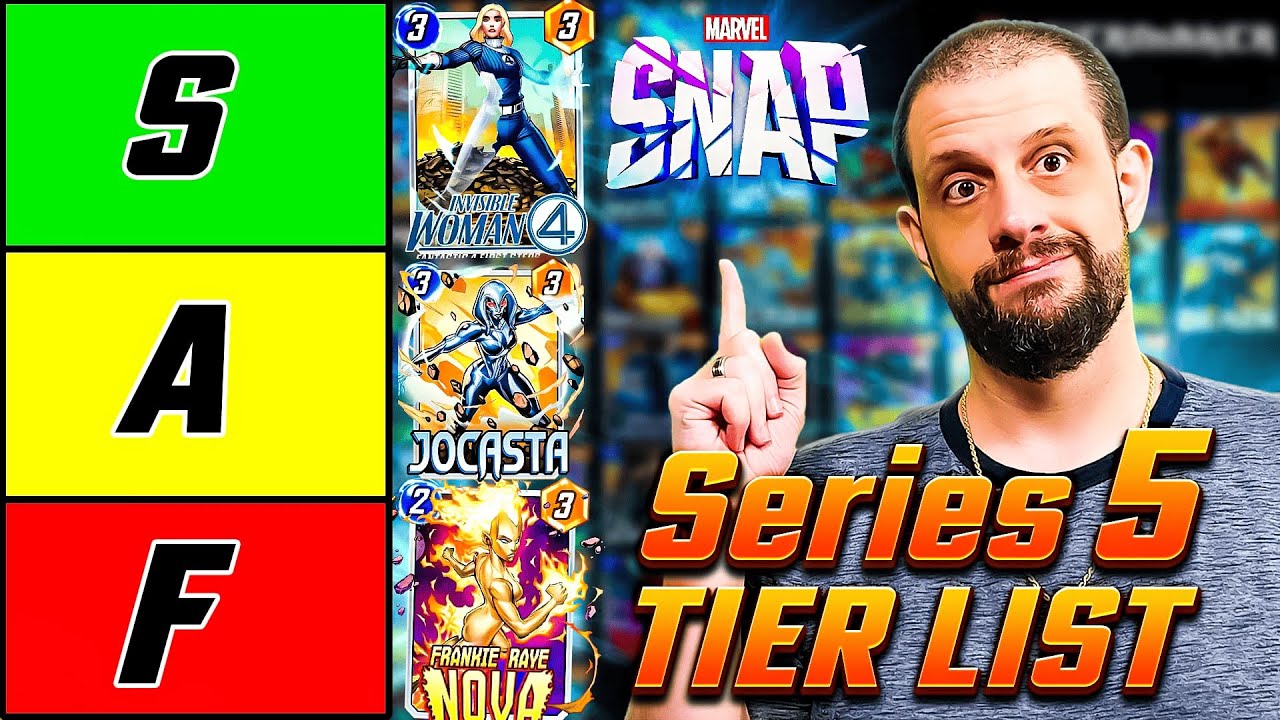
Cosmic Ghost Rider, Legion, Luna Snow and Mercury were among my highest-priority collection picks in August 2026. At the other end, I had moved Elixir and Magus down because I kept regretting the games where I tried to make them work.
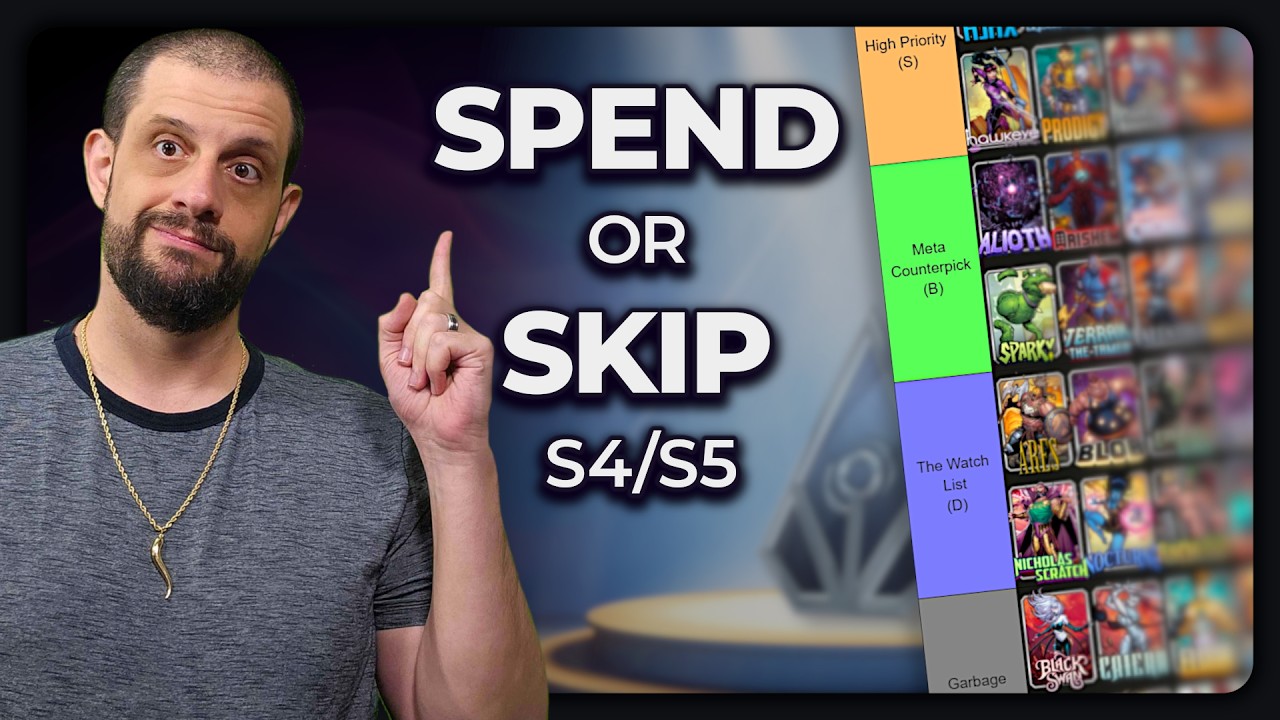
That was the point of this tier list: deciding which cards deserved my collector's tokens, which were useful additions, and which were luxuries for a particular deck. The judgments below come from the video published on August 25, 2026. They preserve that collection-value snapshot and its reasoning.
What the tiers meant
I had already placed the cards before recording. The video concentrated on additions, movement between tiers, and the distinctions that made one card a higher collection priority than another.
| Tier | My label in this recording | The collection decision |
|---|---|---|
| F | Garbage Pass | Cards I wasn't willing to prioritize in that balance state. |
| D | The Watch List | Cards I thought needed a change before becoming more attractive. |
| C | Collection Luxury | A synergy choice that wasn't mandatory for the broader archetype. |
| C+ | Playable But Replaceable | A useful card whose role could be filled another way. |
| B | Meta Option | A credible option for the deck or strategy I wanted to play. |
| B+ | Meta Weapon | A card that could push its deck further. |
| A | Solid Add | The point where I became comfortable targeting a card with tokens. |
| A+ | Strong Add | Cards whose arrival could make an opponent change their plan. |
| S | High Priority | Some of my strongest collection targets at the time. |
| S+ | Instant Purchase | My highest tier, favoring flexibility or exceptional impact. |
I changed the B-tier label during the recording. “Meta Counterpick” didn't quite describe the cards I was putting there, so I called it “Meta Option” instead.
The eleven cards I put in S+
My top tier contained eleven cards:
- Cosmic Ghost Rider
- Legion
- Luna Snow
- Mercury
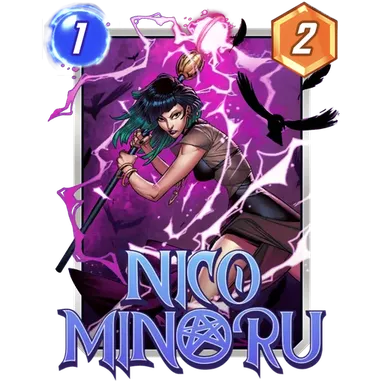
- Nico Minoru
- Aurora
- Iron Patriot
- Sam Wilson Captain America
- Prodigy
- Spider-Man: Brand New Day
- Thanos Fractured Frontier
The attraction was how much a card could do for a collection. I pointed to Sam Wilson Captain America, Mercury, Luna Snow, Legion and Cosmic Ghost Rider as cards I could use across a variety of decks.
Aurora was the exception I called out. She was more closely tied to an archetype, but I considered her strong enough to put alongside those flexible cards anyway. That distinction explains why a card could reach my highest tier through either broad usefulness or a particularly strong effect on the deck it enabled.
Spider-Man: Brand New Day and Thanos Fractured Frontier also made that tier. I was especially positive about those season-pass cards in the recording. “Instant Purchase” is the label I used for this August list; it describes my judgment at that time.
Watch the complete S+ discussion from 17:10.
A strong card could still be below S+
I had Scorpion Brand New Day, J. Jonah Jameson, Hydra Bob, Copycat, Frigga and Victoria Hand among the cards I named in S. I could make arguments for moving some of that group up or down a tier, which was part of why I left them where they were.
Copycat was a good example of value that went beyond raw points. I liked the information she supplied about the opposing deck. That was part of the defense I was considering when ranking her.
For A+, I focused on cards that could change how the opponent had to play once they appeared. The Thing First Steps stood out to me because I considered him both offense and defense. I particularly liked the scaling in a ramp setup with additional energy. Shou-Lao the Undying and Man-Spider were also cards I still thought highly of when their combinations came together.
The distinction between A and A+ wasn't that I disliked the A-tier cards. I put Hydra Stomper in A despite considering its package very strong. My hesitation was how heavily the deck had to build around that card. I wanted that commitment reflected in its collection ranking.
Doctor Octopus Fractured Frontier was another A-tier card I liked. I was interested in the quick-draw interaction and the way additional releases could support it. Red Guardian and Hawkeye Kate Bishop were among the other additions I discussed positively in that section.
Playable and replaceable was still a good result
C+ was where I put cards I considered viable and valuable in their decks while recognizing alternatives for their roles. Hydro-Man was one example: I thought he helped Skaar decks, but I didn't think a player needed him to build that sort of deck. Jeff the Baby Land Shark, Karen Page, Tombstone and Triton were other examples I used to explain the distinction.
Red Hulk Fractured Frontier needs an extra qualification here. I discussed that card before its release and placed it in C+ based on what I understood about it. That was a preview judgment, not a report from playing it.
C was a lower collection priority. Black Knight, Agent Venom, Infinity Ultron and Scream were among the cards I had moved into that luxury category. My issue with Scream decks was that I didn't think their interference was producing enough points in that field.
I also treated Jubilee Silver Surfer as a scaler a player could choose to build around. Having a home in a deck didn't automatically make a card the most important acquisition for that archetype.
The low tiers were judgments about that August field
Elixir and Magus were in F because my attempts to play them kept leaving me unhappy with the result. Red Wolf Fractured Frontier was another card I thought needed help. I considered it underpowered and awkward for what I wanted it to accomplish.
D was my watch list for cards that might become more appealing after a power or effect adjustment. Jim Hammond Human Torch had lost ground as the earlier Star-Lord field changed. I had also dropped Juggernaut Horseman of War, and I wasn't sold on Nightmare decks.
Death Fractured Frontier was a new card I had tried by the time of the recording. I found it clunky and felt I had to go too far out of my way to make it work, so it belonged on the watch list.
For the deck context behind those collection decisions, the site's MARVEL SNAP deck guides explain individual builds. The original video's full tier-by-tier discussion contains the complete on-screen placements.