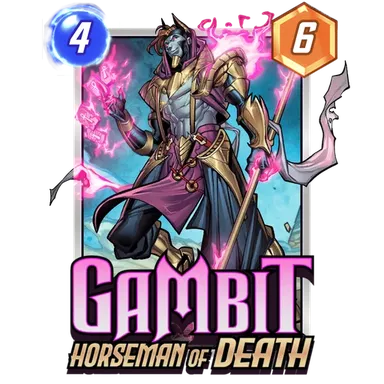
Gambit Horseman of Death escaped a direct change after several streamers expected it to get hit. That reaction makes sense. The pre-update sequence used created copies for a final-turn board wipe and a large cube swing against a small-ball deck. Whether a reduced-copy version remains sufficient is unresolved.
The update instead changed Mother Escani, which had become the card’s powerful partner. That choice does not settle the central argument. We split on the target. Our first position floated the possibility that Gambit Horseman of Death is a bad card. Our counterpoint sees Mother Escani as the wider problem because it fits into far more shells and had become too efficient there.
The old Gambit Horseman of Death finish is weaker. Whether the card loses play rate, loses win rate, or finds a narrower home remains an open question.
Mother Escani no longer stacks the same way
Mother Escani copies the card first, then only the copy gets minus-one cost and plus-two power. The original no longer gets that same treatment.
Our read treated repeated-copy scaling as the main problem the change targeted. Grandmaster no longer produces the old outcome, and Wong is notably worse with Mother Escani. A single change took away the discount on the original, removed power from the original, and weakened the scaling from repeated triggers. This is a substantial loss even before Gambit Horseman of Death enters the conversation.
The reach extends beyond Gambit Horseman of Death. Lady Bullseye received a point of power, yet we still treated the loss of multiple copier turns as a meaningful hit to what that card wanted to do.
Its future remains open. One possibility is that it becomes an archetype card. If the duplicate itself matters, there may still be a reason to play it. The clear examples were Gambit Horseman of Death and Sasquatch raised in our discussion. The job is smaller than the card had before, and it may take time for players to find the version that works.
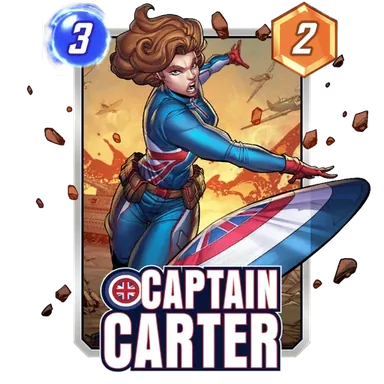
Captain Carter is the sharper test case. A concern was that losing that catch-up work could make the deck clunkier and tighten its margins. The shell may still remain strong because its other lines are still substantial.
The Gambit Horseman of Death data supports a question, not a verdict
A 30-day Untapped check started the disagreement by treating the cards separately rather than together. Mother Escani had many positive-win-rate, positive-cube-rate decks without Gambit Horseman of Death. Without Mother Escani, Gambit Horseman of Death had only two positive examples in that check, both at a 52% win rate and with very small cube rates.
That result supports a limited point: Mother Escani currently has more homes without the card than the card has without Mother Escani. It does not establish that the card can only succeed with Mother Escani. A counterpoint pushed back. A deck built around created cards already has reason to include a card that creates cards, so the correlation can run in more than one direction.
The prior ceiling was clearer than the data argument. A player could whittle down the hand, use Mother Escani with Grandmaster, and play three copies on the final turn. Against a small-ball deck, that could clear the board and steal an enormous number of cubes.
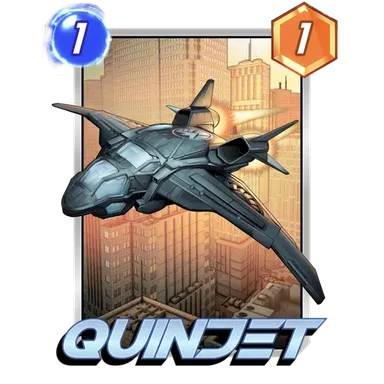
A two-copy sequence is still hypothetical. We considered two created copies, potentially helped by Quinjet, as a line that may still be strong. Our competing read doubted two Gambit Horseman of Death copies would be sufficient, arguing that the full board wipe had been the decisive payoff.
That leaves the patch in an honest middle ground. It attacked an interaction that needed attention while leaving the future of Gambit Horseman of Death's own role unsettled.
Luke Cage turns an automatic loss into a position fight
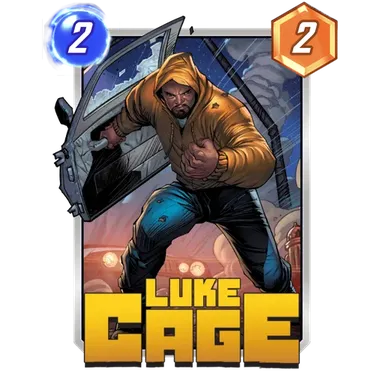
Luke Cage is now a two-cost ongoing card that protects only your front-row cards from power reduction. We favored that direction because the old matchup was too binary.
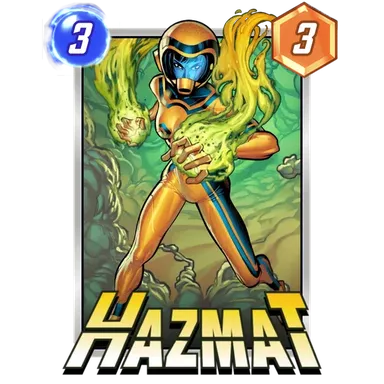
Affliction decks could run Luke Cage beside Hazmat. Players trying to beat affliction could run Luke Cage because the old version could make the entire opposing game plan disappear. There was little interesting Marvel Snap left once that happened. A tech card should matter, and it should hurt the deck it targets, but it should leave room for decisions.
The new Luke Cage still hits affliction hard. He just no longer protects every space. Positioning matters, and an affliction player keeps some portion of the plan instead of seeing the entire plan erased. We framed it as Luke Cage still doing a great deal of damage without deleting the game.
The lower cost changes that tradeoff. One side held that the two-cost version could feel like a buff in Cerebro despite covering fewer cards. That is not a final balance verdict.
Several card-versus-skill adjustments were easy wins. Tarantula now has to target a character rather than a skill. Spider-Man Noir can coexist with skills that spend energy away from the board. Silver Sable had a confusing interaction with skills that made the correction feel overdue. Boomerang benefits from the same cleanup.
Triton, Spider-Man 2099, and Boomerang need different things
Triton's change drew genuine interest. Iron Patriot appealed to one of us as a home for him. The competing idea saw a lane-pressure line with Nebula, where early placement can steer an opponent toward the other lanes. Those are different ideas, yet both treat Triton as a card worth testing rather than a card that can be dismissed immediately.
Spider-Man 2099 drew skepticism about Aunt May’s package. He can move once and afflict an enemy card at that location with minus-three power. One speaker considered Spider-Man 2099 itself a good card while calling the context around it weak.
The proposed fix was direct: make Spider-Man 2099 movable twice. That would turn him into a far more compelling turn-four play and give Aunt May another card willing to absorb the movable commitment. A higher-power version was also discussed. The current version still did not settle Aunt May's broader problem.
Aunt May gained a point of power. That makes her worth revisiting, yet the package still needs another piece that either makes the requirement easier to meet or makes the payoff larger. A point of power cannot carry that entire burden by itself.
Boomerang arrived in an especially bad Gambit Horseman of Death environment. Bounce relies on priority to dodge tech and redistribute its power. Gambit Horseman of Death bypasses that defense and punishes the kind of board Bounce builds: low-cost cards holding a large share of the deck's power.
A test from one of us raised the same concern across straight Bounce, affliction, and mixed shells. Even a favorable sequence with Boomerang, Toxin, Beast, then more Boomerang and Toxin did not put enough points on the board to compete. Gambit Horseman of Death made the experience worse, but the concern went beyond Gambit Horseman of Death. Boomerang asks for heavy investment while leaving part of its payoff in the opponent's hands.
We split on a cheaper Boomerang. One side wanted a one-cost version that Falcon could pick up. One concern was that this could become scary outside this Gambit Horseman of Death environment. Bounce can use priority to dodge other answers, so the disagreement is whether a cheaper Boomerang would help here or become too strong outside the current Gambit Horseman of Death environment. That tension remains unresolved.
Snap Packs still need to feel like packs
We eventually moved from balance to the collection system. Marvel Snap's gameplay was described as a genuine reinvention. Collecting was the drag. The economy has spent years responding to the last problem, then exposing the next one.
Snap Packs and tokens were called the best version of the system so far and still worth acknowledging. The name remains the problem. A pack should feel like multiple cards. Too many openings feel like one card plus rewards, or worse, a booster pack.
The concrete proposal was simple. Every Snap Pack could include five random Series 1, Series 2, or Series 3 cards. A missing card would unlock. An owned card would convert into boosters. That would make the opening feel more like the thing its name promises, while giving newer players a way to move their collection forward.
Watch the full discussion in the [source video](the original episode).