Raw ceiling alone does not settle where I want to commit my cubes this week. The better question is which deck profile matches the field you are actually seeing right now.
Pick for your pocket meta and choose the deck profile that fits the pressure points you are actually facing right now. Avoid forcing the wrong deck into a bad matchup.
A Victoria Hand Hybrid Built for the Gambit Horsemen of Death Field
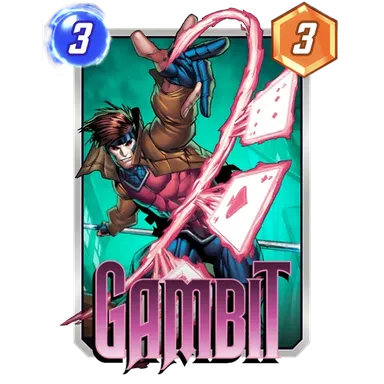
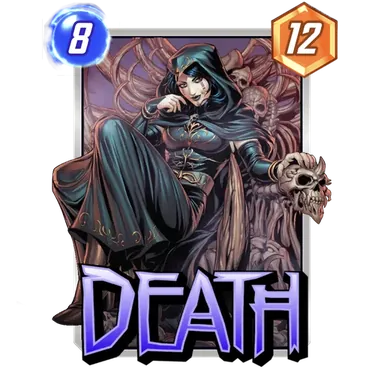
My first choice is my read on the current field. Gambit Horsemen of Death is prevalent, and its ability to destroy opposing one-, two-, three-, and four-cost cards is shaping the field. There are versions that commit fully to Victoria Hand and versions that commit fully to Gambit Horsemen of Death. I prefer the hybrid because it can pursue Gambit Horsemen of Death while retaining the strong baseline of a Victoria Hand deck and lets the Victoria Hand line carry games where Gambit Horsemen of Death does not show up.
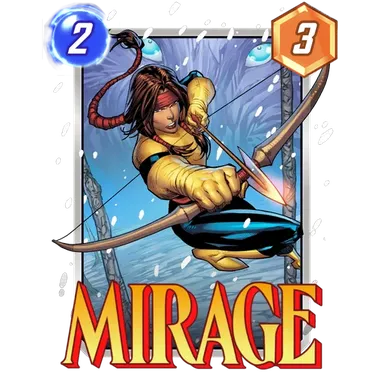
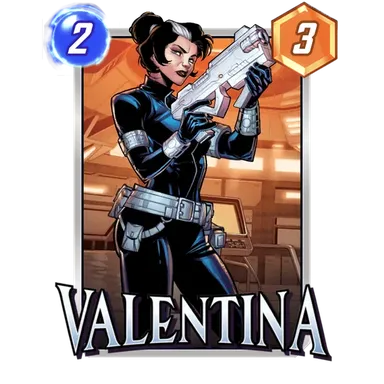
The copy-making is the point. The demon from the Hood, created cards from Iron Patriot, Mirage, and Valentina all give the Gambit Horsemen of Death condition plenty of ways to come together. Iron Patriot and Valentina also create an information imbalance. They can produce powerful cards without telling the opponent exactly what they need to prepare for.
That matters when Gambit Horsemen of Death does not show up. I still have a Victoria Hand game plan, with room for generated cards to scale and for my opponent to make decisions without complete information. The hybrid is not asking every draw to do the same thing. That gives me room to scale generated cards through Victoria Hand while an opponent still has incomplete information about the cards I made.
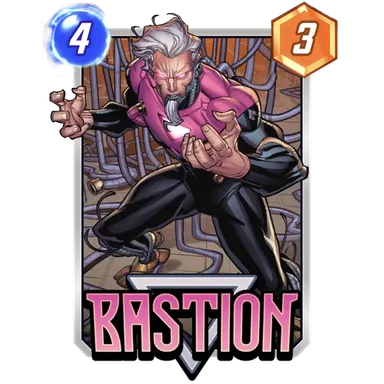
Its weakness is just as important. This is a deck full of cards that Gambit Horsemen of Death can destroy. If I can identify another Gambit Horsemen of Death deck, Bastion and potentially Misery are defensive options. If their Gambit Horsemen of Death lands on a four-cost card, the hit can be comparatively low impact. An Iron Patriot-created four-cost card can add to that protection when the line is available.
My target is two Gambit Horsemen of Death on the board. I think that is probably the middle ground: enough value. I don't think I need Prodigy to chase a third Gambit Horsemen of Death, because that probably costs flexibility. This is a very efficient place to be in a deck that can still win through Victoria Hand.
Scarlet Spider Gives the Second Deck a Safer Floor
The second deck is the adjustment. It is the reminder that a high-upside deck does not automatically convert its ceiling into cubes when its floor is unstable against the current meta.
The source of that instability is Gambit Horsemen of Death pressure on a low-cost plan. A final-turn one-drop getting destroyed can collapse the intended finish. Gambit Horsemen of Death firing on turn five and removing Maverick before it receives its boost can be even worse. This is why I am looking back toward Scarlet Spider versions as a way to distribute power and create redundancy.
Armor is central to the ideal setup. I want an Armor lane where I can build a scaler and protect Scarlet Spider. Two Scarlet Spiders can either contest one lane at enough height or spread their power across two lanes, depending on where the copy lands.
There are supporting lines that fit that approach. Angela can keep scaling, Kitty Pride can scale with Agony, and Maverick remains another possible destination for power.
Armor will not appear every game, and I cannot pretend that it will. The point is to have enough power distribution to keep playing when protection is unavailable. I do not need an enormous final-turn scale if I can make a safer amount of power, put multiple Scarlet Spiders down, and keep more than one lane live. That approach is how I raise the floor while the meta is punishing fragile low-cost finishes.
Bigger Cards Turn Gambit Horsemen of Death Into a Small Problem
The third deck is my stability anchor. The premise is simple: let other players optimize Gambit Horsemen of Death while I play cards whose value is concentrated above its targets. If Gambit Horsemen of Death destroys Jennifer Kale or Electro here, those cards are helping the larger cards happen rather than carrying the deck's real value themselves.
The same lesson is also the next step from the Doom 2099 lessons of the last couple of weeks. I have liked those decks because they were consistent and solid, but Gambit Horsemen of Death can make the destruction of certain four-cost cards or scalers hurt a great deal. The answer in this build is to ensure that the lower end exists to reach the top end.
Blob is a big part of why I like this direction. Luna Snow, Wave, and Blink are all described as substantial cards, so Blob is not relying on a deck full of tiny values.
There is room to adjust individual slots and play different big-card lines. That flexibility does not change the core recommendation. Bigger-cost cards are better in this Gambit Horsemen of Death-heavy moment, and I think this is probably the safest deck of these three for climbing in that meta.
Match the Profile, Then Protect Your Cubes
My formula for the week is to play the deck that matches the opponents in front of me and retreat when the win condition has fallen apart.
Watch my full breakdown: the original episode.