Replacing a missing MARVEL SNAP card starts with the turn you need it for. Work out what that card makes possible, then look through your collection for something that preserves the play. Matching the energy cost gets you a candidate. You still need to know whether the deck works after the swap.
A card that supplies enough Power on curve can have a perfectly usable, weaker replacement. A card that creates the interaction the whole deck depends on is a different problem. If you remove that interaction, the remaining cards need another reason to be together.
Write down the job before choosing the replacement
Be specific about what you expect the missing card to accomplish. “It's a good card” doesn't tell you what to put in the slot. “It contests a location before my expensive turn” gives you something to compare.
The same card can perform different jobs in different lists. One deck may want its standalone Power. Another may depend on its ability, its timing, or the way it enables the following play. You can't settle the replacement question from the card name alone.
In the August 22 deck discussion, my advice was to work with your collection and think about the role of the cards. That leaves room for substitutions. It also asks you to understand what you're taking out.
If you haven't identified the deck's main plan yet, start with the deckbuilding guide. A missing-slot decision gets much easier when you know which cards support that plan and which ones are responsible for making it happen.
If you're still learning how to build from a small collection, the beginner guide's deckbuilding basics cover that starting point.
A weaker card can still do enough
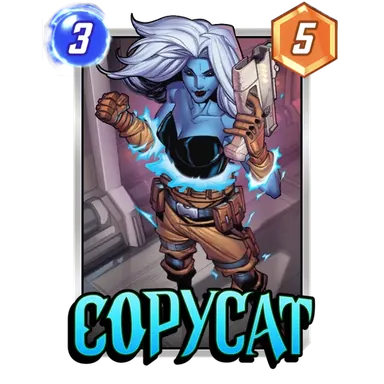
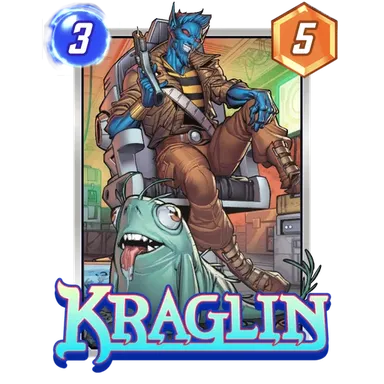
The Groot discussion in Marvel Snapcast Episode 152 is a useful example of the distinction. In that August 14 conversation, Groot came up as an accessible way to fill a slot otherwise occupied by a more desirable card such as Copycat or Kraglin. The argument was that a player should have a usable alternative when the job is largely putting Power onto the board.
That was a dated assessment of those cards, and it wasn't a claim that their abilities were interchangeable. It certainly isn't a standing instruction to replace every missing Copycat or Kraglin with Groot.
The useful part is the standard being applied. A replacement can give up some strength while leaving the deck playable. You don't need to pretend you've found an equivalent card to make a reasonable substitution.
You do need to acknowledge the loss. If the original list relied on additional utility as well as Power, your replacement may preserve the curve while changing a matchup or removing an option later in the game. Judge the version you're actually playing.
Use this substitution worksheet
Fill this out for the missing card and the candidate from your collection. Short answers are enough, provided they describe an actual play.
| Check | What to write down |
|---|---|
| Essential effect | What does the missing card do that the other cards need? If the answer is only Power, say so. |
| Timing | When must that job happen, and can the replacement do it then? |
| Board role | Which location or follow-up play is the card supposed to support? |
| Conditions | What must already be in hand or on the board for the replacement to work? |
| What you give up | Which ability, amount of Power, or option disappears after the swap? |
Here's a hypothetical comparison. Your missing card's main job is to put Power into a location before you spend the following turn on setup. One candidate contests that location immediately. Another has a higher ceiling but needs a later turn and additional support to reach it.
The immediate option may fit this slot better, even if you'd rather own the other card. The later payoff doesn't solve the problem on the turn the deck needs it solved.
Now change the job. Suppose the missing card provides the unique effect that makes your payoff usable. A same-cost body doesn't restore that effect. The worksheet should catch that failure before you queue.
Recognize when the plan needs to change
The Episode 152 discussion makes this exception explicit with Thanos Fractured Frontier, described there as a unique game piece. The hosts' enthusiasm for budget alternatives didn't mean every card had a direct substitute.
When the missing effect holds the deck together, look at the cards that depended on it. Keeping all of them and inserting an unrelated card can leave you with a list built to execute a play it no longer has.
Choose a different supported line, then reconsider those dependent slots. That may require more than one change. It's still a better use of your collection than treating eleven remaining cards as untouchable because they appeared in the original list.
Before playing the revised version, describe its important turn using only the cards you actually own. If your explanation still requires the missing card, the replacement isn't finished.