Episode 153 does not settle on one Marvel Snap verdict. It works through competing opinions instead. Death: Fractured Frontier gets a hard look, Fast Forward gets a harder one, and the Golden Gauntlet conversation opens into Cerebro 3, Thanos shells and the case for playing Nimrod instead of forcing a weaker Destroy line.
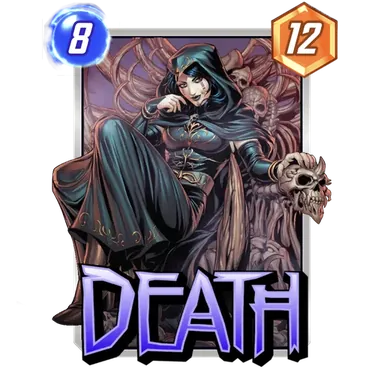
The episode begins with Death: Fractured Frontier’s On Reveal text, which resurrects destroyed characters to random locations. Even the wording becomes part of the discussion. The conversation runs through the inconsistent use of “revive” and “resurrect” on other cards, then moves on without pretending that the labels provide a reliable rules language. That restraint carries through the rest of the card review.
Death has a midrange case, not a combo case
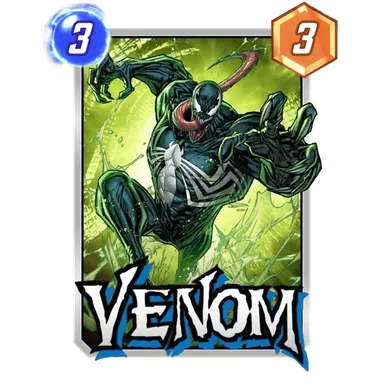
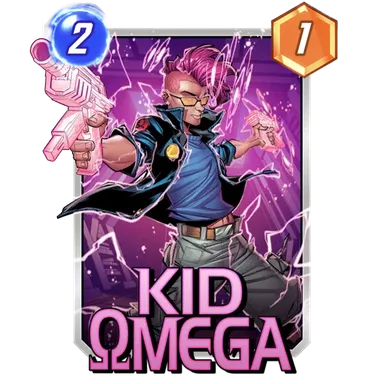
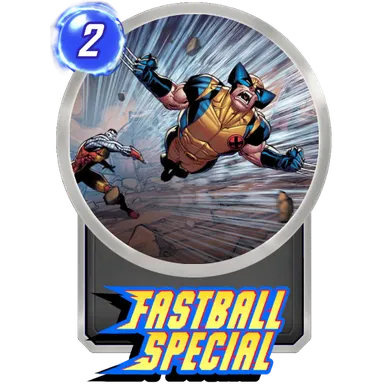
The strongest conclusion on the show is not that Death is secretly a new Hela-style centerpiece. It is almost the opposite. One host says the card has made more sense when it turns destruction exchanges into a midrange payoff, naming Venom, Kid Omega and Fastball Special as enablers that can fit into an existing deck. In that framing, Death is not asked to create the entire game plan. She comes down after the deck has already traded cards and built a board.
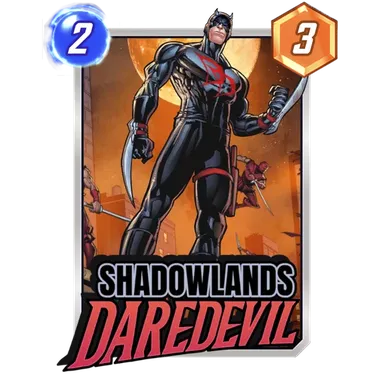
The distinction is doing a lot of work. The conversation describes a Thanos shell using Venom, Kid Omega, Fastball Special and Death alongside Shadowlands Daredevil. The speaker’s testing impression is measured: the deck felt like a deck, even if it was not presented as the best Death: Fractured Frontier build. The claim stays far narrower than calling Death solved.
The more elaborate lines are where the skepticism returns. Firehair, Cassandra Nova, Elixir, White Tiger, Strife and Phoenix Force come up while the conversation explores repeated destruction and revival sequences. There are moments where those lines start to look promising. The same objection keeps returning: if the payoff is a dense combo that asks too much from the draw, another Destroy package may simply do the job better.
The final recommendation lands in the middle. Death is still weak in the episode’s view. A midrange Thanos deck with Death can be a pleasant surprise. Treating her as the core of an all-in combo is where the episode draws the red line.
Any buff needs to solve a clear problem
The discussion does not agree on a single balance change. It throws out possibilities: more base Power, a bonus for the cards Death brings back, or a larger boost tied to each revival. Those are proposals, not a prediction of an OTA.
One side argues that the five-cost space is useful because it still leaves room for a card played after Death. Another wants the card to gain more Power from the action it performs. A third concern is complexity. Adding another mechanic to a card that already creates several effects becomes harder to follow when the game also skips through them.
For that reason, the episode’s balance conversation works better as a boundary than a forecast. The card needs help, in their opinion. The exact route should make the card stronger without asking players to reconstruct an invisible sequence after the fact.
Fast Forward is hiding decisions, not only loops
Fast Forward takes the next part of the episode. The discussion is not a request to watch every repetitive animation. The argument accepts the system’s purpose in stopping looped interactions. Its complaint is about non-deterministic effects and complicated board states where the game jumps forward and leaves a player unable to tell what happened.
Ramatut is one example raised in the conversation. Death: Fractured Frontier is another, because random resurrection locations can be part of the decision space the player is trying to evaluate. The proposed direction is a higher threshold before Fast Forward triggers on effects that are not deterministic. If the game still accelerates those moments, the speakers would rather see the animations than a blackout that removes the sequence.
It is a product complaint, not a claim that Fast Forward alone is responsible for Death’s weak showing. The episode treats the two problems as related player experience issues. A card can be difficult to play for balance reasons, and the game can make that card harder to understand by skipping its resolution.
Golden Gauntlet leaves room around the obvious decks
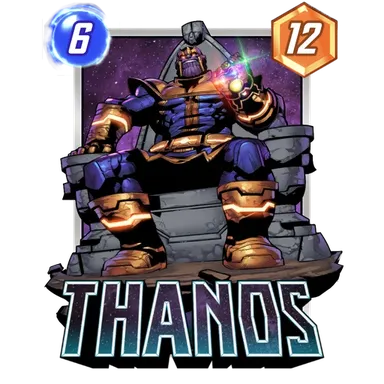
The Golden Gauntlet section moves from card theory into the current field. The show highlights Hannah’s Cat Cafe for a Thanos list and describes the appeal as priority, energy cheating and a turn-five Thanos line. The speakers are still testing which double-Thanos shell they prefer. The podcast is clear that this is work in progress.
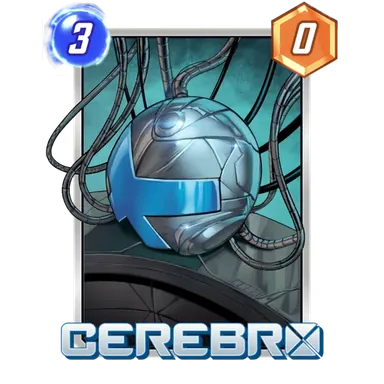
Shadow King’s reported Golden Gauntlet result surprised them. They describe it as a negative win rate despite a high bring rate, alongside other widely brought cards that were below fifty percent. Cerebro 3 gets the opposite kind of respect. The show cites 2,000 tracked games at a 43% win rate, then immediately adds the larger point: cube management and recognizing good draws can make the deck feel different from its raw match results.
That does not turn Cerebro 3 into an easy recommendation. The hosts call it a high-skill deck. They say it rewards good cube management because the gap between good draws and bad draws is so wide. Identify the draws worth snapping and leave the ones that are not there.
Thanos still has an unanswered next step
The Thanos conversation is deliberately unfinished. It compares the new Thanos package to earlier Shou-Lao development: a base shell appears, then players search for the version that can beat the next version. Ongoing, Activate and Destroy experiments are treated as branches to test, rather than proof that a final list exists.
One warning is more definite. One host says, “do not put magic in that deck,” when discussing double-Thanos lists. He calls magic a specific tool and warns that a deck which is only the second or third biggest magic deck in the same space is in trouble. That is matchup reasoning, not a blanket argument against the card.
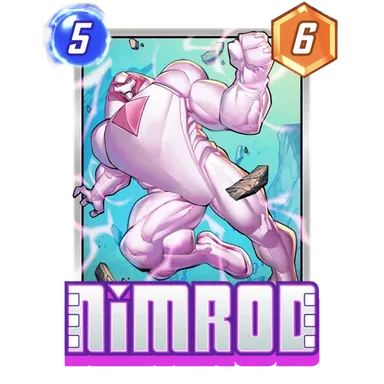
Nimrod gets the bluntest recommendation of the whole show. If the goal is a five-cost Destroy combo deck, the episode says Nimrod is a better choice than trying to make Death fill that role. The episode still leaves a place for Death as a midrange card. It does not present Death as that combo deck's answer.
Watch the full Marvel Snapcast conversation here: Thanos, Cerebro & Death Walk Into A Bar | Ep. 153 Marvel Snapcast