A Swarm draft needs a way to put small bodies on the board, a way to make those bodies stronger, and a finish that rewards the board you've built. If the next offer only gives you more of the part you already have, it can leave the whole plan stuck.
That was the drafting problem I focused on in my August 28 Draft matchup breakdown. The play sequence can be straightforward once the pieces fit. Finding those pieces is where you have to pay attention. A board full of small cards doesn't automatically become a board that wins.
Count the jobs your draft can actually do
Start with the cards you've already selected. Which ones put bodies into play? Which ones improve those bodies? Which ones turn that setup into enough Power to contest another location?
These are roles, so a card can contribute to more than one. You don't need an equal number of cards in each group. You need the pieces to work in a sequence you can play.
| What your draft already has | What to examine in the next offer |
|---|---|
| Plenty of small bodies, little reinforcement | Does this pick increase the value of the bodies you're already going to play? |
| Reinforcement, too little to receive it | Can this pick supply useful bodies before the reinforcement needs to happen? |
| A promising finish, unreliable setup | Which requirement of that finish can this pick actually satisfy? |
| Bodies and reinforcement, no strong finish | Can this pick use the board you've built to contest a location? |
If you're used to assembling a complete list, the 6-3-2-1 deckbuilding guide explains the value of giving cards specific jobs. In Draft, use that habit to assess the next offer. Don't force the constructed ratios onto the cards you're being offered.
Gilgamesh and Mockingbird reward different parts of the setup
I used Gilgamesh and Mockingbird as payoff examples in that August discussion. They can occupy the same broad role of adding a substantial body after your setup, but their conditions are different.
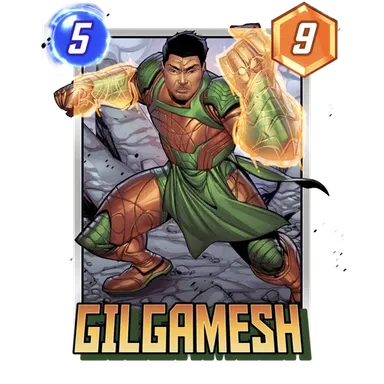
Gilgamesh gains Power for your other cards in play that have increased Power. That is why reinforcement belongs in the plan. Adding another small body without increasing its Power doesn't satisfy that condition by itself. Second Dinner's Gilgamesh announcement describes this relationship directly.
Mockingbird gets cheaper from your created cards in play. Her discount doesn't ask whether those cards have been buffed. Check the actual Mockingbird card text before treating any board full of small cards as the setup she needs.
That distinction changes the pick. If you're drafting toward Gilgamesh, ask how your cards will gain Power. If you're drafting toward Mockingbird, ask which cards will count toward her discount. Calling both cards payoffs doesn't make their support interchangeable.
Leave room for the cards that finish the job
The bodies have to go somewhere. Before choosing another way to fill the board, picture where your reinforcement and finishing card will land.
A small card can be useful early and still take a space that you need later. The same applies to an offer that creates several bodies: assess where those bodies go, then leave room for the rest of your sequence. Being able to generate more cards isn't enough if the placements prevent you from completing the play you drafted toward.
Read any augment as part of that particular offer. If it changes how the card supplies bodies or Power, account for that change. A strong augment on a payoff still leaves you responsible for building the board that payoff needs.
The beginner deck guide covers the familiar foundation of developing and reinforcing a board. The Draft decision is more specific: which missing job can you fill with the selection in front of you?
Make that the reason for your next pick. If the bodies are already there, find what makes them worth the spaces they occupy.
Watch Top MARVEL SNAP Draft Matchups: The Results Are In! for my original Swarm discussion, or find more help in the MARVEL SNAP Draft guide.