Boost was the safest pick in my first look at MARVEL SNAP Draft matchups on August 28, 2026. Ongoing was where I wanted newer Draft players to start, and Swarm was my biggest sleeper. Destroy had good numbers, but I wasn't nearly as sold on it as the overall win rate might suggest.
This is the breakdown from that August 28 episode. The statistics belong to the seven-day Untapped.gg snapshot discussed then. They are historical game win rates, not current Draft rankings or the chance of finishing a run with five wins.
What the August 28 numbers showed
The episode description records 510,000 Draft games in the last-seven-days view. These were the overall results it highlighted:
| Archetype | Overall game win rate in that snapshot |
|---|---|
| Boost | 58.2% |
| Ongoing | 55.4% |
| Swarm | 54.8% |
| Destroy | 54.1% |
Boost alone accounted for 110,000 games. Its matchup results included 65.6% against Move, 62.2% against Control, and 59.9% against Special. Those numbers explain why it caught my attention. It was getting results across very different opponents.
The table was another tool for choosing between the starter trios on offer. If the starter system is unfamiliar, the Draft starter packs and archetypes guide explains that part of the mode.
Why I trusted Boost and struggled to justify Move
Boost compounds. That was the big advantage I saw in the August field. There were several different cards that could keep building on the power already added, so the plan didn't depend on one exact sequence.
Move could compound too, but the order mattered much more. You could draft the pieces and still fail to draw or play them in the sequence the deck needed. Having a combo somewhere in your deck wasn't enough to keep up with Boost doing its thing turn after turn.
My opinion at the time was blunt: Control and Move sucked. I thought Move needed stronger Augments to help its cards keep pace. That was my read of the first-week balance, not a claim about what either archetype can do after later changes. The Draft Augments and upgrades guide has more on the system behind those power differences.
Even within Boost, I wasn't treating every starter as equal. Near the end of the episode, I warned that the Venus starters hadn't felt as good as some of the others. My concern was that Venus might be a trap in that particular Draft environment. It was an observation from my games, without a separate win-rate figure attached.
Ongoing was my starting point for newer drafters
Ongoing was the easiest archetype for me to draft in that first week. Put together a useful group of Ongoing cards, then work with the Augments you get. I liked how it used power upgrades and effects such as Regroup, and how cards like Iron Man, Captain America, and Spectrum gave the deck different ways to come together.
That made it my recommendation for someone learning the mode in August. Let the drafting decisions become more familiar while you spend time playing against other people. Then move into Boost, where the power-building pattern was still more straightforward than assembling a delicate combo.
The snapshot supported taking Ongoing seriously: 55.4% overall and 61.6% against Move. My preference for teaching it first came from the drafting experience, rather than simply picking whichever row had the highest percentage.
Destroy's results didn't settle the question for me
Destroy sat at 54.1% overall in the episode description, but it wasn't in my personal top three. I thought it was probably the hardest archetype to draft because you had to balance the cards that activated the plan with the cards that paid you for it.
Its Augments were doing a lot of work. Reviving cards and getting them back onto the board gave Destroy tools I thought were much stronger than what Control or Move had available. A well-assembled Destroy draft could absolutely be good. I still preferred other options more often.
I also questioned how much the opening days of experimentation were helping that overall number. Players were getting more deliberate about their drafts as the week went on. I said I wouldn't be surprised to see Destroy fall toward 51% or 52% after the weekend. That was a forecast made on August 28. This article doesn't establish whether it happened.
Swarm was the one I wanted people to practice
Swarm was underrespected in my view. The August snapshot had it at 54.8% overall, with 62.3% against Control and 62.5% against Move.
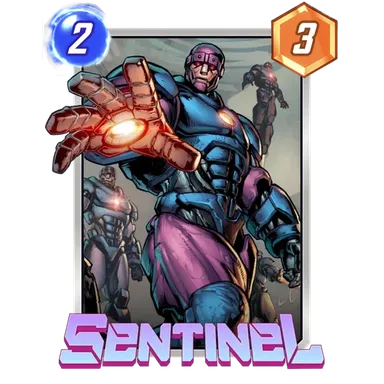
Drafting it asked you to keep track of the small bodies, the cards that amplified them, and the payoff for doing that work. Gilgamesh and Mockingbird were the payoffs I called out. I especially liked seeing Gilgamesh offered, and I preferred starters that didn't automatically include Sentinel, although I thought those could work too.
That balance made Swarm harder to draft than Boost. Once it came together, the play pattern was simple: get bodies down, reinforce them, then add the big payoff. Augments supplied extra power to a plan that was already easy to understand.
I thought Swarm could rise to the second-best general archetype by the end of that Draft run. Again, that was my prediction, not a later result being reported here.
Special depended on the trio; Ramp was the simpler fallback
Special needed an asterisk. I singled out Thanos Fractured Frontier and Black Panther as strong starters, while Mole Man and Arishem pulled my opinion of the wider category down. An archetype-wide average didn't tell you enough about which specific trio you were getting.
Ramp was easier to explain. In the August episode, I preferred Ongoing when both were available. If the choice was Move, Control, or Ramp, I was taking Ramp. I liked its straightforward activator-into-payoff lines, but didn't expect it to be my regular five-win option.
For the original chart discussion, including my first reactions to each archetype, watch the August 28 episode below.
Watch the August 28 episode
Watch Top MARVEL SNAP Draft Matchups: The Results Are In! on YouTube.